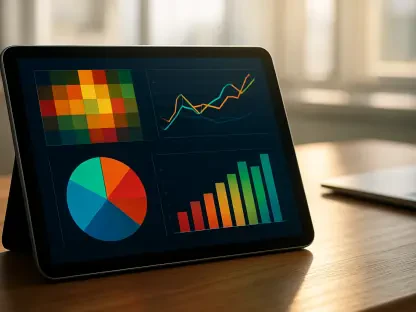

The ability to maintain visual context across multiple applications reduces cognitive load and allows engineers to focus on the nuances of complex designs. In the current industrial landscape, the transition from linear product development to highly integrated digital ecosystems has fundamentally altered the role of the individual workstation. Modern engineering teams are currently managing an unprecedented influx of data points, ranging from high-fidelity digital twins to real-time simulation outputs. This surge in complexity is largely driven by a massive push toward automation, with data from recent industry playbooks indicating that nearly 96% of organizations are increasing their investments in artificial intelligence over the next year. As these technologies become standard, the primary challenge has shifted from data generation to data interpretation. Success in this environment requires more than just raw processing power; it demands a sophisticated visual interface that serves as a bridge between machine logic and human insight, ensuring that development remains efficient.
Enhancing Decision Speed Through Strategic Hardware
Accelerating Workflows with High-Fidelity Displays
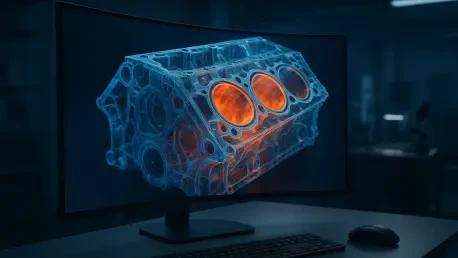
High-performance displays have moved from being simple output peripherals to becoming central strategic assets within the product validation process. Validation is no longer a task relegated to the final stages of a project; it is a continuous visual exercise that demands extreme precision and clarity. When engineers utilize high-fidelity monitors, they gain the ability to spot minute discrepancies in 3D models or thermal simulations that would be virtually invisible on standard office equipment. This immediate visual feedback is essential for maintaining the momentum of a project, as identifying a single alignment error or a material stress point early can save weeks of subsequent redesign work. By providing a wider field of view and higher pixel density, these monitors allow for the simultaneous display of critical performance metrics and geometric data. This eliminates the persistent need to minimize and maximize various software applications, which directly translates to faster decision-making and a more streamlined path to production.
Facilitating Shift-Left Engineering Practices
The strategic adoption of “shift-left” engineering practices represents a significant pivot toward early-stage virtual testing and validation. This methodology relies on the premise that identifying flaws during the conceptual phase is exponentially more cost-effective than discovering them during physical prototyping. Current data suggests that approximately 78% of engineering teams practicing shift-left techniques have reported measurable improvements in project outcomes, with over a third describing these gains as transformative for their business models. To execute this strategy effectively, the workspace must accommodate the sheer complexity of reviewing Computer-Aided Design models alongside Printed Circuit Board layouts and manufacturing constraints. Large-scale, high-resolution screens provide the necessary real estate to conduct these multi-faceted reviews in a single view. This spatial continuity ensures that mechanical and electrical teams can synchronize their efforts, verifying that every digital component functions harmoniously before any physical resources are committed.
Bridging the Gap Between AI and Human Judgment
Managing the AI-Driven Design Explosion
The integration of artificial intelligence into engineering workflows has triggered an explosion of design possibilities, allowing teams to explore vast iterations in record time. Advanced algorithms can now generate and analyze thousands of design variants for a single component, a task that would have taken human teams months to complete manually. Statistics from simulation platforms indicate that AI-enabled workflows allow for the evaluation of more than three times as many design iterations per program compared to traditional methods. However, this massive increase in output creates a new form of pressure for the lead engineer, who remains ultimately responsible for the safety and viability of the final product. The display serves as the critical intersection where this machine-generated data meets human judgment and professional experience. For an engineer to effectively vet an AI recommendation, they must be able to view it in context, comparing it against historical test data and specific design requirements to ensure that the chosen variant is truly optimal.
Safeguarding Quality Through Visual Governance
Despite the rapid proliferation of artificial intelligence across the industry, a significant gap remains in how these tools are governed and verified. Current industry reports show that while 60% of organizations are in the late stages of adopting AI for product development, only about 27% have established a comprehensive governance framework to manage it. In this environment, the visual clarity provided by professional-grade monitors acts as a vital safeguard against potential errors in machine logic. High-end displays allow engineering teams to perform visual audits of AI-generated models, identifying subtle anomalies or patterns that automated systems might overlook. This is particularly crucial for safety-critical components where even a minor calculation error could lead to product failure. By providing the visual real estate necessary to display original design intent alongside AI suggestions, high-performance hardware ensures that the speed of modern automation does not come at the expense of rigorous product validation and quality control standards.
Cultivating Collaboration Across Engineering Silos
Resolving Miscommunication in Cross-Functional Teams
Product validation has transitioned from a solitary engineering task into a collaborative, cross-functional endeavor that requires tight alignment between disparate departments. However, the persistence of organizational silos continues to be a major obstacle, often leading to miscommunication that delays project timelines and increases costs. Recent research highlights that roughly 65% of project delays are directly attributable to poor handoffs between design teams and manufacturing specialists. To address this, high-performing organizations—73% of which have implemented specific alignment strategies—are turning to shared visual environments to bridge the gap between departments. When a design engineer and a manufacturing expert can both look at a high-resolution representation of a complex assembly, the chances of a misunderstood specification are greatly reduced. This level of clarity is essential for ensuring that the design intent is preserved as a product moves from the virtual world to the factory floor, preventing expensive rework.
Unifying Stakeholders Through Shared Visual Truth
The use of large-format, high-resolution displays creates a “shared source of truth” that is indispensable during multi-disciplinary design reviews. When all stakeholders, from software developers to quality assurance specialists, have access to the same high-detail simulation or 3D model, the ambiguity that often plagues verbal or text-based communication is minimized. This shared visual workspace allows teams to engage in more productive discussions, as every participant is evaluating the exact same data in real-time. This is particularly important for identifying potential manufacturing bottlenecks or assembly issues that might not be apparent in a text-based report or a low-resolution screenshot. By fostering a collaborative environment where visual data is the primary driver of consensus, organizations can significantly accelerate the transition from the final design stage to full-scale production. Ultimately, the ability to see and analyze complex data collectively ensures that every department is moving in the same direction, reducing the risk of late-stage revisions.
Strategic Clarity as a Catalyst for Action
The integration of advanced visualization technology proved to be a decisive factor in the success of modern product validation strategies. By moving beyond basic hardware configurations, engineering firms addressed the critical bottlenecks associated with data interpretation and cross-functional communication. The transition toward high-performance displays facilitated a more effective implementation of “shift-left” practices, allowing teams to catch and correct errors earlier in the development cycle. Furthermore, these visual tools provided the necessary clarity for engineers to oversee the explosion of AI-generated design variants, ensuring that automated efficiency remained balanced with human oversight and safety standards. Organizations that prioritized high-fidelity visual interfaces successfully bridged the gap between complex digital twins and actionable engineering decisions. These investments ultimately moved teams from passive analysis to rapid action, cementing the monitor’s role as a vital lens for innovation. The future of the industry resided in this synergy between computational power and visual insight.