
Dr. Rostami’s work in the UTA Division of Data Science focuses on moving beyond simple accuracy to ensure that AI decision-making is both transparent and ethically sound. The global food supply chain is currently facing unprecedented pressure as sophisticated criminal networks exploit technological gaps to infiltrate markets with counterfeit goods. Meanwhile, the very algorithms designed to catch such criminals often harbor hidden biases that can lead to systemic injustice in legal proceedings. At the University of Texas at Arlington, researchers are now pioneering a shift toward Explainable Artificial Intelligence (XAI) to bridge these gaps. This movement acknowledges that for AI to be truly effective in high-stakes fields like food safety and criminal justice, it must do more than just provide a binary answer. It must demonstrate a clear, logical path that human experts can verify and trust. By integrating multidisciplinary insights, the UTA team is transforming “black box” models into transparent tools for public protection and scientific integrity.
Combating Food Adulteration with Intelligent Data
The battle against food adulteration has intensified as sophisticated fraud techniques now bypass traditional safety checks with ease. In the global honey market, the intentional mislabeling of products is a widespread issue that erodes consumer trust and destabilizes local economies. Dr. Rostami’s current research addresses this by developing a framework that distinguishes genuine honey from adulterated versions using localized environmental data. By focusing on North Texas, the study creates a robust defense for local beekeepers who face unfair competition from fraudulent, low-quality imports. This work is not merely about testing for purity but about understanding the biological and chemical nuances of a specific geographic area. Such precision ensures that the regional supply chain remains resilient against global fluctuations in food quality. By utilizing high-resolution data science, the research team provides a scientific shield for the agricultural sector, ensuring that authenticity is verified through empirical evidence.
The Local Context: Protecting Regional Honey Integrity
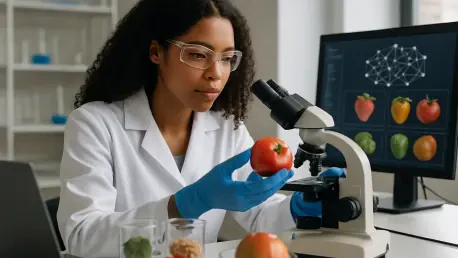
The core of this research involves the creation of a localized reference library that captures the unique “natural fingerprint” of North Texas honey. This database accounts for the specific regional floral sources and environmental conditions that distinguish authentic local products from mass-produced or synthetic alternatives. Through the use of multimodal data fusion, the team integrates several distinct scientific inputs, including pollen microscopy, chemical analysis, and infrared spectroscopy. This multifaceted approach ensures that the assessment of a honey sample does not rely on a single, potentially fallible data point. Instead, the AI looks for a convergence of evidence, much like a forensic investigator would at a crime scene. By layering these different streams of information, the researchers can detect subtle discrepancies—such as a missing regional pollen type or an unusual chemical signature—that would otherwise go unnoticed by standard testing methods currently used in the global food industry.
Multimodal Data Fusion: Creating a Natural Fingerprint
A defining characteristic of this research is the implementation of a “Pass-or-Review” system, which functions as a collaborative bridge between machine learning and human expertise. In traditional AI deployments, a model might label a product as “fraudulent” without explaining why, leaving humans with no way to verify the conclusion. Rostami’s system changes this dynamic by flagging suspicious samples and simultaneously providing the specific evidence that triggered the alert. For example, if a honey sample is flagged, the system might point to a specific wavelength in the infrared spectrum or a lack of indigenous pollen species as the primary cause. This transparency allows laboratory scientists to understand the underlying logic of the algorithm, ensuring that no legitimate product is unfairly penalized due to a computational error. This shift from opaque “black box” models to interpretable systems represents a significant advancement in the reliability of automated diagnostic tools across various complex scientific disciplines.
Enhancing Algorithmic Transparency and Social Fairness
Beyond the agricultural sector, the pursuit of algorithmic transparency is vital for addressing systemic issues in the criminal justice system. Machine-learning models are increasingly used to analyze human trafficking data, yet these models are only as reliable as the datasets used to train them. Because many datasets only capture cases that have been successfully prosecuted, they naturally reflect the biases and priorities of existing legal institutions. Dr. Rostami is working with social work experts to critically evaluate these models, ensuring they do not inadvertently perpetuate unfair treatment or ignore specific forms of exploitation. This interdisciplinary approach is essential for creating “scientifically responsible” AI that serves the public interest. By identifying where models fail to account for underrepresented data, the research helps develop tools that are both accurate and equitable. This effort reflects a broader movement within data science to move away from purely technical metrics and toward a more comprehensive understanding of social impact.
The Logic of Transparency: Pass-or-Review Systems
This approach ensured that technological progress aligned with ethical standards and provided a foundation for future policy development. The research demonstrated that the integration of explainable logic into artificial intelligence was not just a technical upgrade but a necessary step for public trust. By prioritizing transparency, the University of Texas at Arlington established a new standard for how high-stakes data should be handled in an increasingly automated world. These findings suggested that future developments in AI should focus on collaborative systems where human insight and machine efficiency work in tandem. Moving forward, the implementation of these transparent models across other food sectors and social services will likely become the industry benchmark for accountability. The study ultimately proved that when algorithms were forced to explain themselves, the resulting systems were both more resilient and more representative of the diverse populations they served, paving the way for more equitable outcomes.
Ethical Standards: Evaluating Bias in Sensitive Data
The successful integration of XAI into food security and social justice research marked a pivotal shift in how computational tools were designed and deployed. Moving toward a model of “Trustworthy AI” required a fundamental commitment to scientific rigor and ethical responsibility, which ensured that automated systems remained accountable to the humans they served. Future applications of this research expanded into broader supply chain management and other areas of criminal forensics, where the need for verifiable evidence was paramount. Stakeholders in both the public and private sectors recognized the need to adopt these transparent frameworks to mitigate the risks of algorithmic bias and economic fraud. By fostering an environment where technology and field-specific expertise intersected, the scientific community built more robust defenses against the complex challenges of the modern era. The ongoing work at UTA provided a definitive blueprint for the next generation of researchers, proving that clarity and integrity were the most valuable components.