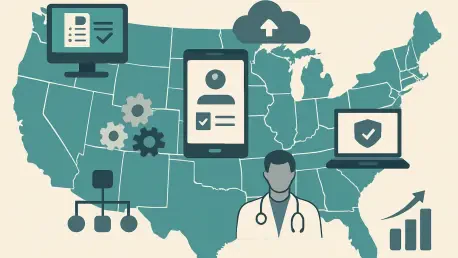

The National Student Clearinghouse now serves as a critical infrastructure component by managing verified records for over 130 million students from 3,700 institutions nationwide. This massive repository has become the cornerstone for U.S. states attempting to navigate the complexities of the “One Big Beautiful Bill Act,” commonly referred to as H.R. 1. This legislation introduces strict community engagement and work requirements for Medicaid beneficiaries, yet it provides a vital safety valve through educational exemptions. By allowing individuals enrolled at least half-time in eligible academic programs to maintain their health coverage, the law creates a new administrative demand for precise, verifiable data. State agencies are currently overhauling their eligibility systems to ensure that students do not fall through the cracks during this transition. The challenge lies in the sheer volume of data and the need for a seamless interface between educational institutions and state healthcare bureaucracies to protect the coverage of millions.
Integrating Real-Time Verification Systems
At the core of this transformation is the utilization of Application Programming Interfaces provided by the National Student Clearinghouse. These tools allow state Medicaid agencies to move away from stagnant self-reporting and toward a model of real-time data retrieval. Because student enrollment is inherently fluid, marked by frequent changes in credit hours, major declarations, or temporary withdrawals, a static check at the beginning of a semester is no longer sufficient for maintaining compliance with federal mandates. The API-driven approach enables states to pull updated records every 30 to 60 days, ensuring that a recipient’s eligibility status reflects their current academic standing. This technical capability is essential for minimizing the procedural churn that often occurs when beneficiaries are incorrectly flagged for non-compliance. By establishing a direct digital pipeline, agencies can verify enrollment status with unprecedented speed and accuracy.
The transition toward these automated systems represents a fundamental shift in how government administration handles eligibility logic. Historically, Medicaid workflows were designed to prioritize income thresholds and residency status, with academic enrollment serving as a secondary or overlooked variable. However, the implementation of H.R. 1 has forced a total redesign of internal agency processes, placing education verification at the center of the community engagement compliance sequence. This shift is not merely about data access but about the intellectual and technical restructuring of how eligibility is determined. Agencies must now incorporate complex algorithms that can interpret academic data and apply it to individual case files without human intervention. This modernization effort is intended to create a more resilient safety net that recognizes the pursuit of higher education as a valid contribution to community engagement, aligning healthcare policy with workforce development goals.
Navigating Implementation Challenges and Strategic Partnerships
To meet the pressing deadlines of 2026, many states are bypassing the creation of custom internal systems in favor of strategic partnerships with third-party data aggregators. These vendors act as intermediaries that already possess the technical frameworks and legal clearances necessary to bridge the gap between state Medicaid offices and educational data repositories. By leveraging these existing connections, states can significantly reduce the technical friction associated with overhauling legacy IT infrastructures that were never intended for high-speed data exchange. This approach allows for a more rapid deployment of H.R. 1 requirements while controlling costs and mitigating the risks of system failure. For state administrators, the priority has shifted from building proprietary software to identifying reliable partners who can provide a turnkey solution for verification. This reliance on the private sector highlights the growing trend of hybrid government-tech ecosystems.
Despite the availability of sophisticated data tools, the legal landscape presents its own set of hurdles that must be cleared to achieve full compliance. Establishing robust data-sharing agreements involves navigating the intricate requirements of the Family Educational Rights and Privacy Act and various state-level privacy mandates. Medicaid agencies must ensure that the transfer of sensitive student information is conducted with the highest levels of security and ethical oversight. Furthermore, the administrative structure of Medicaid itself adds a layer of complexity, particularly in states where the program is managed at the county level. Coordinating a unified data strategy across multiple jurisdictions requires a high degree of bureaucratic alignment and clear communication. Success in this area depends on the ability of state leaders to standardize procedures and ensure that every local office has access to the same single source of truth provided by the clearinghouse records.
Modernizing Outreach and Streamlining Workflow Efficiency
The ultimate success of educational exemptions under H.R. 1 hinges on the widespread adoption of ex parte or automated renewals. When a state agency can verify a student’s status automatically, the administrative burden on both the caseworker and the recipient is dramatically reduced. Lessons learned from recent modernization projects in states like Minnesota and Maryland demonstrate the profound impact of these efficiencies. In these regions, the time required for a caseworker to process a standard renewal was slashed from over an hour to just under 12 minutes through better data integration and redesigned digital notices. These improvements are critical for preventing eligible individuals from losing their healthcare coverage simply because they could not navigate a complex manual documentation process. By automating the verification of academic enrollment, states are creating a more equitable system that prioritizes continuity of care and reduces the likelihood of administrative errors.
In conclusion, state administrators successfully addressed the immediate demands of H.R. 1 by prioritizing the integration of high-fidelity educational data into their core eligibility engines. The focus shifted toward actionable strategies that eliminated manual paperwork and replaced it with automated verification pipelines. Moving forward, policymakers should continue to refine these systems to include a broader range of vocational and non-traditional training programs to ensure that no legitimate pathway to community engagement is ignored. By establishing these technical foundations, states provided a clear blueprint for how modern government can utilize centralized data to protect vulnerable populations while upholding federal standards. The move toward data-driven governance proved that reducing technical friction is the most effective way to ensure policy intentions are translated into tangible benefits. Future efforts will likely concentrate on expanding these interoperable frameworks to other sectors.