

The moment an executive realizes that three different departments have presented three entirely different figures for quarterly revenue marks the precise point where organizational trust begins to erode. This phenomenon, often referred to as the boardroom paradox, occurs when data-heavy

Modern enterprise analytics environments often resemble a house of cards where a single upstream change to a database schema can silently collapse an entire network of executive dashboards and critical machine learning models. This systemic fragility stems from the deep-seated decoupling between

Chloe Maraina is a powerhouse in the realm of Business Intelligence, known for her ability to translate complex data sets into vivid, actionable visual narratives. With a career built at the intersection of data science and enterprise management, she has spent years navigating the high-stakes world
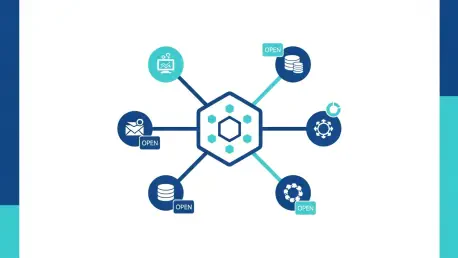
Organizations are currently grappling with an unprecedented level of data dispersion that threatens to turn their most valuable digital assets into inaccessible liabilities buried within fragmented cloud silos. This reality necessitates a move toward unified analytics to dismantle technology

High-dimensional vector embeddings have long served as the silent architects of modern artificial intelligence, yet the massive physical distance between where this data lives and where it is processed remains a persistent barrier to innovation. In the controlled environment of a research

The traditional dashboard, once the crown jewel of corporate decision-making, has morphed into a digital graveyard where static data remains buried under layers of manual requests and technical bottlenecks. Modern enterprises can no longer afford to wait days for a static report that only captures