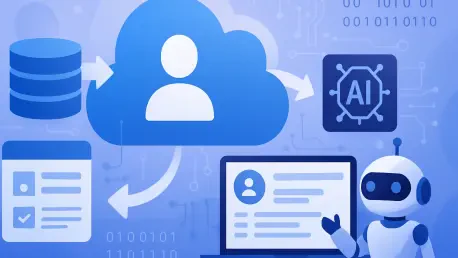

Consolidating data functions into a single intelligent ecosystem prevents the fragmentation and security risks associated with using multiple isolated single-cloud tools. As the industry navigates the profound transition from traditional decision-support systems to the era of Agentic AI, the necessity for a unified platform has become the defining characteristic of operational success. Unlike previous models that merely curated information for human review, modern autonomous agents are now empowered to execute complex workflows and make independent decisions in real-time. This shift demands a level of data integrity that traditional manual integration methods simply cannot provide. Salesforce, through its long-standing leadership in data management, has positioned itself at the forefront of this revolution, securing its 21st consecutive top ranking in the global assessment of data integration tools. This sustained excellence reflects a deep commitment to transforming raw information into high-fidelity fuel for the next generation of autonomous enterprise intelligence.
The Evolution of Data for Autonomous Systems
Redefining Data Value: The Impact of Agentic Action
In the current technological landscape, the margin for error regarding data quality has evaporated because autonomous systems do not merely suggest errors; they act upon them. When an AI agent is tasked with adjusting supply chain logistics or modifying customer financial records, any underlying data inconsistency results in a “bad action” executed with mechanical speed and precision. This reality has forced a strategic pivot toward semantic clarity, where the meaning of data is as important as its location. Organizations are increasingly realizing that for an agent to be effective, it must operate within a framework of “AI-ready” data that provides context-aware grounding. By establishing these rigorous standards, businesses are effectively creating a safeguard against the high-speed propagation of errors. This proactive approach to data hygiene ensures that autonomous systems remain reliable assets rather than liabilities, fundamentally changing how enterprise leaders perceive the value of their underlying digital assets and long-term data strategy.
Industry Trends: Achieving Accuracy and Cost Reduction
Industry projections for the period spanning from 2026 to 2028 indicate that organizations prioritizing semantic data structures will see a transformative return on their technology investments. Specifically, those who successfully implement a governed data value chain are expected to boost the accuracy of their autonomous agents by up to 80% while simultaneously reducing operational overhead by nearly 60%. These figures represent more than just incremental improvements; they signal a paradigm shift where data integration becomes the primary lever for financial performance. In the agentic economy, the ability to rapidly synthesize diverse datasets into actionable intelligence is what separates market leaders from those struggling with legacy architectures. As the demand for precision increases, the focus on building a trusted foundation ensures that every automated decision is rooted in a verifiable truth. This movement toward high-fidelity data is the cornerstone of operational efficiency, providing the necessary stability for businesses to scale their AI efforts.
Innovative Solutions for Modern Data Management
Autonomous Engineering: Automating Pipelines with Agentic Integration
The introduction of specialized features within the Intelligent Data Management Cloud (IDMC) marks a significant milestone in the automation of data engineering tasks. AI agents are now capable of assuming the heavy lifting associated with data pipeline creation, a process that historically required extensive manual labor and specialized coding. These autonomous systems can intelligently identify relevant datasets, detect structural gaps based on specific business goals, and assemble production-ready pipelines that are fully grounded in rich metadata. This shift allows human engineers to move from the role of builders to that of architects, focusing on high-level strategy rather than routine maintenance. By leveraging the deep contextual understanding provided by a centralized metadata repository, these agents ensure that every pipeline they construct adheres to established governance standards. This level of automation significantly accelerates the deployment of new data-driven services, enabling the enterprise to react to market changes with unprecedented speed.
Developer Synergy: Empowering Teams through Headless Capabilities
To bridge the gap between traditional enterprise software and the modern developer’s daily workflow, Salesforce has introduced innovative “headless” integration features. This approach recognizes that many developers prefer to work within specialized environments such as VS Code or Cursor rather than navigating a centralized enterprise console. By leveraging the Model Context Protocol (MCP), the platform allows developers to build, validate, and deploy AI-ready pipelines directly from their preferred tools. This functionality effectively eliminates the steep learning curve often associated with adopting new enterprise-grade integration platforms, fostering a more inclusive and efficient development culture. By meeting developers where they already work, the platform encourages the rapid prototyping of new AI-driven applications and services. This flexibility does not come at the expense of security or governance, as the headless capabilities are fully integrated into the broader management ecosystem, maintaining the high standards required for enterprise operations.
Operational Optimization: Performance and Financial Management
Managing the financial implications of high-performance data workloads is another critical area where AI-assisted tools are providing significant value. With approximately 44% of CEOs currently struggling to demonstrate a clear return on their AI investments, the need for efficient resource management has never been more pressing. Integrated FinOps capabilities within the data management platform allow organizations to monitor and optimize the costs of their integration processes in real-time. By providing visibility into which workloads are consuming the most resources, these tools help businesses identify opportunities for cost savings and efficiency gains. This data-driven approach to financial management ensures that AI initiatives remain sustainable and scalable over the long term. Furthermore, by aligning technical performance with business value, these tools help bridge the gap between IT operations and executive leadership. This focus on efficiency ensures that every dollar spent on data integration contributes directly to the organization’s bottom line.
Achieving Scale through a Unified Data Foundation
Structural Integrity: Connectivity and Governance as Competitive Drivers
The primary differentiator in the modern integration market is the ability to provide a comprehensive, end-to-end lifecycle on a single platform driven by shared metadata. This metadata serves as the “connective tissue” for the entire enterprise, providing a consistent framework for understanding and managing data regardless of its physical location. Whether the information resides in on-premises legacy systems or across multiple cloud environments, a unified platform can access and integrate it without sacrificing governance or security. This broad connectivity is essential for building a truly agile enterprise that can respond to changing market conditions in real-time. By maintaining a centralized view of the data landscape, organizations can ensure that their AI agents are always working with the most current and relevant information. This foundation of trust is what enables businesses to move their AI initiatives from small-scale pilots to full-scale production environments with total confidence in the underlying digital infrastructure.
Strategic Outcomes: Future-Proofing the Autonomous Enterprise
In the evolving landscape of 2026, the transition toward agentic systems demanded a fundamental reimagining of how data was integrated and governed across the modern enterprise. Organizations that prioritized a unified, metadata-driven foundation successfully navigated the complexities of tool sprawl and semantic inconsistency, turning their raw information into a reliable driver of autonomous action. The shift from human-assisted AI to independent agentic operations proved that the integrity of the data value chain was the ultimate determinant of technological success. By adopting headless development capabilities and AI-assisted optimization tools, businesses eliminated the silos that previously hindered innovation and slowed down deployment cycles. Leaders in the space recognized that scaling AI was not merely a matter of selecting superior models, but of providing those models with high-fidelity, context-rich information. Moving forward, the most effective strategy involved continuous investment in data transparency and autonomous pipeline management.