
In an era where the frequency of zero-day exploits and ransomware-as-a-service has reached an all-time high, the reliance on purely manual intervention has become a strategic liability for modern enterprises. The contemporary cybersecurity landscape is shifting from manual intervention toward a sophisticated hybrid model that leverages the specific strengths of both machine-driven logic and human intuition. As digital threats grow in complexity, the integration of Artificial Intelligence and human expertise has become the new industry standard, ensuring that security operations can keep pace with the hyper-scale nature of the cloud. This approach does not seek to replace human professionals but rather to augment their capabilities, ensuring that machine learning handles the speed and scale of data while people provide the essential strategic oversight. By bridging the gap between automated detection and contextual response, firms are building a more robust defense mechanism that can adapt to the shifting tactics of global adversaries.
The Technological Engine: AI’s Role in Modern Operations
Data Analysis: Mastering Massive Information Influx
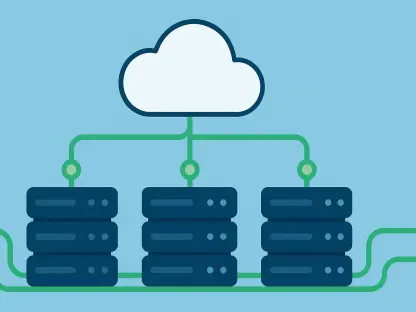
Security Operations Centers are currently facing a massive influx of telemetry from cloud systems, network traffic, and identity management tools, creating a data deluge that exceeds traditional human capacity. The volume of this data is so great that manual analysis has become physically impossible for human teams alone, even within well-staffed organizations that possess significant resources. Consequently, AI-driven analytics have now become a foundational requirement for identifying threats within the vast sea of digital information generated by modern enterprises in various sectors. Without these automated systems, critical signals would remain buried under a mountain of benign activity, leaving organizations vulnerable to stealthy intrusions that move at machine speed. By deploying advanced algorithmic filtering, companies can maintain a granular view of their entire digital footprint without overwhelming their operational staff with endless streams of raw logs.
Deep learning models provide a critical advantage by processing historical datasets to establish a baseline of normal behavior within a specific corporate environment or across a global network. By recognizing subtle anomalies that deviate from these patterns, AI can detect potential attacks in their early stages, often before the actual payload is delivered or executed. Mapping these findings against frameworks like the MITRE ATT&CK knowledge base allows security teams to identify specific adversary tactics and techniques with a high degree of confidence and technical accuracy. This proactive identification is essential for disrupting the kill chain and minimizing the dwell time of attackers who might otherwise persist for months undetected. As these models ingest more data, their ability to predict the next logical step of an intrusion attempt improves, offering a level of foresight that was previously unattainable through traditional signature-based detection methods.
Operational Efficiency: Triage and Automated Reporting
Machine learning also plays a vital role in managing the millions of security notifications that security teams receive every day, ensuring that human attention is directed where it is needed most. By automatically classifying and prioritizing these alerts based on their severity and potential impact, AI ensures that high-stakes incidents are addressed immediately while routine noise is filtered out. This prioritization is essential for helping human analysts stay focused on the most credible threats in real time, preventing critical issues from being buried under a mountain of trivial events. The reduction of false positives through automated cross-referencing of alerts against known threat intelligence feeds allows the SOC to operate with much greater precision. This systematic approach to triage not only speeds up the response time but also ensures that the most skilled analysts are not wasting their time on minor configuration errors or benign system updates.
Generative AI is increasingly used to handle the administrative side of security operations, such as documenting incidents and drafting technical reports for compliance and auditing purposes. By automating these time-consuming tasks, organizations can significantly reduce the administrative workload on their staff, which has historically been a major source of job dissatisfaction. This allows defense teams to spend more time on active investigation and strategic problem-solving rather than repetitive paperwork and data entry that adds little value to the actual security posture. The ability of AI to summarize complex logs into readable narratives helps bridge the communication gap between technical teams and executive leadership during a crisis. Reducing the time spent on manual documentation ensures that once a threat is mitigated, the lessons learned are captured instantly and shared across the organization without delaying the next phase of defensive planning.
The Human Element: Critical Interpretation and Governance
Contextual Reasoning: Beyond Pattern Recognition
Despite its processing power, AI lacks the contextual awareness needed to understand how a specific threat affects a unique business environment or a specialized industry vertical. An anomaly might be a sophisticated cyberattack, or it could simply be a harmless configuration change made for a legitimate business reason during a scheduled maintenance window or a product launch. Distinguishing between these scenarios requires the nuanced judgment and organizational knowledge that only a human professional can provide through their understanding of internal workflows. Human intuition remains the primary defense against attackers who attempt to blend in with legitimate user behavior by mimicking standard operational procedures that an algorithm might miss. Analysts can interpret the “why” behind an action, considering factors such as political climate, internal project deadlines, and historical vendor relationships that influence digital activity.
Human analysts serve as the ultimate safeguard against the problem of false positives, which can lead to severe alert fatigue and operational paralysis if left unmanaged by expert oversight. By validating AI findings through the lens of organizational goals and regulatory requirements, humans ensure that detection remains accurate and trustworthy over the long term for all stakeholders. This level of oversight is mandatory for maintaining the integrity of the data used to train and govern automated security systems, as biased or incorrect training data can lead to systemic failures. Furthermore, human governance ensures that the automated responses triggered by AI do not inadvertently disrupt critical business processes or violate privacy laws in different jurisdictions. The human element acts as the ethical and strategic anchor, ensuring that the speed of AI is always tempered by the caution and responsibility required to manage enterprise-level risk.
Workforce Sustainability: Preventing Analyst Fatigue
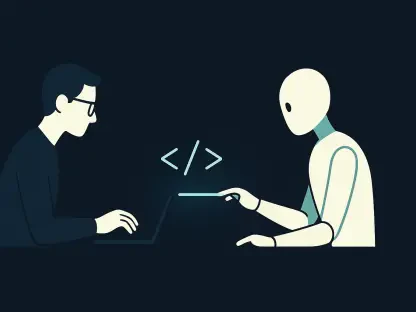
The hybrid model creates a symbiotic relationship where AI performs the heavy lifting of data correlation and pattern recognition across multiple disparate sources of information simultaneously. It acts as a massive filter, sifting through billions of data points at machine speed to highlight the few areas that truly require human scrutiny and high-level decision-making for mitigation. Once the AI flags a potential risk, the human analyst takes over to investigate the context and determine the most appropriate strategic response based on the current threat landscape. This partnership allows the organization to scale its security efforts without a linear increase in headcount, which is vital given the ongoing talent shortage in the cybersecurity industry. By leveraging the strengths of both parties, companies can achieve a level of coverage that would be impossible to maintain using either purely manual or purely automated systems.
Integrating AI into security workflows dramatically improves operational efficiency and helps prevent professional burnout by removing the monotony associated with legacy monitoring tools. By delegating low-value, repetitive tasks to machines, organizations can free up their most skilled personnel for high-value activities like proactive threat hunting and security architecture design. This shift helps keep analysts engaged and focused on the intellectual challenges of their roles, making the most of human creativity and intuition in a fast-paced environment. When professionals are empowered to use their expertise on complex problems rather than sorting through spam or benign logs, job satisfaction and retention rates typically see a marked improvement. This strategic allocation of human capital ensures that the brightest minds in the company are solving the toughest problems, creating a more dynamic and rewarding culture within the security team.
Evolutionary Defense: The Continuous Learning Loop
The final layer of this defense strategy is the continuous feedback loop between humans and machines, which drives the iterative improvement of the entire security ecosystem over time. When analysts validate or correct AI detections, they are effectively training the algorithms to be more precise in the future by providing high-quality ground truth data for the models. This ongoing cycle of improvement ensures that the organization’s defensive posture evolves alongside the rapidly changing tactics of modern cyber adversaries who are also leveraging automation. As the AI learns from the analyst’s corrections, the frequency of false alerts decreases, further streamlining the workflow and enhancing the trust between the human team and the technology. This creates a self-reinforcing system where every incident handled by the team contributes to a more intelligent and resilient defense posture for the subsequent round of digital challenges.
Organizations that successfully navigated the transition to this hybrid model realized that the future of defense rested on the seamless orchestration of technology and human talent. Leaders prioritized the upskilling of their workforce to ensure that analysts were prepared to manage and interpret the outputs of advanced machine learning systems effectively. This proactive investment in human-centric security governance allowed firms to build a resilient and robust environment that adapted to the shifting tactics of modern cyber adversaries. Future strategies moved toward a more integrated approach where threat intelligence was shared autonomously between organizations to create a collective defense network. By establishing clear protocols for human-in-the-loop validation, companies maintained high levels of trust in their automated systems while significantly reducing their mean time to respond. These steps ensured that the security infrastructure remained agile enough to face the next generation of digital risks.