
Robust Principal Component Analysis helps isolate hidden anomalies by separating consistent background signals from sparse, high-intensity noise. The global cloud infrastructure serves as the digital backbone of modern society, but it remains susceptible to “gray failures” that are often invisible to standard monitoring tools. Unlike traditional “stop-and-crash” events where a system simply goes offline, gray failures represent a deceptive twilight state. In this scenario, hardware or software components remain technically operational but perform in a severely degraded manner. These malfunctions are notoriously difficult to detect because they often bypass the binary health checks used by standard monitoring tools, appearing “healthy” while silently dropping packets or leaking memory. This subtle degradation creates a ripple effect across distributed applications, poisoning the user experience and increasing latency across millions of requests. To address this “Achilles’ heel” of cloud systems, A3SM was created as an advanced anomaly-aware framework.
The Subtle Menace: Understanding Gray Failures in Infrastructure
The fundamental problem with gray failures is their inherent subtlety, which allows them to persist within high-density environments without triggering traditional alarms. Most monitoring systems are built on a binary logic of success or failure, where a component is either functional or broken. However, a server suffering from a gray failure might continue to respond to basic pings while its internal processing speed slows to a crawl or its packet loss rate climbs to unacceptable levels. This creates a situation where the system dashboard shows a sea of green indicators while the actual end-user experience is rapidly deteriorating. The difficulty for cloud operators is not just finding these weak signals but deciding how to respond without causing further disruption to the overall service. Because the node appears functional, traffic continues to be routed to it, which effectively poisons the workload and drags down the performance of every interconnected service in the cluster.
This persistent degradation often results in significant financial and operational losses for organizations that rely on high-speed data processing. When a single node in a distributed system slows down, it can cause a “straggler” effect, where the entire application waits for the slowest component to finish its task. In 2026, where microservice architectures are the standard, a single gray failure can cascade through dozens of dependent services, making the original source of the problem nearly impossible to find manually. Traditional manual intervention is simply too slow for the scale of modern data centers, yet overly aggressive automated responses can lead to “migration churn,” where virtual machines are moved unnecessarily, wasting bandwidth and computational resources. The A3SM framework aims to bridge this gap by creating an intelligent, self-healing system that balances detection accuracy with operational cost-efficiency. It provides the necessary oversight to maintain stability without constant manual tuning.
Multi-Layered Detection: The Core of the A3SM Framework
At the heart of the A3SM framework is a sophisticated detection engine that utilizes four distinct mathematical and machine-learning approaches to catch different signatures of system degradation. This ensemble method ensures that even the most well-hidden failures are brought to light through consistent monitoring of performance metrics. First, a Temporal Convolutional Network is used for residual prediction by learning the historical rhythm of system metrics over time. By doing so, the network can forecast expected behavior and flag instances where current performance deviates from the predicted trend in real time. Second, an Autoencoder functions as a high-dimensional data compressor that learns the normal patterns of metric vectors. If incoming data cannot be cleanly reconstructed with low error, it suggests a novel anomaly that the system has not encountered before, allowing the framework to flag previously unknown failure modes for immediate review and potential automated remediation.
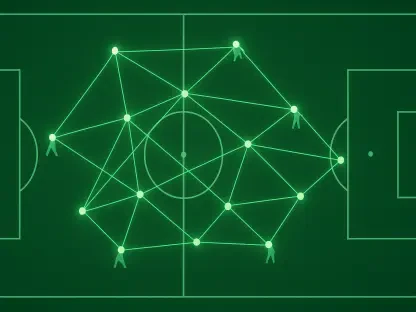
Building on these individual metrics, the system employs a unique Graph-Consistency Analysis that examines the complex interdependencies between various nodes in a cluster. This is particularly crucial for identifying cases where a single machine might appear healthy when analyzed in isolation but is behaving inconsistently compared to its peers in the same cluster or service group. By mapping these relationships into a graph structure, A3SM can detect outliers that disrupt the collective flow of data or execution of tasks. This holistic view prevents the system from missing “slow-poison” failures that only become apparent when comparing the relative performance of redundant components. When combined with the high-intensity noise separation provided by advanced mathematical modeling, this multi-layered approach provides a robust defense against the nuances of gray failures. This level of oversight ensures that no single point of degradation can go unnoticed for long within the infrastructure.
Precision Localization: Determining the Failure Blast Radius
Detecting a problem is only half the battle; the system must also determine the precise “blast radius” of the failure to prevent unnecessary interventions. A3SM uses a sophisticated three-tier attribution scheme to pinpoint exactly where the fault lies, which allows for granular control over the recovery process. This means the framework can distinguish between a minor task-level glitch, a full-scale node failure, or a correlated group-level issue affecting an entire rack. By accurately localizing the scope of the impact, A3SM prevents the overreactions that often plague simpler automation tools, ensuring that only the necessary components are moved or restarted. This precision is vital in the current landscape, where the density of microservices makes any large-scale migration a potentially high-risk operation. If the system incorrectly identifies the source of the lag, it might initiate a chain reaction of migrations that only serves to increase the load on healthy servers.
The most innovative aspect of the A3SM architecture is its use of a two-level hierarchical reinforcement learning model to manage the decision-making process. In complex cloud management, the questions of when to act and where to move are usually tangled and difficult to solve simultaneously. A3SM decouples these through a hierarchical policy that mimics the logical triage process used by experienced site reliability engineers. The upper-level policy focuses exclusively on the timing of the intervention by evaluating the risk score against the potential cost of disruption. It only triggers a migration if the statistical risk of maintaining the status quo outweighs the calculated cost of the move. This prevents the system from making impulsive decisions based on transient spikes in network traffic or temporary resource bottlenecks. By focusing on long-term stability, the upper-level agent provides a steady hand in the face of the often chaotic data patterns found in modern data centers.
Strategic Reliability: Closed-Loop Feedback and Performance Results
A3SM is fundamentally described as a “closed-loop” system because it incorporates a sophisticated online benefit-cost feedback mechanism into its daily operations. Every action the system takes is followed by a rigorous post-mortem assessment to determine if the migration resulted in faster recovery and better service or if it was a wasted effort. This continuous stream of data is fed back into the reinforcement learning models, allowing the framework to tune its own sensitivity and decision parameters over time. In effect, the system learns to calibrate its own level of caution based on the actual outcomes of its past interventions. If the framework finds that its actions are frequently leading to minimal improvements, it will automatically raise the threshold for future interventions. This self-correcting nature is essential for production environments where workload patterns and hardware behavior can change by the hour, rendering static rules obsolete.
The development and validation of A3SM provided a concrete roadmap for the implementation of self-healing cloud architectures. By utilizing massive real-world datasets from Alibaba and Google Borg, the researchers proved that autonomous management could effectively reduce recovery times to under 190 seconds while maintaining a high anomaly-detection F1-score. This transition toward closed-loop systems offered a practical path for reducing operational costs and improving the reliability of the global digital backbone. As these technologies moved into production, they transformed the nature of site reliability engineering from manual firefighting to the supervision of intelligent agents. The success of this framework suggested that the future of cloud architecture lay in systems that were not just powerful, but deeply self-aware and capable of independent pathology management. Industry leaders began adopting these methods to secure services against the elusive nature of gray failures.