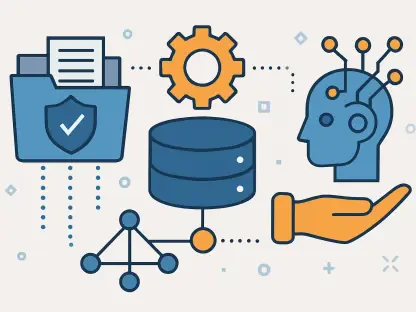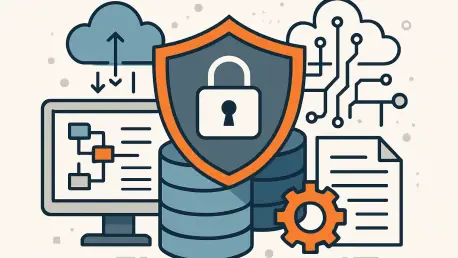

Modern enterprises have reached a pivotal juncture where the massive scale of autonomous analytical engines often outpaces the traditional security protocols designed to govern them, creating a significant risk of silent data leaks. The Teradata Enterprise Data Protection framework represents a significant advancement in the data management and analytics sector, shifting the paradigm from reactive patching to an architectural necessity. This review explores the evolution of the technology, its key features, performance metrics, and the impact it has had on various applications. The purpose is to provide a thorough understanding of the technology, its current capabilities, and its potential development within the modern hybrid-cloud landscape.
Teradata has moved beyond the antiquated notion that a strong perimeter is sufficient for protecting sensitive assets in an era of constant data motion. By integrating privacy, security, and resiliency into a single native experience, the framework addresses the complexities of AI-driven environments where data spans various cloud and on-premises platforms. This holistic approach ensures that security is inherent to the data layer itself, preventing the vulnerabilities that frequently occur when fragmented security solutions are layered onto complex analytical processing systems.
Evolution of Teradata’s Integrated Protection Framework
The transition toward a unified framework marks a departure from the siloed security measures that dominated the previous decade. Traditionally, organizations managed encryption, access control, and disaster recovery as separate administrative tasks, often handled by different teams using disparate tools. However, the rise of sophisticated AI models necessitated a more streamlined approach. Fragmented defenses often result in “security friction,” where the complexity of the protection measures actually hinders the speed of data analysis.
Teradata’s integrated model focuses on protecting data at its source rather than at the edge. This strategy recognizes that in a modern ecosystem, data is accessed by thousands of automated agents and human analysts simultaneously. By embedding protection protocols directly within the Vantage platform, the system ensures that security policies follow the data regardless of how it is queried or where it is moved. This move toward “data-centric” security reflects an industry-wide realization that the data itself must be the primary point of defense.
Core Technical Components: Privacy and Security Integration
Poly-Anonymization: Redefining Identity Privacy
A standout feature in Teradata’s arsenal is Poly-Anonymization, developed through a strategic partnership with Anonomatic. This technology allows organizations to replace personally identifiable information with stable identifiers, maintaining data utility for AI models while masking actual identities. Unlike traditional masking, which can destroy the statistical relationships needed for deep learning, Poly-Anonymization preserves the integrity of the dataset for researchers while keeping the raw identity data sequestered in a secure “PII Vault.”
This capability significantly reduces the identity footprint within the analytical ecosystem without compromising the structural integrity required for high-quality insights. Analysts can perform complex trend analysis and behavior modeling on anonymized data, and only if a specific business or legal requirement arises can the actual identities be relinked through a controlled, audited process. This functional separation of identity from utility is a major differentiator compared to competitors who often rely on simpler, less flexible masking techniques.
Post-Quantum Cryptography: Future-Proofing Transit
Teradata is proactive in addressing emerging threats by implementing post-quantum security measures, including TLS 1.3 hybrid-key exchange. This protocol safeguards data in transit against future quantum computing decryption capabilities, which are expected to challenge current RSA and ECC standards. By combining traditional cryptographic algorithms with post-quantum resistant ones, Teradata ensures that intercepted data remains unreadable even as computational power grows exponentially in the coming years.
Additionally, the system utilizes format-preserving encryption, which protects sensitive data values while maintaining their original character length and type. This ensures that legacy applications and downstream systems can continue to process protected data without requiring expensive and time-consuming code modifications. This focus on compatibility allows enterprises to enhance their security posture without breaking the operational workflows that have been established over many years of development.
Dynamic Attribute-Based Access Control: Granular Governance
In collaboration with Immuta, Teradata has integrated Dynamic Attribute-Based Access Control (ABAC) to refine governance. Unlike traditional role-based systems that often suffer from “role explosion,” ABAC leverages specific identity attributes, such as department, location, or clearance level, to enforce granular security policies across all AI workloads. This native capability, combined with dynamic data masking and automated data classification, ensures a zero-trust environment where access is verified at every step.
Security rules remain consistent regardless of how the data is accessed, eliminating the need for manual policy replication or data duplication across different environments. This automation is critical in 2026, where the volume of data requests makes manual oversight impossible. The system can automatically identify sensitive columns upon ingestion and apply the appropriate masking or encryption based on the requester’s real-time attributes, ensuring that governance is as dynamic as the data it protects.
Innovations: Shifting Toward Resiliency-by-Design
The landscape of data protection is currently shifting toward “resiliency-by-design” and proactive threat mitigation. Teradata’s recent innovations reflect an industry-wide trend toward integrating cybersecurity directly into the data warehouse architecture. There is a growing emphasis on protecting the data engines that power artificial intelligence, as these are increasingly targeted by sophisticated cyber threats that aim to corrupt training data or disrupt operational pipelines.
Furthermore, the introduction of immutable backups provides a critical layer of defense against ransomware. These backups cannot be altered or deleted by any user, including those with administrative privileges, for a predetermined period. This ensures that even if a catastrophic breach occurs, the organization has a pristine copy of its data from which to restore operations. The move toward hybrid-cloud deployments and the necessity for quantum-ready encryption are also major factors influencing the current trajectory of the platform’s development cycle.
Real-World Applications: Sector-Specific Impact
Teradata’s framework is being deployed across diverse industries, including finance, healthcare, and retail, where data sensitivity is paramount. In the financial sector, firms use Poly-Anonymization to perform fraud detection analysis while adhering to strict global privacy regulations like GDPR and CCPA. By analyzing transaction patterns without exposing individual account holder names, banks can train highly effective fraud models while maintaining the highest levels of customer confidentiality.
Healthcare providers leverage immutable backups to protect patient records against ransomware while maintaining the high availability required for life-critical diagnostics. In an environment where seconds matter, the ability to ensure that data is both secure and immediately available is indispensable. These implementations demonstrate how integrated protection allows organizations to scale their AI initiatives without risking regulatory non-compliance or catastrophic data loss, proving that security can be a business enabler rather than a bottleneck.
Operational Challenges: Navigating Implementation Friction
Despite its technical prowess, the technology faces hurdles related to the complexity of migration and the integration of legacy infrastructure. Organizations with deeply entrenched siloed security protocols may find the transition to a unified ABAC and resiliency model culturally and technically demanding. The requirement for a “PII Vault” adds another layer of architectural management that requires specialized skills to maintain and audit effectively.
Furthermore, keeping pace with the rapid evolution of quantum computing requires continuous updates to cryptographic standards, which can introduce latency if not managed correctly. Teradata continues to mitigate these limitations by offering flexible deployment options across AWS, Azure, and Google Cloud, aimed at reducing the friction of adoption. However, the initial investment in terms of both time and capital remains a significant consideration for mid-sized enterprises looking to modernize their data protection strategies.
Technological Trajectory: Moving Toward Self-Healing Architectures
Looking ahead, Teradata is expected to further automate the intersection of AI and data governance. Current development tracks from 2026 to 2028 suggest a focus on “self-healing” data architectures that can autonomously detect and isolate compromised nodes or unauthorized access patterns in real-time. As AI agents become more autonomous, the framework will evolve to provide even more sophisticated identity-aware protections that can anticipate threats before they manifest.
The long-term impact will be a paradigm where data protection is no longer a separate administrative task but a seamless, invisible component of the data lifecycle. We are seeing a trend toward decentralized identity verification where the data itself verifies the credentials of the querying agent without relying on a central authority. This would further reduce the latency associated with security checks while increasing the overall robustness of the system against centralized points of failure.
Summary: Actionable Insights for Data Centricity
The assessment of Teradata’s integrated approach to privacy, security, and resiliency confirmed that a unified architecture provided the most effective defense against the multifaceted threats of the AI era. By merging advanced features like Poly-Anonymization and post-quantum encryption into a single native experience, the framework successfully addressed the unique challenges of modern data management. Organizations that adopted these measures found that they could accelerate their analytical projects because the security barriers were built into the infrastructure rather than added as afterthoughts.
The review of real-world deployments indicated that the transition to attribute-based access control was the most critical step for firms managing diverse data consumers. It was observed that the reduction in identity exposure through secure vaults allowed for a broader democratization of data without increasing the risk of privacy breaches. Moving forward, the focus was placed on maintaining cryptographic agility and investing in self-healing capabilities to stay ahead of automated threats. The overall verdict established Teradata as a leader in secure, resilient analytics for high-stakes enterprise environments.