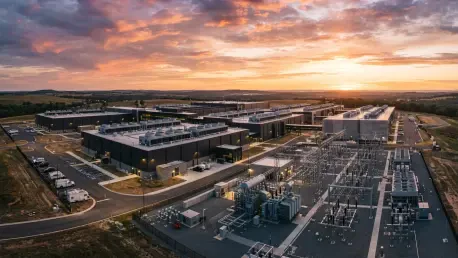

Heavy engineering and specialty trade contracting are emerging as high-growth areas within the construction industry, supporting the physical infrastructure required for modern data networks. The annual economic projection from the Indiana University Kelley School of Business, known as the Kelley Futurecast, provides a detailed look at the financial landscape for 2027. This report serves as a resource for the business community, combining data from multiple sectors to forecast a year of moderate and resilient growth. While the outlook is positive, it is framed by caution due to lingering risks that could impact the trajectory of the national and local economies. Experts evaluate market health through Gross Domestic Product, shifts in the labor market, and investment trends. By synthesizing these factors, the Futurecast paints a picture of an economy that is successfully navigating a transition toward a more digitized future while managing traditional industrial pressures.
National Growth Drivers: The Evolving Economic Framework
At the national level, the Kelley School predicts a 2.6% expansion in real GDP for 2027, supported by consistent consumer spending and a surge in business investment. Although certain sectors like residential and commercial construction have faced recent challenges, a revival in real estate is expected during the second half of the year as pent-up demand is finally unleashed. This momentum is largely built on a strong baseline from previous years, signaling a stable recovery path for the country. A major shift in the economic structure is becoming evident as growth becomes increasingly tied to intellectual property and physical infrastructure. Business investment is expanding at an impressive rate, driven by the development of software, advanced computer chips, and the facilities needed to house data centers and energy networks. This trend suggests that the U.S. economy is firmly moving toward a framework supported by artificial intelligence and high-tech innovation.
The nature of this growth is focused on the intersection of digital capabilities and physical power requirements. As industries move from traditional production to software-defined processes, the demand for specialized computer chip designs has surged. This transition has led to significant capital expenditures in energy infrastructure to support the massive electrical needs of new data processing centers. These centers are the backbone of the modern economy, facilitating cloud computing and real-time analytics. Consequently, the second half of 2027 is likely to see these investments bear fruit as companies realize productivity gains from technological upgrades. While the shift requires upfront capital, the long-term outlook remains optimistic because these advancements create an efficient and scalable economic foundation. This structural evolution represents a departure from previous cycles, where growth was often driven by low-cost labor rather than high-value technological assets.
Labor Market Dynamics: Technological Integration and Demand
The national labor market in 2027 is expected to be characterized by high demand and a limited supply of workers, with unemployment likely dipping below 4%. This tightening is caused by a combination of stagnant labor force growth and an intense search for high-tech talent. Because immigration policies remain restrictive, companies are forced to compete more aggressively for the skilled professionals needed to maintain their operations and drive growth. This shortage is particularly acute in technical fields where specialized knowledge is paramount for scaling new business models. Organizations are responding by offering competitive compensation packages and investing heavily in internal training programs to develop the talent they cannot find in the open market. This dynamic creates a seller’s market for labor, where workers with the right skills have leverage. However, for businesses, this environment presents a challenge in managing operational costs while trying to fill critical roles.
Artificial intelligence is a primary catalyst for these employment trends, moving beyond simple terminology to become a fundamental part of business strategy. Organizations are prioritizing the hiring of experts who can integrate AI into daily operations to gain a competitive edge. This specialized demand keeps the job market robust for tech-savvy individuals, even as the broader pool of available workers remains relatively flat across other sectors. The AI revolution is not merely a buzzword; it is a structural driver of employment trends that reshapes how companies evaluate productivity. Professionals capable of navigating large language models and automated systems are seeing their value rise rapidly, leading to a wage premium. Furthermore, the integration of AI is allowing some firms to mitigate the effects of the labor shortage by automating routine tasks, though the demand for human oversight remains higher than ever. This evolution ensures that the labor market stays dynamic and resilient.
Fiscal Realities: Inflationary Pressures and Market Risks
Despite the optimistic GDP projections, the Futurecast identifies several tail risks that could disrupt economic stability throughout the year. One major concern is the possibility of stretched stock valuations, particularly within the tech sector, which could lead to a market correction if AI-related growth fails to meet expectations. Additionally, geopolitical tensions in the Middle East and Eastern Europe are expected to keep energy prices volatile, potentially increasing costs for both businesses and consumers. This pain at the pump is a recurring theme that weighs on consumer confidence and can lead to a reduction in discretionary spending. The forecast rests on a delicate balance where the economy performs well as long as major external shocks are avoided. High energy costs act as a hidden tax on the economy, reducing the capital available for business expansion. Managing these risks requires a sophisticated approach to risk mitigation and a constant awareness of the global climate.
Monetary policy will remain a critical factor as the Federal Reserve continues its effort to manage inflation effectively. With price indices expected to stay between 2% and 3% during 2027, it is unlikely that interest rates will be lowered significantly. This higher for longer approach reflects the central bank’s commitment to its 2% target, while concerns over federal debt and the potential impact of trade tariffs add further layers of uncertainty. The persistent nature of inflation, influenced by both tariffs and energy prices, ensures that the era of low-interest rates remains a thing of the past. Business leaders must adapt to this environment by carefully managing debt and prioritizing investments that offer a rapid return on capital. While the Fed remains vigilant, the market must navigate the tension between resilient corporate earnings and the reality of sustained high borrowing costs. This environment favors well-capitalized firms that can self-fund growth and maintain strong balance sheets.
Regional Resilience: Indiana’s Manufacturing and Life Sciences
Indiana is projected to be a standout performer in 2027, with a growth rate of 2.8% that surpasses the national average. This outperformance marks a significant shift for the state, driven by its diverse industrial base and strategic investments in high-growth sectors. Manufacturing remains a cornerstone of the state’s economy, with both durable goods and the pharmaceutical industry contributing heavily to the positive outlook for the region. The state’s focus on life sciences and heavy engineering is paying off, particularly through initiatives like the BioHeartland project. While Indiana’s total labor force has seen some contraction, the workers who remain are benefiting from higher-than-average wage growth. Average hourly earnings in Indiana have grown by 3.9%, showing that the state is successfully shifting its employment mix toward higher-paying, high-skill industries. This transition is essential for closing the wage gap between local workers and the national average.
The 2027 economic analysis concluded that success was dependent on a proactive stance toward technological shifts and global volatility. Decision-makers were advised to prioritize the integration of artificial intelligence while maintaining a buffer against energy price shocks and sustained high interest rates. It was suggested that organizations should have diversified their supply chains to mitigate the impact of potential trade tariffs and geopolitical disruptions. For the labor market, the focus shifted toward upskilling the existing workforce to fill gaps left by restrictive immigration and high-tech demand. Investors were encouraged to remain cautious about equity valuations in the tech sector, balancing their portfolios with resilient manufacturing and life sciences assets. Ultimately, the findings indicated that the economy rewarded those who combined innovation with fiscal discipline, ensuring that growth remained sustainable despite the narrow and volatile path ahead for markets.