

The enterprise landscape is currently navigating a pivotal transition away from simple assistive AI that merely summarizes meetings toward sophisticated autonomous agents capable of independent execution. While previous iterations of artificial intelligence functioned as reactive "co-pilots," the

Navigating the complex intersection of cross-border data flows and increasingly stringent national privacy mandates has become the primary operational hurdle for multinational corporations seeking to leverage hybrid cloud architectures. As governments worldwide intensify their focus on digital

Chloe Maraina has spent her career at the intersection of big data and human intuition, transforming cold numbers into compelling visual stories that drive executive decisions. As a Business Intelligence expert with a deep background in data science, she has witnessed the evolution of enterprise

The traditional view of data as a passive digital exhaust is being systematically dismantled as enterprises recognize that raw information is the primary engine for economic survival and competitive differentiation in an automated world. Valued at roughly $66 billion in 2025, the global big data
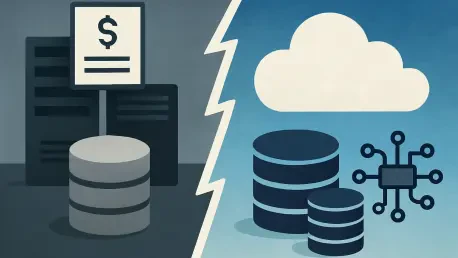
Maintaining expensive on-premises database licenses while attempting to modernize operations in the cloud has long felt like paying for two parallel lives that never actually meet. AWS recently introduced the Bring Your Own Media (BYOM) capability for SQL Server on Amazon RDS to dismantle the

The technical divide that once separated the structured world of cloud data warehousing from the flexible domain of big data engineering has effectively vanished, leaving enterprise leaders with a choice between two highly capable and increasingly similar ecosystems. In the current market,