
Chloe Maraina is a powerhouse in the world of Business Intelligence, blending a deep technical understanding of data science with a strategic vision for how enterprises manage their digital backbone. Her expertise lies in transforming raw data into visual narratives, and she has closely monitored how the physical footprint of IT infrastructure impacts the agility of global organizations. Today, she sheds light on the evolution of mainframe technology, specifically focusing on how the intersection of high-performance computing and data center constraints is driving a new era of compact, high-efficiency hardware that prioritizes both security and flexibility.
How does the introduction of industry-standard rack mount options alongside single frame units change the game for data center architects who have traditionally viewed mainframes as separate, isolated silos?
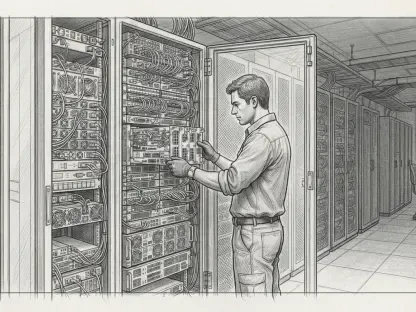
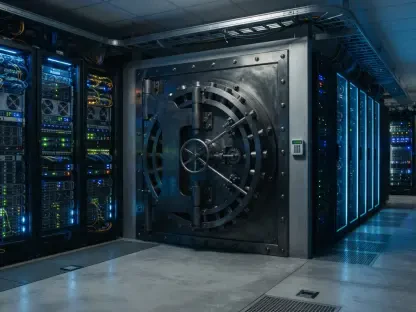
This shift is a monumental turning point for data centers that are currently gasping for floor space and struggling with rigid layouts. Traditionally, you had the “big iron” sitting in its own dedicated footprint, often requiring specialized power and cooling arrangements that made it feel like an island in the middle of the server room. By allowing the IBM z17 and LinuxONE 5 to slide into industry-standard racks, organizations can finally co-locate their most critical IBM hardware directly alongside non-IBM equipment, creating a much more cohesive and fit-for-purpose installation. It removes that physical and psychological barrier between the mainframe and the rest of the stack, allowing for a compact 18U configuration that fits into the existing environment like a glove. This isn’t just about saving square footage; it’s about the operational efficiency and flexibility for a CTO who no longer has to choose between top-tier performance and the physical limitations of a crowded data center.
When we look under the hood of these new systems, what specific hardware improvements stand out to you as the most significant drivers for modern, high-intensity workloads?
The numbers are frankly staggering when you consider the density we are talking about in these two-drawer configurations. We are looking at a system that supports up to 82 cores and 18 TB of memory, which is a massive leap forward for any organization struggling with data-heavy processing and mission-critical workloads. Specifically, we’re seeing a 20% increase in core count and a 12% boost in memory capacity compared to the previous generation of systems. For those running the z17 ME2, the throughput per core is about 10% greater than what we saw with the z16 A02, meaning your applications are humming along much faster without drawing excessive power. It feels like the traditional processing bottleneck is finally being smashed, providing a sleek, high-octane engine that can handle the relentless rise of digital transactions without requiring a massive expansion of the infrastructure footprint.
With the rise of AI becoming a non-negotiable for modern enterprises, how do these compact configurations handle the massive computational demands of real-time inferencing?
AI integration is where these systems truly shine, moving beyond the idea of AI as a separate, external process and treating it as a core component of the transaction itself. The inclusion of the Telum II processor and the IBM Spyre Accelerator allows for advanced multi-model AI inferencing right where the data lives, which is a game-changer for speed and security. We are talking about in-transaction predictive AI and generative AI that doesn’t suffer from the latency of sending data back and forth to an external cloud or a separate server. This is particularly evident in the LinuxONE Rockhopper 5, which offers on-chip AI acceleration alongside confidential computing to keep that sensitive data protected while it’s being analyzed. It’s a seamless experience for developers who see their models running at lightning speed, protected by post-quantum cryptography that ensures today’s data remains safe even against future decryption threats.
Infrastructure management has often been a hurdle for companies lacking specialized mainframe skills, so how do the new management capabilities bridge that talent gap?
This is perhaps the most practical evolution in the entire announcement because it addresses the very real “skills gap” that keeps many IT managers up at night. By integrating IBM Infrastructure Management for Z and LinuxONE with widely adopted tools like Terraform, the platform is finally speaking the language of the modern DevOps engineer. We are moving toward a world of Infrastructure-as-Code, which automates provisioning and configuration through a unified user interface that features a simple visual I/O topology. Instead of needing a small army of niche specialists to orchestrate every physical move, a generalist can now manage these systems with the same automated tools they use for the rest of their cloud-native environment. When this becomes generally available on August 14, 2026, it will effectively democratize the power of the mainframe, making enterprise-grade resiliency accessible to a much wider range of organizations.
What is your forecast for the future of compact, high-density enterprise computing in the next five years?
I predict we are going to see the total disappearance of the distinction between “commodity” hardware and “high-end” mainframes in terms of how they are physically managed within the data center. As organizations continue to scale at an incredible pace, the demand for high-density, energy-efficient units like the LinuxONE 5 Express will become the industry standard, allowing even smaller businesses to leverage enterprise-grade Linux and confidential computing. We will see AI acceleration moving even deeper into the silicon, making real-time fraud detection and predictive analytics a standard, invisible feature of every digital transaction globally. By the time we hit the late 2020s, the “compact” footprint we are seeing today will be the baseline for any business that wants to remain resilient and secure in a post-quantum world. The launch of these systems on August 12, 2026, is just the first step toward a future where massive computational power no longer requires a massive physical presence.