
Chloe Maraina is a powerhouse in the world of Business Intelligence, specializing in the intersection of data science and human resources. She has dedicated her career to turning raw data into compelling visual narratives that help organizations understand the heartbeat of their workforce. Her vision for the future of data management is not merely about the code or the cloud; it is about the seamless, empathetic integration of technology into the daily lives of employees. By focusing on the human side of HR tech implementation, she ensures that transitions are not just functional but truly transformative for the business. This discussion explores the essential pillars of change management, ranging from the nuances of senior leadership buy-in to the granular details of training schedules and communication loops that keep a project from stalling after launch.
Implementation challenges often persist long after a system goes live, frequently catching project leaders off guard. When building a change management plan, how do you ensure the strategy remains resilient enough to handle the post-launch period?
A resilient change management plan must be viewed as a living document that extends far beyond the initial launch date. It is not enough to simply discuss change in a boardroom; you must allocate specific time and resources to building a detailed roadmap that outlines every action and identifies exactly who is responsible for each step. This plan should be reviewed with a high level of frequency to confirm that every milestone is on track, allowing for quick adjustments if the scope of the project shifts or if timelines begin to slip. By documenting these responsibilities early, you prevent the common “post-launch lag” where issues arise and no one is quite sure who is tasked with fixing them. The goal is to create a structure that feels sturdy yet flexible, providing a safety net for the organization as it transitions from the old way of doing things to the new digital reality.
Securing senior management buy-in is often cited as a top priority for any tech rollout. Beyond just signing a check, what does active, visible leadership support look like in the context of HR software adoption?
Senior management support must be visible and tangible to truly resonate with the workforce; a hands-off approach simply will not suffice. When employees see a high-level executive actively using the new software—perhaps by logging into a new timesheet application to approve employee hours—it sends a powerful, non-verbal message that the system is a permanent and mandatory part of the company culture. This visible endorsement bridges the gap between a corporate mandate and daily habit, as leaders lead by example rather than just by instruction. It creates a sense of shared accountability where the software is seen as a tool for everyone, from the entry-level associate to the CEO. Without this active participation, the new system risks being viewed as an optional IT project rather than a fundamental business evolution.
Communication is the lifeblood of any transition, yet it often falls short after the initial announcement. How should a communication plan be structured to keep employees engaged and informed throughout both the pre- and post-go-live phases?
A successful communication strategy must be a continuous loop rather than a one-way broadcast, starting well before the launch and intensifying as the go-live date approaches. In the early stages, the communication team should focus on selling the benefits and highlighting the user experience to build genuine excitement among the staff. Once the system is live, the focus must shift to maintaining an open channel where employees can log defects or submit change requests without feeling like their feedback is disappearing into a void. It is critical to regularly update those who have reported issues; when an employee sees that their defect report led to a tangible fix, they feel a sense of ownership and are far more likely to continue using the software. This transparency builds trust and ensures that the communication is not just about the “what,” but also the “how” and the “why” of the ongoing improvements.
Training is often where implementation success is won or lost. Given that every employee learns differently, what are the most critical factors to consider when designing a comprehensive training schedule?
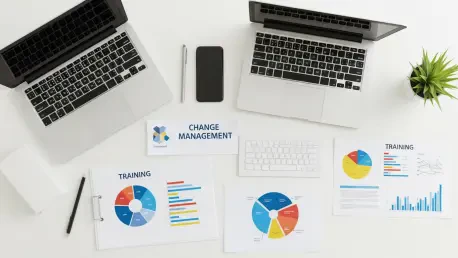
When we design training, we look at five key considerations to ensure that no one is left behind during the transition. First, we recommend that intensive training begins precisely a couple of weeks before the go-live date, which provides enough time for the material to sink in without giving employees enough time to forget it before they actually use the system. We provide a diverse range of learning options, such as tactile cheat sheets, instructor-led training sessions, e-learning modules, and the vendor’s own help systems, to accommodate various learning preferences. Managers require their own specialized sessions to master high-level functions like requesting a raise or processing an employee transfer, while HR and IT teams need deep-dive technical training that starts early and continues long after the launch. For specialized roles, such as a reporting specialist who needs to use business intelligence applications for custom data views, we add extra, targeted training to ensure they can fully leverage the software’s power.
Champions can be a secret weapon for driving adoption across different departments. How do you identify these individuals and provide them with the resources they need to build excitement?
Champions are those unique employees who don’t just tolerate the new HR software but actively advocate for it and help build a sense of anticipation within their teams. To empower them, we provide regular updates and deep insights into how the software functions, giving them the “inside track” that they can then share with their colleagues. We also arm them with professional collateral, such as short presentations or eye-catching posters for office common spaces, which helps maintain a visual presence for the project. These champions act as a bridge, translating technical changes into relatable benefits for their peers and serving as a first line of support for those who might be struggling. When champions are well-informed and enthusiastic, they create a grassroots movement that makes the software feel like a welcomed upgrade rather than a forced change.
Discrepancies between software settings and actual company policies can cause significant frustration. Why is it so vital to align these elements before employees ever log into the new system?
One of the quickest ways to lose employee trust is to present them with software that contradicts the company’s published guidelines. For instance, if a junior employee discovers that the new system lists only 10 vacation days when the official policy promised 14, it creates immediate confusion and resentment. These policy changes must be clearly communicated and resolved before the software is accessed to prevent employees from assuming the data is simply incorrect or that they are being treated unfairly. Ensuring that the digital rules match the human rules is a matter of data integrity and organizational transparency. When the software reflects the reality of the company’s policies, it reinforces the system’s role as a reliable source of truth rather than a source of bureaucratic friction.
What is your forecast for HR technology change management?
I believe we are moving toward a future where change management is no longer a separate project phase but a continuous, data-driven feature of the software itself. As Business Intelligence tools become more integrated, we will be able to track adoption rates in real-time, identifying exactly which departments are struggling with a new feature and deploying automated, personalized training “nudges” to those users. The traditional “go-live” will evolve into a cycle of constant micro-improvements, where the feedback loop between the employee and the developer is nearly instantaneous. Ultimately, the success of HR tech will be measured not by the complexity of the code, but by the emotional comfort and digital fluency of the people using it every day.