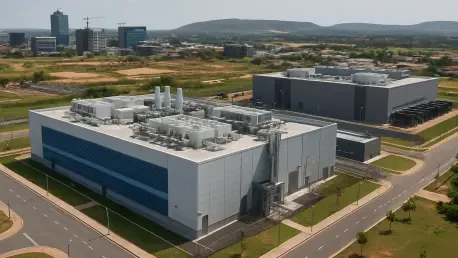

The swift evolution of South Africa’s technological ecosystem has reached a pivotal juncture with the injection of a $329 million investment aimed at redefining the nation’s status as a digital gateway. This initiative represents a fundamental shift in how cloud services and artificial intelligence are integrated into the regional economy, moving beyond simple data storage to a comprehensive architectural overhaul. Microsoft is spearheading this transformation by scaling its hyperscale data center network to accommodate the increasingly complex requirements of enterprise cloud services and digital public initiatives. The project is strategically designed to ensure that South Africa remains the premier hub for technological innovation across the continent, facilitating a seamless transition into a data-driven future. By focusing on both physical capacity and technical resilience, the initiative addresses the surging demand for high-performance computing that characterizes the current landscape while laying a foundation for sustainable growth.
Strengthening the Foundation of Digital Infrastructure
At the heart of this massive expansion lies a sophisticated engineering effort centered on the construction of high-density server halls and modular cloud facilities. These spaces are specifically engineered to house the specialized hardware necessary to run Microsoft Azure’s most demanding artificial intelligence workloads and cloud-native applications. Unlike traditional data centers, these modular units allow for rapid scalability, ensuring that the infrastructure can grow in direct response to the real-time needs of the market. The design philosophy emphasizes maximum hardware density, which is essential for processing the massive datasets required by modern machine learning models and real-time analytics platforms. This focused approach to physical architecture ensures that the hardware can operate at peak performance without compromising reliability or system integrity. Furthermore, the integration of these high-capacity halls positions the region to host global-scale digital projects locally.
To support such intensive computing power, the project incorporates substantial upgrades to the regional electrical grid and the implementation of pioneering cooling technologies. High-performance servers generate significant thermal output, necessitating the use of liquid cooling systems and advanced air-management strategies that drastically improve energy efficiency compared to legacy methods. These systems are not only critical for operational stability but also align with broader environmental sustainability goals by reducing the overall carbon footprint of the data centers. Beyond the physical power requirements, the initiative focuses on enhancing network interconnectivity through the installation of high-capacity fiber optics. By optimizing the internal network architecture and strengthening global links, the project effectively reduces latency to unprecedented levels. This ensures that international enterprises and local startups alike enjoy fast, reliable access to cloud resources, creating a truly interconnected ecosystem.
Investing in Human Potential and AI Readiness
While the physical structures form the skeleton of this digital revolution, the true value of the investment lies in the cultivation of human capital and professional expertise. Microsoft has recognized that advanced infrastructure remains underutilized without a workforce capable of managing and innovating upon these sophisticated tools. Consequently, a massive portion of the strategic plan is dedicated to a multi-year digital skills development program targeting thousands of South African learners. This initiative involves deep collaboration with local universities and technical colleges to integrate cloud computing and AI-focused curricula into academic programs. By bridging the gap between theoretical knowledge and practical application, the program prepares a new generation of ICT specialists, data scientists, and cloud architects. This focus on education ensures that the local population can participate directly in the high-growth sectors of the economy, fostering long-term social and economic mobility.
Establishing formal certification pathways that adhere to global standards is a critical component of the human capital strategy within this expansion. By offering recognized credentials in specialized fields like cybersecurity, neural network optimization, and cloud management, the initiative ensures that South African professionals are competitive on the global stage. These training modules are designed to evolve alongside the technology, providing continuous learning opportunities that keep the workforce at the cutting edge of industry developments. This commitment to human potential transforms the investment from a one-time infrastructure project into a self-sustaining cycle of innovation. As local talent gains the proficiency to develop indigenous solutions on the newly established cloud framework, the region moves from being a consumer of technology to a creator of it. This shift is essential for building a resilient digital economy that can withstand global shifts and capitalize on the unique opportunities presented by regional markets.
Catalyzing Economic Opportunity and Collaboration
The economic implications of this $329 million injection extend well beyond the immediate tech sector, serving as a powerful signal to the global investment community. By demonstrating a long-term commitment to the region, Microsoft is reinforcing South Africa’s reputation as a stable and attractive destination for international capital and high-tech ventures. Local startups are among the primary beneficiaries, as they gain access to the same hyperscale cloud resources as global giants, allowing them to scale their operations with minimal upfront costs. Government institutions are also leveraging this improved infrastructure to modernize public services, ranging from digital identity systems to more efficient healthcare delivery. The resulting increase in digital literacy and accessibility creates a ripple effect throughout the economy, driving productivity gains in traditional sectors like agriculture, mining, and manufacturing. This broad-based economic revitalization is a direct result of placing advanced digital tools in the hands of the public.
The expansion of the South African cloud network succeeded in establishing a sophisticated framework for future industrial growth and digital sovereignty. This project demonstrated that the successful integration of hyperscale infrastructure required a balanced focus on engineering excellence and human capability. To maintain this momentum, stakeholders prioritized the expansion of broadband access to rural areas to ensure that the benefits of high-speed cloud computing reached every corner of the nation. Policymakers and industry leaders recognized the importance of creating flexible regulatory environments that encouraged further investment while protecting data privacy. Future considerations involved the integration of renewable energy sources directly into the data center supply chain to further minimize environmental impacts. By continuing to invest in localized AI research and development, South Africa positioned itself to lead the continent’s digital narrative for years to come. These proactive steps ensured that the initial capital injection served as a catalyst for a broader, more inclusive technological revolution.