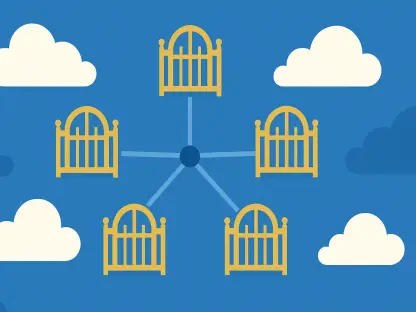

The global technology landscape has reached a definitive turning point where the long-held “cloud-first” mandate is rapidly evolving into what many industry veterans now describe as the “post-cloud” era. For the better part of a decade, the primary objective for enterprise information technology departments was the aggressive centralization of all workloads within massive, borderless hyperscale platforms to capitalize on economies of scale and rapid innovation cycles. However, the convergence of skyrocketing operational expenses, the massive data requirements of generative artificial intelligence, and a volatile geopolitical climate has triggered a fundamental strategic pivot across both the private and public sectors. Organizations are increasingly dismantling monolithic infrastructure models in favor of distributed, policy-aware, and regionally segmented architectures that prioritize control over convenience. This transformation represents a departure from the vision of the cloud as a single, ubiquitous layer of global compute, moving instead toward a reality where every byte of data and every virtual machine is scrutinized through the lens of national security and jurisdictional integrity. Executive leadership teams no longer view digital sovereignty as a secondary compliance task but as a cornerstone of corporate risk management and operational survival in an era where data borders are becoming as real and rigid as physical ones.
The Strategic Shift Toward Distributed Infrastructure
Moving Beyond the Hyperscale Monolith
The previous decade was defined by a race to abstract away the physical location of servers, creating a seamless global experience that allowed developers to deploy code without ever considering the underlying geography. This borderless ideal is currently being replaced by a “re-introduction” of geography into the core of IT planning, as organizations realize that where data lives is just as important as how it is processed. This transition is not merely about physical server locations but involves a profound shift from a “default to cloud” mindset to a more calculated “fit-for-purpose” placement of specific workloads. Decisions that were once based solely on performance and cost are now made using a multi-dimensional matrix that factors in political stability, foreign access laws, and the long-term reliability of international partnerships. Consequently, there is a visible trend toward diversifying infrastructure providers to avoid over-reliance on a single global entity, ensuring that a disruption in one geopolitical region does not result in a total operational blackout. This movement is particularly evident in large-scale enterprises that are now building localized cloud ecosystems, which allow them to maintain high-speed innovation while keeping sensitive data within specific legal boundaries that protect them from external regulatory overreach.
Assessing Jurisdictional Risks: The Re-introduction of Geography
In the current climate, assessing jurisdictional risk has become a permanent feature of the architectural design process for modern infrastructure. Organizations are moving away from the assumption that a global service provider can offer uniform protection across all territories, especially as residency laws in regions like the European Union and the United Kingdom become increasingly stringent. This change is forcing a migration of sensitive government and regulated industry data away from standard public cloud environments into more specialized, sovereign-ready frameworks. By adopting a strategy that segments workloads based on their legal and ethical implications, companies can mitigate the risk of being caught in the crossfire of international trade disputes or sudden changes in data privacy treaties. This localized approach also allows for better alignment with regional industry standards, which often demand higher levels of transparency and auditability than what is typically provided by a global, one-size-fits-all service. The goal is no longer just to achieve maximum uptime, but to achieve “jurisdictional uptime,” ensuring that services remain legally compliant and accessible even when international data transfer agreements are in flux or under legal challenge.
Defining Control in the Digital Age
Jurisdictional Autonomy: Moving Beyond Physical Location
A critical distinction is being drawn between simple regional cloud offerings and true sovereign clouds, as organizations realize that physical proximity does not always equal legal protection. While many providers offer data centers within specific borders to reduce latency, those facilities remain subject to the legal reach of the provider’s home country, such as the United States Cloud Act. This “extraterritoriality” creates a significant hurdle for organizations in sectors like defense, healthcare, and finance, where data must be entirely immune to foreign subpoenas or investigative requests. True digital sovereignty, therefore, requires not only that the data be stored locally but that the entire operational stack—from the hardware to the administrative staff—is managed by a domestic entity with no legal obligations to foreign powers. This realization is driving the adoption of “sovereign-by-design” architectures, where the control plane is physically and legally isolated from global management consoles. By decoupling sensitive operations from the standard global infrastructure, organizations can guarantee that their most critical assets remain under their exclusive jurisdiction, regardless of shifting international alliances or the evolving legal landscape of the major technology hubs.
The Security Paradox: Global Scale vs. Local Transparency
The pursuit of digital sovereignty introduces a unique security paradox that forces IT leaders to weigh the benefits of global engineering against the necessity of local oversight. On one hand, global hyperscalers invest billions of dollars annually into cybersecurity, providing a level of threat intelligence and automated defense that is virtually impossible for smaller, localized providers to replicate. On the other hand, these massive platforms often operate as “black boxes,” offering limited visibility into their internal governance and the personnel who have administrative access to the underlying hardware. To resolve this tension, a blended security model is emerging where hyperscale environments are utilized for general-purpose computing and non-sensitive customer-facing services, while sovereign or private clouds are reserved for high-stakes workloads that demand complete operational transparency. This hybrid approach allows enterprises to leverage the world-class security tools of the giants while maintaining a “sovereign vault” for data that requires audited, local-only access. The result is a more resilient posture that combines the best of global innovation with the rigorous control required by modern regulatory mandates, ensuring that security is not sacrificed in the name of sovereignty or vice-versa.
Navigating Modern Technical Catalysts
AI Adoption: The Challenge of Data Residency and Latency
The rapid proliferation of artificial intelligence and machine learning technologies has significantly accelerated the demand for sovereign cloud solutions, as these workloads generate and process unprecedented volumes of sensitive data. Training modern AI models requires vast datasets that often contain proprietary intellectual property or highly personal information, making the physical and legal location of this data a top-tier concern. Furthermore, the need for low-latency inference means that processing must happen close to the data source, yet the specialized hardware required for these tasks is often concentrated in a few global hubs. This creates a friction point where organizations must find ways to deploy high-performance compute clusters within sovereign boundaries without creating isolated data silos that hinder collaboration. To address this, enterprises are investing in “distributed AI” strategies, where sensitive data is pre-processed or anonymized in a local sovereign environment before being utilized by more powerful, global AI models. This “split-brain” architecture ensures that the core intelligence remains localized and protected, while still benefiting from the computational heavy-lifting provided by global platforms, effectively bridging the gap between national data protection and the global AI arms race.
Operational Management: Bridging the Gap in Distributed Environments
As infrastructure becomes increasingly fragmented across different jurisdictions and provider types, the operational burden on IT departments has reached a new level of complexity. Managing a distributed stack that includes global hyperscale services, regional sovereign clouds, and edge computing nodes requires a sophisticated orchestration layer that can enforce consistent policies across diverse environments. IT leaders are now tasked with ensuring data portability and interoperability so that workloads can be moved between different providers without significant downtime or expensive reconfiguration. This has led to the rise of “policy-as-code” frameworks, where governance, security, and compliance requirements are embedded directly into the deployment pipelines, ensuring that every resource remains within its legal and technical boundaries from the moment it is created. The challenge is no longer just about technical integration, but about maintaining a single source of truth for governance in a world where the rules of the game change every time a packet of data crosses a national border. Organizations that successfully navigate this complexity are those that view sovereignty not as a series of isolated silos, but as a managed ecosystem of interconnected, policy-aware platforms that can adapt to changing regulatory demands in real-time.
The Future of Enterprise Resilience
Jurisdictional Resilience: A New Tier of Disaster Recovery
In this new environment, the traditional definition of resilience is expanding to include “jurisdictional resilience,” which measures an organization’s ability to maintain operations despite legal or political upheavals. Standard disaster recovery plans used to focus on hardware failures, power outages, or natural disasters, but modern strategies must now account for the risk of sudden changes in international law or the severing of digital ties between nations. Building jurisdictional resilience involves creating redundant systems in politically neutral or strategically aligned territories, ensuring that a legal dispute in one region does not paralyze the entire global business. This approach treats the legal and political environment of a data center as a critical component of the infrastructure’s “health,” just as important as the redundancy of its fiber optics or the cooling capacity of the facility. By diversifying the legal foundations of their digital presence, enterprises are effectively “hedging” their technology bets, creating a robust framework that can withstand both technical failures and the unpredictable shifts of global geopolitics. This foresight allows organizations to operate with confidence, knowing that their digital assets are protected by a multi-layered shield of technical redundancy and legal independence that spans multiple sovereign jurisdictions.
A Maturing Ecosystem: The Shift Toward Policy-Aware Infrastructure
The rise of digital sovereignty did not lead to a decline in the influence of global hyperscalers, but instead fostered a more mature and sophisticated cloud ecosystem. These global giants adapted by forming deep partnerships with local telecommunications firms and government-backed entities to offer localized governance controls that meet the specific needs of individual nations. This collaborative model ensured that the most advanced technologies remained accessible to regulated industries while respecting the boundaries of national law. The successful organizations of the future were those that moved beyond viewing sovereignty as a burdensome compliance checkbox and instead integrated it as a foundational element of their architectural design. By adopting policy-aware infrastructure, businesses gained the flexibility to pivot their strategies quickly in response to an increasingly fragmented world, turning a complex regulatory challenge into a competitive advantage. The transition was defined by a shift from centralized simplicity to a distributed, intentional model where every infrastructure decision was weighed against its geopolitical impact. This proactive approach allowed leaders to build a digital footprint that was not only high-performing and cost-effective but also fundamentally secure and legally autonomous, securing their place in the new global digital economy.