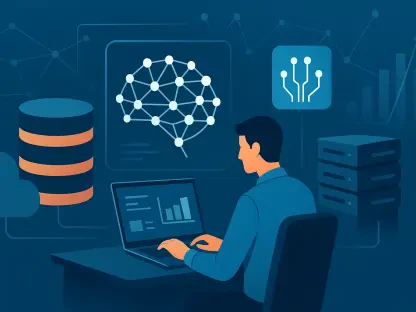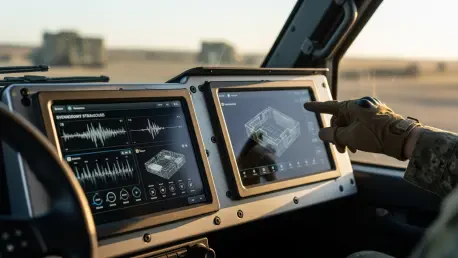

The United States Army stands at a precarious technological crossroads where the immediate demand for artificial intelligence outpaces the structural integrity of the antiquated data frameworks currently in operation. While the Department of Defense pushes for rapid deployment of predictive analytics and autonomous systems, the reality on the ground involves thousands of disconnected databases that do not communicate with one another effectively. These legacy silos represent more than just a bureaucratic hurdle; they are a fundamental barrier to achieving the vision where sensor-to-shooter timelines are reduced to seconds. As commanders look toward 2026 and beyond, the urgency to harmonize this fragmented landscape has become a national security priority. Without a unified data layer, the most advanced machine learning algorithms remain useless, trapped behind proprietary firewalls and incompatible software architectures that were designed decades ago. This digital friction creates a fog of war that hinders decision-making.
The Modernization Barrier: Overcoming Fragmented Information Systems
Current efforts to modernize the force face a daunting obstacle in the form of technical debt accumulated through years of decentralized procurement and system development. Each branch and functional command has historically purchased specialized software tailored to narrow requirements, resulting in a patchwork of systems like the Global Combat Support System-Army and various intelligence platforms that struggle to share telemetry in real-time. This fragmentation means that critical data regarding logistics, personnel readiness, and battlefield intelligence often resides in stoved-pipe environments where human intervention is required to transfer information from one screen to another. In high-intensity conflict scenarios, the manual entry of data is a liability that costs lives. The challenge lies in creating a middleware solution that can bridge these gaps without requiring an overhaul of every legacy program, which would be financially and logistically impossible under current budgetary constraints.
Artificial intelligence thrives on high-quality, labeled, and accessible data, yet the Army’s current repositories are frequently unorganized or stored in formats that modern neural networks cannot ingest. When data is trapped in silos, it prevents the creation of a comprehensive common operating picture, which is the foundational requirement for any AI-driven command and control system. For instance, if maintenance records are stored separately from operational mission data, predictive maintenance algorithms cannot accurately forecast when a tank engine might fail during a specific combat maneuver. This lack of interoperability leads to garbage-in, garbage-out scenarios where AI outputs become unreliable or dangerously inaccurate. To solve this, the military must move away from the traditional model of data ownership toward a model of data stewardship, where accessibility is the default. Transitioning to this mindset requires a cultural shift as much as a technological one to ensure success.
The path forward required a radical prioritization of data tagging standards and the enforcement of open-source protocols across all new procurement contracts to ensure future compatibility. Leaders shifted focus from buying closed proprietary systems to investing in modular platforms that supported rapid integration with emerging large language models and computer vision tools. It was determined that the most effective way to eliminate silos was to establish a universal data API that functioned as a standard interface for all legacy hardware. Technical teams worked to automate the cleaning and labeling of historical datasets, transforming decades of dormant information into valuable training material for tactical edge computing. These actions demonstrated that fixing the silo problem was not merely a maintenance task but a strategic necessity for maintaining overmatch in a digital-first environment. By 2026, the emphasis transitioned toward continuous data auditing to maintain the integrity of the frontline AI.