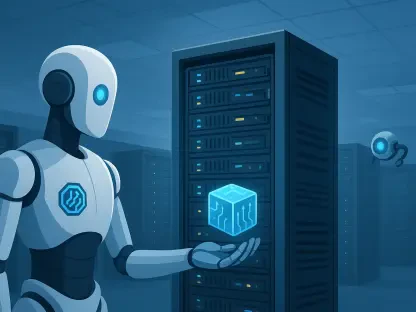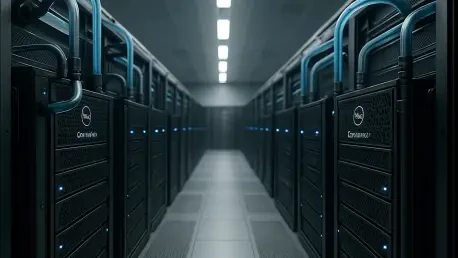

The grueling manual process of assembling a modern data center used to resemble a multi-month construction project, yet the latest advancements in modular engineering have compressed this timeline into a single afternoon. For years, the bottleneck of artificial intelligence was not just the code or the data, but the sheer physical difficulty of plugging thousands of components together and hoping they would communicate. Today, the “Dell AI Factory” has transitioned from a theoretical architecture into a physical reality, promising that a massive, high-performance infrastructure can move from a shipping crate to full operational status in roughly six hours. This shift marks the end of piecemeal assembly, replacing it with a pre-integrated philosophy that treats the entire rack as a single, programmable machine rather than a collection of separate servers.
Why Wait Weeks for AI Performance: The Six-Hour Ultimatum
The era of fragmented infrastructure is fading as enterprises face an urgent ultimatum: modernize at scale or fall behind a new wave of competitors. Dell Technologies is challenging the status quo by evolving its AI Factory from a conceptual framework into a turnkey reality that solves the most persistent headache in generative AI—deployment complexity. By pre-validating every connection and component, organizations no longer have to spend weeks troubleshooting cabling or firmware mismatches. This rapid deployment capability is essential for businesses that are under pressure to show immediate returns on their massive investments in silicon and specialized software.
Speed is becoming the primary currency of the AI race, and the ability to stand up a cluster in hours rather than months allows for a faster iteration of models. This transformation isn’t just about saving time for IT staff; it is about reducing the time-to-value for the entire business. When a company can deploy a full-scale AI environment in less than a day, it can begin fine-tuning proprietary models and running inference tasks before the competition even finishes unboxing their hardware. This streamlined approach allows the “AI Factory” to function as a seamless extension of the enterprise, rather than a separate, isolated lab project.
Bridging the Gap: Specialized AI Silos and Global Data Gravity
As organizations move past the experimental pilot phase, they inevitably encounter the “data gravity” problem, where moving massive datasets to the cloud becomes prohibitively expensive and risky. The expansion of the Dell AI Factory with Nvidia integration marks a strategic shift toward bringing high-performance computing directly to where the data lives. This move directly supports the rise of Sovereign AI, where nations and corporations prioritize data independence to ensure that their intellectual property remains within their own borders. By building these “factories” on-premises, companies maintain total control over their information while bypassing the high egress fees and latency issues associated with public cloud providers.
This strategic direction also addresses the persistent global GPU supply crunch through deepened hardware partnerships. By securing a steady flow of high-end accelerators and flash memory, Dell provides a reliable path for enterprises that have previously been locked out of the market by long lead times. The focus has shifted from simply selling individual servers to architecting end-to-end solutions that encompass everything from the chip level to the software layer. This transition ensures that the infrastructure is not just a siloed island of performance but a integrated part of a global data strategy that respects local regulations and corporate security protocols.
Engineering the Modern PowerRack: Compute, Cooling, and Connectivity
The technical refresh centers on the PowerRack, a cohesive unit designed to eliminate the friction between disparate hardware components by balancing power, thermal management, and data throughput before it reaches the customer. At the core of this engineering feat is the massive throughput capability of the Nvidia Spectrum-6 ASIC, which allows for 800 Tbps of switching capacity. Such speeds are necessary to prevent the networking bottlenecks that often occur when training large language models, ensuring that the processors are never waiting for data to arrive. This level of connectivity transforms the rack into a unified fabric of compute power that can handle the most demanding generative AI workloads.
Thermal management has also seen a breakthrough with the introduction of the PowerCool C7000 in-rack liquid cooling system. As modern chips consume more power, traditional air cooling is no longer sufficient to prevent thermal throttling. This liquid-cooled approach provides over 220 kilowatts of cooling capacity in a compact form factor, saving valuable floor space while allowing the hardware to run at peak efficiency. Furthermore, the evolution of PowerFlex storage allows for the swapping of “storage personalities,” enabling the same hardware to handle both specialized AI tasks and traditional enterprise workloads. An Integrated Rack Controller serves as the brain of the unit, providing automated safety features and leak detection to protect the expensive hardware within.
The Software Ecosystem: Public Cloud Experience Behind the Firewall
Hardware alone cannot sustain the AI revolution; it requires a software layer that simplifies the orchestration of complex models with the fluidity of a cloud environment. Dell is leveraging its ecosystem to integrate frontier models like Google Gemini and Grok, as well as the Nvidia NemoClaw sandbox, directly into its private infrastructure. This setup allows developers to experiment with the latest AI agents and models without the risk of sensitive proprietary data being exposed to the public internet. By creating a controlled environment, the enterprise can foster innovation while maintaining the rigorous security standards required for corporate or national data sovereignty.
The introduction of “Agentic” automation, through partnerships with ServiceNow and Palantir, further simplifies the day-to-day management of these complex systems. Instead of requiring a small army of data scientists and IT specialists to keep the factory running, these tools use AI to manage AI, automating workload placement and resource optimization. This shift toward automated orchestration means that a heterogeneous environment—one that might include various generations of GPUs and CPUs—can be managed through a single unified interface. It bridges the gap between the raw power of the hardware and the practical needs of the business users who rely on it.
Frameworks for Implementation: Deploying the AI Factory at Scale
For enterprises ready to transition to this new architecture, the focus must shift toward a structured roadmap that minimizes downtime and maximizes resource utilization. Utilizing pre-validated designs is the most effective way to bypass traditional infrastructure hurdles, as these configurations are already tested for compatibility and performance. Implementing “Agentic AIOps” allows the system to automatically determine whether a specific workload should be processed at the edge or within the core data center, optimizing for both latency and cost. This automated strategy replaces manual spreadsheets with dynamic, real-time resource management.
Scaling liquid cooling infrastructure remains a critical challenge for existing data centers, but the modular nature of the new PowerRack designs makes this transition more manageable. By integrating the cooling distribution units directly into the rack, companies can upgrade their thermal capabilities without a total overhaul of their facility’s plumbing. Leveraging tools like Dell OpenManage provides a unified view of power consumption, performance metrics, and cost, allowing administrators to fine-tune their operations for maximum efficiency. This holistic approach ensures that the AI Factory is not just a high-performance machine, but a sustainable and manageable asset for the long term.
As the industrialization of artificial intelligence progressed, the focus shifted from the novelty of the models to the reliability of the physical and digital foundations supporting them. Organizations realized that the “factory” model was the only sustainable way to manage the massive scale of modern data requirements. By the time these integrated racks became the standard, the complexity of deploying high-performance clusters had been largely abstracted away by intelligent software and modular engineering. The emphasis then moved toward refining the efficiency of these systems, ensuring that every kilowatt of power and every byte of data contributed directly to the strategic goals of the enterprise. This evolution successfully turned AI from a specialized experiment into a dependable utility that could be deployed and scaled with unprecedented precision.