
The traditional silicon-based processor has finally encountered the unyielding boundaries of atomic physics, forcing a radical departure toward computational architectures that leverage the very fabric of subatomic reality. This shift marks the transition from the binary certainty of classical bits to the probabilistic potential of quantum information. While classical computers remain unmatched for sequential logic and general-purpose tasks, they struggle with problems of exponential complexity, such as simulating molecular interactions or optimizing global supply chains. Modern quantum computing addresses these limitations by utilizing the principles of quantum mechanics, specifically superposition and entanglement. This review examines the current state of the technology, evaluating whether the recent progress in hardware and delivery models justifies the massive investment flowing into the sector.
The evolution of quantum information represents more than a mere incremental speed boost; it is a fundamental reimagining of information processing. In a classical system, a bit exists as a discrete state of either zero or one, much like a standard light switch. A qubit, however, exists in a superposition of states, allowing a quantum processor to represent a vast landscape of possibilities simultaneously. When multiple qubits are entangled, the state of one becomes inextricably linked to another, regardless of the distance between them. This interconnectedness allows for a level of parallelism that traditional high-performance computing (HPC) cannot replicate. While the technology is currently in a foundational stage reminiscent of early mainframes, its potential to disrupt the digital economy is profound, offering a path to solve equations that would take classical supercomputers thousands of years to resolve.
Architecture of the NISQ ErHardware and Delivery Models
The Qubit and the Noisy Intermediate-Scale Quantum: NISQ Framework
The current landscape of quantum hardware is defined by the Noisy Intermediate-Scale Quantum (NISQ) era, a term that describes the delicate balance between increasing qubit counts and managing environmental interference. Modern processors now routinely operate within the 50 to 1,000 qubit range, a significant milestone that allows for the execution of complex algorithms. However, these qubits are highly sensitive to “noise”—slight fluctuations in temperature, electromagnetic radiation, or physical vibration. This sensitivity leads to decoherence, where the quantum state collapses before the computation is complete. Consequently, the primary challenge for hardware engineers is not just adding more qubits, but improving their fidelity and extending the time they remain in a stable state.
Unlike classical transistors that operate at room temperature, most high-performance qubits require extreme environments to function. Superconducting circuits, for instance, must be cooled to temperatures colder than outer space using complex dilution refrigerators. Other approaches, such as trapped ion technology or neutral atom arrays, use laser cooling and vacuum chambers to isolate individual particles. These hardware requirements create a massive barrier to entry for individual enterprises, making the physical ownership of a quantum computer impractical for all but the largest research institutions. This physical constraint has fundamentally shaped how the technology is consumed and deployed in the current market.
Quantum Computing-as-a-Service: Cloud Ecosystems
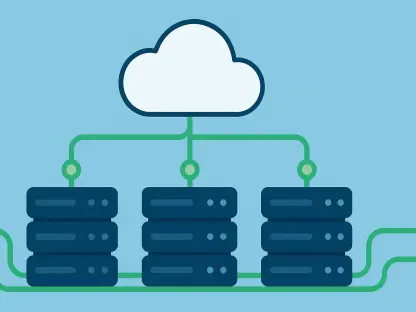
To overcome the physical and financial hurdles of quantum hardware, the industry has pivoted toward a decentralized delivery model known as Quantum Computing-as-a-Service (QCaaS). Platforms like Amazon Braket, IBM Quantum, and Microsoft Azure Quantum have democratized access to specialized backends, allowing developers to submit circuits to cryogenic systems via standard cloud interfaces. This model is essential because it permits organizations to experiment with different hardware modalities—such as superconducting qubits or trapped ions—without committing to a specific architecture. These cloud ecosystems also provide integrated development environments (IDEs) and software development kits (SDKs) that simplify the translation of high-level logic into quantum machine code.
The emergence of these platforms has catalyzed a shift from theoretical research to practical application development. By abstracting the complexities of the physical hardware, QCaaS providers allow users to focus on algorithmic efficiency and error mitigation strategies. Moreover, these services often include classical simulators that allow for the testing of quantum logic on traditional CPUs before deploying to an actual quantum processor. This hybrid approach is critical for optimizing resource consumption and ensuring that expensive quantum “shot” time is used effectively. As these ecosystems mature, they are becoming the primary vehicle for enterprise innovation, mirroring the earlier trajectory of cloud-based AI and data analytics.
Current Industry Trends and Strategic Development
A defining trend in the current era is the rise of hybrid classical-quantum workflows. Instead of attempting to run an entire program on a quantum processor, developers are identifying specific subroutines—tasks involving massive state-space exploration—that can be offloaded to a quantum backend. The classical processor manages the overall logic, data input, and post-processing, while the quantum chip acts as a specialized accelerator. This synergy is particularly effective for variational algorithms, where the system iteratively adjusts parameters to find an optimal solution. This pragmatic approach acknowledges the limitations of current hardware while maximizing the unique strengths of quantum logic.
Furthermore, the concept of “Quantum Readiness” has become a strategic priority for global corporations. There is a growing realization that the transition to quantum computing will require a workforce with a specialized blend of skills in physics, computer science, and linear algebra. Organizations are increasingly investing in pilot programs and internal training to bridge the talent gap. Rather than waiting for the arrival of error-corrected, fault-tolerant machines, companies are building the necessary software infrastructure and intellectual property today. This proactive stance ensures that once hardware reaches a commercial tipping point, these organizations will have the competitive advantage of having already integrated quantum-aware processes into their operations.
Real-World Applications and Sector Implementations
The practical utility of quantum computing is most visible in industries plagued by optimization bottlenecks and complex modeling requirements. In financial services, firms are exploring quantum algorithms for bond trading simulations and risk assessment. Traditional Monte Carlo simulations, while effective, are computationally expensive and time-consuming. Quantum-enhanced versions of these models offer the potential for near real-time pricing and more accurate predictions of market volatility. By navigating the intricate correlations between thousands of financial variables, quantum systems can identify optimal investment strategies that classical heuristics frequently overlook.
In the realms of logistics and life sciences, the impact of quantum computing is even more tangible. Global shipping companies are testing route optimization algorithms that can handle millions of variables, such as weather patterns, port congestion, and fuel efficiency, in a single pass. Simultaneously, the pharmaceutical industry is leveraging quantum simulators to model molecular structures at the atomic level. Classical computers struggle with the “electron correlation” problem, making it difficult to predict how a new drug will interact with specific proteins. Quantum hardware, however, naturally mimics these interactions, potentially reducing the time and cost of drug discovery by identifying viable candidates long before they reach physical clinical trials.
Critical Challenges: Technical Constraints and Security Risks
Despite the momentum, the technology faces formidable technical hurdles, primarily regarding error rates and scalability. In the current NISQ era, every computation is a race against decoherence. To achieve a truly fault-tolerant system, researchers believe we may need thousands of physical qubits to create a single “logical” qubit capable of error correction. This overhead means that the path to a universally capable quantum computer is still several years of engineering away. Additionally, the cost of maintaining the required infrastructure—from liquid helium for cooling to specialized microwave electronics—remains prohibitively high, limiting the frequency and scale of experimental runs.
A more immediate concern is the looming threat to global cybersecurity, often referred to as “Q-Day.” The very algorithms that enable quantum computers to solve complex chemistry problems can also be used to factor large integers, which is the basis of modern encryption standards like RSA and ECC. This has led to the “Harvest Now, Decrypt Later” strategy, where malicious actors collect encrypted data today with the intent of decrypting it once sufficiently powerful quantum hardware exists. Consequently, there is an urgent move toward Post-Quantum Cryptography (PQC). Organizations must overhaul their cryptographic foundations now, as the transition to quantum-resistant standards is a massive undertaking that could take years to fully implement across global networks.
The Road to Quantum Maturity and Future Outlook
The trajectory of the industry points toward a transition from experimental pilots to fault-tolerant quantum computing. Future hardware developments are expected to focus on modularity and inter-qubit connectivity, allowing multiple quantum processors to be linked together to create a more powerful unified system. This scaling will be essential for tackling the most ambitious challenges, such as carbon capture modeling and the creation of high-room-temperature superconductors. As the fidelity of qubits improves and error-correction techniques become more efficient, the reliance on classical-quantum hybrids will likely diminish, making way for more autonomous quantum applications.
The long-term societal impact of this technology cannot be overstated. By providing a tool to master the complexities of the natural world, quantum computing could unlock breakthroughs in materials science and biotechnology that were previously considered impossible. However, this future requires a sustained commitment to basic research and interdisciplinary collaboration. The transition will not be a single event but a gradual integration of quantum capabilities into the broader technological stack. As the hardware evolves from noisy, experimental prototypes into stable, commercial-grade systems, the focus will shift from proving the technology works to discovering the limits of what it can actually achieve.
Summary and Strategic Assessment
The analysis of the current quantum landscape revealed that the technology was no longer confined to the laboratory; instead, it functioned as a high-stakes arena for strategic innovation. While the hardware was characterized by the constraints of the NISQ era, the development of QCaaS models provided a vital bridge for enterprise experimentation. The review established that quantum computing acted as a specialized accelerator rather than a general-purpose replacement for classical systems. It also highlighted the dual nature of the technology—serving as a powerful tool for scientific discovery while simultaneously presenting a significant threat to existing cybersecurity infrastructures.
The final assessment suggested that a “wait and see” approach was no longer viable for organizations operating in data-intensive sectors. The most successful entities were those that treated quantum readiness as a mandatory defensive and offensive strategy. They focused on identifying intractable problems within their own domains while aggressively migrating to quantum-resistant encryption. Ultimately, the maturity of quantum computing was viewed not as a distant destination but as a continuous journey that demanded immediate engagement, thoughtful piloting, and a rigorous focus on security. The era of quantum utility had arrived, and its successful navigation required a pragmatic balance between acknowledging current limitations and preparing for future breakthroughs.