
The competitive landscape of the modern market dictates that organizations no longer treat information as a digital byproduct but as the core fuel for institutional survival and market dominance. In this environment, the transition from passive data collection to active strategic exploitation marks the boundary between industry leaders and those struggling with obsolescence. Historically, data was perceived as a static record of past transactions, stored away in silos and accessed only when necessary for basic reporting. Today, however, industry analysts observe that data serves as the primary engine of competitive advantage, driving real-time decision-making and enabling the predictive capabilities required to navigate an increasingly volatile global economy.
Success in this digital landscape requires a departure from fragmented, departmental initiatives in favor of a holistic framework. This framework must align technical infrastructure with human capital and overarching organizational goals to ensure that every byte of information contributes toward a measurable business outcome. When an enterprise views data through a multi-dimensional lens, it moves beyond mere digital complexity. Instead, it builds a resilient ecosystem where information flows seamlessly from collection points to strategic command centers. Such a shift necessitates a fundamental rethinking of how data is governed, processed, and valued across the entire corporate hierarchy.
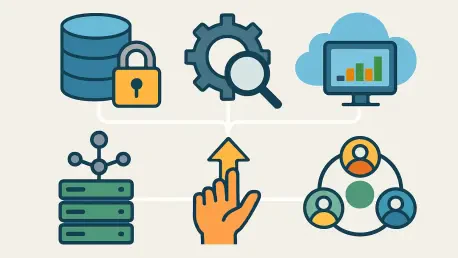
The following analysis explores a preview of the multi-dimensional ecosystem required to transform digital complexity into long-term corporate resilience. By examining the consensus among leading practitioners, it becomes clear that a modern strategy is built upon six foundational pillars. These pillars do not exist in isolation; rather, they form an interdependent structure that supports the weight of a truly data-centric organization. From the technical nuances of lifecycle management to the ethical considerations of algorithmic transparency, these components represent the essential requirements for any business aiming to thrive in the current era.
The Architectural Blueprint for Sustainable Data Value
Establishing a Foundation Through Rigorous Asset Management and Lifecycle Oversight
Redefining data as high-value corporate property is the first step toward building a sustainable strategy. Much like physical assets or financial capital, data necessitates secure storage, rigorous quality validation, and continuous maintenance throughout its entire lifecycle. Experts in the field argue that without a disciplined approach to asset management, organizations risk drowning in a sea of unverified information. This lifecycle oversight begins at the moment of ingestion and continues through various stages of processing and integration, eventually concluding with secure archival or deletion. By treating data as property, companies ensure that it remains accurate, available, and protected against unauthorized access.
A critical tool in this foundational phase is the enterprise data catalog. By utilizing metadata and automated discovery tools, organizations can effectively eliminate the phenomenon of dark data—information that is collected and stored but remains invisible to those who could benefit from it. Data catalogs provide a searchable inventory of all available assets, ensuring organization-wide discoverability and preventing the duplication of effort that occurs when different departments unknowingly collect the same information. This level of transparency is essential for maintaining the integrity of the data ecosystem, as it allows users to understand the lineage and quality of the information they are using for analysis.
However, a tension often exists between the impulse for massive data accumulation and the practical need for actionable, high-quality insights. Some strategic advisors suggest that more data is not always better; rather, the focus should be on the density of value within the data. Rigorous lifecycle oversight helps balance these competing interests by identifying and purging redundant or obsolete records. This ensures that the analytical engines of the enterprise are fed only the most relevant and accurate information, thereby increasing the reliability of the resulting business intelligence.
Balancing Technological Control with the Agility of Self-Service Ecosystems
The second pillar involves a significant transition from IT-centric gatekeeping to a more flexible, decentralised philosophy. For decades, the standard operating procedure involved a centralized IT department that controlled all access to data and analytical tools. Modern strategies, however, favor a “Bring Your Own Tool” approach for data scientists and analysts. This shift acknowledges that specialized departments often have unique requirements that a one-size-fits-all corporate toolset cannot meet. By allowing experts to utilize the specific BI applications or programming environments they are most comfortable with, organizations can significantly accelerate the pace of insight generation.
Defining the strategic boundaries between heavy-duty infrastructure management and flexible, end-user applications is essential for maintaining order. While IT must remain the ultimate steward of the underlying data architecture—ensuring security, uptime, and integration—the actual manipulation and visualization of data can be decentralized. This allows the core technical team to focus on the stability of the data warehouse or lake, while departmental analysts focus on the specific business questions relevant to their domain. This clear division of labor prevents the technical staff from becoming a bottleneck in the decision-making process.
Evaluating the risks of shadow IT versus the benefits of empowering departmental agility is a constant challenge for modern leadership. Shadow IT occurs when departments bypass official channels to implement their own solutions, often leading to security vulnerabilities and data silos. A successful data strategy mitigates this risk by providing a sanctioned, yet flexible, platform that meets the needs of diverse users. When the official corporate ecosystem is agile and accommodating, there is less incentive for departments to go rogue. This balance ensures that tool diversity remains a strength rather than a liability, fostering a culture of innovation within a secure framework.
Integrating Advanced Analytics with Ethical Governance and Algorithmic Transparency
Modern enterprise techniques now span a wide spectrum, ranging from predictive modeling and cluster analysis to sentiment and text analytics. These advanced methods allow businesses to move beyond descriptive statistics—which merely summarize the past—and toward prescriptive insights that guide future actions. For instance, predictive models can forecast supply chain disruptions, while sentiment analysis can gauge customer reactions to a new product launch in real time. Integrating these techniques into the core business strategy allows for a more proactive stance in a fast-moving market, yet it also necessitates a new level of technical sophistication.
With this power comes the disruptive challenge of algorithmic bias and the necessity of maintaining fairness in human-centric processes. When automated systems are used to make decisions about hiring, lending, or law enforcement, the risk of embedding societal biases into the code is high. Many researchers emphasize that governance must move beyond simple data security to include the oversight of the logic and ethics used in automated decision-making. This requires a transparent approach where the “black box” of machine learning is opened, and the variables driving specific outcomes are regularly audited for fairness and accuracy.
Ethical governance serves as the guardrail for innovation, ensuring that the pursuit of efficiency does not come at the cost of corporate reputation or legal compliance. Organizations are increasingly adopting frameworks that require data scientists to document their assumptions and test their models for disparate impacts on different demographic groups. By prioritizing algorithmic transparency, a company builds trust with its stakeholders and avoids the pitfalls of automated discrimination. In this context, governance is not a restrictive force but a foundational element that ensures the long-term viability of advanced analytical initiatives.
Cultivating a Collaborative Culture Through Data Democratization and Literacy
Shifting responsibility for data from isolated IT silos to a crowdsourced model involves every employee, from the executive suite to the front lines. This concept, often referred to as data democratization, posits that information should be accessible to everyone who needs it to perform their job effectively. When frontline employees are empowered with data, they can make localized decisions that improve customer service or operational efficiency without waiting for approval from a distant headquarters. This distributed model of responsibility ensures that data quality is maintained at the source, as those who interact with the information daily are best positioned to identify and correct errors.
Enhancing collective decision-making is further achieved by integrating data insights into everyday enterprise communication and file-sharing platforms. Rather than keeping reports locked away in specialized BI portals, modern organizations are pushing insights directly into the digital workspaces where employees already collaborate. When a visualization or a key performance indicator is shared in a chat channel or attached to a project management task, it becomes a catalyst for discussion. This integration ensures that data is a constant presence in the organizational dialogue, reinforcing its role as the basis for all strategic choices.
A common pitfall is the assumption that technical expertise is the only requirement for successful data preparation and master data definition. On the contrary, domain knowledge is often more important for ensuring that data accurately represents the physical reality of the business. Successful organizations cultivate a culture of literacy where even non-technical staff understand the importance of data integrity and know how to interpret basic visualizations. By valuing the input of subject matter experts in the data lifecycle, the enterprise ensures that its digital twin is a faithful representation of its real-world operations.
Implementation Frameworks for Long-Term Success
The interdependence of technical rigor and human-centric flexibility is the primary driver of business value in a modern implementation framework. To succeed, an organization must synthesize these two elements into a cohesive plan that addresses both the “hard” infrastructure and the “soft” cultural changes required. Actionable strategies involve transforming governance into a foundational layer of business intelligence rather than a restrictive force. Instead of simply saying “no” to new data requests, a mature governance board asks “how can we do this safely?” This mindset shift allows the organization to move quickly while still adhering to the necessary security and compliance standards.
Practical recommendations for building scalable documentation and auditing workflows are essential for supporting both compliance and innovation. Documentation should not be a static artifact but a living record that tracks the evolution of data assets and the logic behind analytical models. By implementing automated auditing tools, companies can ensure that they are always ready for a regulatory review without needing to halt operations for weeks of manual preparation. These workflows provide the “paper trail” necessary for accountability, allowing leadership to trace every strategic decision back to its underlying data source.
Furthermore, a successful implementation focuses on the scalability of these processes. As the volume of data grows and the number of users increases, the systems used for governance and documentation must be able to keep pace. This often involves the use of artificial intelligence to assist with metadata tagging and anomaly detection. By leveraging technology to manage the administrative burden of data strategy, the human workforce is freed to focus on the creative and strategic tasks that drive growth. This combination of human insight and machine efficiency is the hallmark of a high-performing data organization.
The Future of the Data-Centric Enterprise
The evolution of the data-centric enterprise was defined by its ability to treat information as a front-line strategic asset that changed alongside market pressures. Organizations that achieved this status did so by recognizing that no technical architecture could succeed without being rooted in the talent and data literacy of the entire workforce. The journey involved a transition from viewing data as a problem to be managed to seeing it as a solution to be harnessed. Strategic alignment between the IT department and the various business units was not merely a goal but a constant requirement for maintaining relevance in a global economy.
Building a proactive data culture ultimately depended on a commitment to ethical integrity and strategic transparency. The most successful enterprises were those that prioritized the human element, ensuring that every employee felt a sense of ownership over the information they handled. Documentation and auditing frameworks became the silent enablers of innovation, providing the safety net that allowed for bold experimentation and rapid scaling of new ideas. These companies proved that when data is governed with care and utilized with curiosity, it becomes the most powerful tool in a corporation’s arsenal.
Moving forward, the lessons learned from these six pillars suggested that the path to resilience lay in the continuous refinement of both systems and skills. The data-driven era did not reward those with the most information, but those with the best strategy for turning that information into action. By fostering a culture of literacy and maintaining a rigorous focus on asset quality, businesses positioned themselves to navigate the complexities of the future with confidence. The transition to a data-centric model was a challenging endeavor, yet the resulting ability to adapt, predict, and innovate proved to be an invaluable asset in a competitive world.