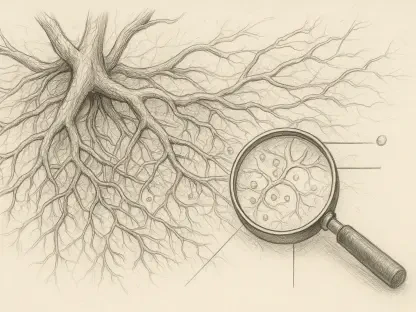

The intricate architecture of human communication reveals a striking parallel between the biological constraints of our neural pathways and the computational limits of modern deep learning frameworks that dominate the technological landscape in 2026. Language is increasingly understood not as an arbitrary collection of sounds and symbols, but as a living, breathing system that undergoes continuous refinement to align with the processing capabilities of its users. This alignment suggests that the very structure of grammar and syntax is a direct consequence of how information is filtered through successive generations of learners, each possessing a specific depth of neural processing. By examining the intersection of linguistics and artificial intelligence, researchers have uncovered evidence that language evolution is a pragmatic response to the cognitive limitations and strengths inherent in both carbon-based and silicon-based systems.
Current research into the structural requirements of artificial neural networks indicates that the natural development of human language follows a predictable trajectory toward efficiency. Rather than being a static set of rules dictated by an innate “language organ,” communication functions as a dynamic system that constantly reshapes itself to become easier for the brain to learn and recall. This transformation is driven by the specific ways deep learning systems process and pass on information, effectively pruning away linguistic irregularities that do not fit the internal logic of the learner. As these patterns are transmitted from one agent to another, the language itself adapts, becoming more structured and rule-bound through a process of natural selection within the cognitive environment.
Evolutionary Mechanics: The Process of Iterated Learning
Meaningful Errors: Transmission Through Systematic Patterns
Within the framework of iterated learning, the transmission of language acts as a multi-generational cycle where each new learner attempts to reconstruct the underlying rules from the output of their predecessors. This process is inherently imperfect, leading to the introduction of small mistakes during the transfer of information, yet these errors are rarely random or chaotic. Instead, they represent the brain’s innate tendency to seek out patterns and simplify complex data, effectively acting as a creative force that steers the language toward a more logical and systematic structure. When a learner encounters a linguistic exception that feels unintuitive, their attempt to “correct” it based on broader patterns serves to smooth out the jagged edges of the language, making it more digestible for the next generation in the sequence.
The staged acquisition of knowledge plays a critical role here, as learners—particularly children and specialized neural models—organize incoming information into hierarchies before focusing on specific, idiosyncratic details. When these learners encounter irregular verbs or complex syntactical anomalies, they often over-generalize the more consistent rules they have already mastered, a phenomenon known as regularization. Over time, these non-arbitrary mistakes act as a filter, removing difficult and idiosyncratic linguistic features while preserving and strengthening the parts of the language that are most consistent with the learner’s cognitive architecture. This results in a communication tool that is highly systematic, not because it was designed to be, but because it survived the rigorous demands of being learned and taught over and over again.
Cognitive Pressure: The Impact of the Bottleneck Effect
The “cognitive bottleneck” refers to the limited window of information that can be successfully passed from a teacher to a student during the learning process, a constraint that forces language to adapt for survival. Because a learner cannot possibly be exposed to every possible sentence or grammatical structure during their developmental period, the language must be “compressible” into a set of generative rules that allow the speaker to produce new sentences they have never heard. This pressure to compress information forces complex and irregular linguistic patterns to evolve into more structured, rule-based forms that the next generation can master more effectively with less data. If a language is too complex to pass through this narrow bottleneck, it risks losing its nuances or being simplified until it reaches a stable, learnable state.
This iterative pressure ensures that the only linguistic features that persist are those that are both functional for communication and easy to acquire within the limits of the biological or artificial processor. Features that are too computationally expensive to maintain or too rare to be consistently learned are eventually filtered out by the systematic errors of new learners, leading to a streamlined system. This evolution mimics the way a designer might simplify a user interface to make it more intuitive; the “users” of language are the brains that speak it, and the “interface” is the grammar itself. Consequently, the structure of modern languages reflects the historical path of least resistance, where the most learnable and efficient structures survived while the cumbersome ones were discarded in the transition between generations.
Computational Architecture: The Impact of Architectural Depth
Structural Necessity: Why Deep Networks Outperform Shallow Systems
A pivotal finding in recent linguistic simulations is the “Depth Absolute,” a principle highlighting that the structural depth of a learning system is essential for complex language to emerge and sustain itself. Researchers discovered that shallow networks, characterized by fewer processing layers, are fundamentally unable to capture or transmit the complex hierarchical logic required for sophisticated grammar. Without a sufficient number of layers to process recursive relationships and long-distance dependencies, these simpler systems fail to maintain the structural regularities that make human language distinct from basic animal communication. Shallow architectures lack the “resolution” needed to distinguish between noise and underlying structure, leading to a breakdown in the transmission of linguistic rules.
Conversely, deep neural networks mirror the multi-layered processing of the human cortex, allowing them to organize linguistic data into sophisticated hierarchies where abstract concepts are built upon simpler foundations. This architectural depth dictates the level of complexity that a learner can perceive and replicate, effectively setting the ceiling for how advanced a language can become. For a language to evolve highly structured features like nested clauses or consistent case markings, the agents involved in the exchange must possess a certain level of computational or cognitive complexity. When the depth of the learning system matches the complexity of the data, a resonance occurs that allows for the preservation of intricate rules across generations, ensuring that the language remains both rich in meaning and strictly governed by syntax.
Informed Scaling: Scale and Systematic Generalization
The emergence of structured language also depends heavily on the volume of data available to the learner and the capacity of the network to generalize from that data. For a neural system to achieve true systematicity—the ability to apply rules consistently across new contexts while ignoring irrelevant noise—it requires exposure to massive datasets that provide enough variety to reveal the underlying patterns. This explains why modern artificial intelligence systems, such as large language models, require both deep architectures and enormous amounts of informational input to reach human-like levels of fluency and structural consistency. The scale of the data acts as the fuel for the architectural depth, allowing the system to refine its internal models of the world and the language used to describe it.
This relationship between scale and structure illustrates a shared principle between artificial intelligence development and human cognitive maturation. Both types of systems rely on hierarchical processing to filter through messy, real-world data and identify the most reliable and productive rules for communication. By analyzing how deep learning systems handle large-scale information, scientists have gained a better understanding of why certain linguistic features survive the transmission process while others fade away into obsolescence. The ability to generalize from a few examples to a universal rule is a hallmark of “deep” learning, and it is this very capability that allows human languages to remain robust even when the specific examples a child hears are limited or inconsistent.
Functional Adaptation: Language as a User-Centered Tool
Efficient Design: The Drive Toward Compositionality
Viewing language evolution through the lens of neural depth suggests that our communication systems are a form of “user-centered design” operating on an immense, historical scale. Language is a tool that has been meticulously refined by the very brains that utilize it, adapting over millennia to fit the specific constraints of human memory and real-time processing. If a specific linguistic feature is too difficult to learn or requires too much cognitive effort to remember during the heat of conversation, it is eventually smoothed over by the systematic errors of new learners. This functional adaptation ensures that language remains a high-performance tool that maximizes communicative power while minimizing the mental energy required to use it.
This relentless drive for efficiency leads to the emergence of compositionality, the unique ability to combine simple, reusable parts to create a near-infinite array of complex meanings. Compositionality is not just an accidental trait of human speech but an emergent property of any deep learning system placed under the twin pressures of a cognitive bottleneck and a need for expressive power. The ability to build a world of meaning from a small set of consistent rules is a logical outcome of deep architectures seeking the most efficient way to store and transmit information. The synergy between transmission constraints and neural depth is ultimately what makes the complex and beautiful structure of language possible, allowing for a system that is both immensely flexible and strictly organized.
Practical Evolution: Refining the Interface Between Human and Machine Cognition
The study of neural depth and linguistic evolution has provided a clear roadmap for the development of more intuitive and capable artificial intelligence systems. By 2026, developers realized that creating AI that can truly understand human intent required more than just increasing parameter counts; it necessitated an understanding of how language adapts to the “shape” of the processor. This realization led to the design of neural architectures that more closely mimic the multi-generational filtering processes observed in human history, resulting in models that are more robust, less prone to hallucination, and capable of more natural interaction. The focus shifted from merely processing data to creating environments where AI could participate in the same “iterated learning” cycles that shaped human speech.
Looking ahead, the integration of these evolutionary principles into technological design suggests that the gap between human and machine communication will continue to narrow as systems are built to respect the same structural constraints. Practical applications of this research have already begun to emerge in the fields of automated translation, real-time linguistic coaching, and the development of new, specialized languages for human-machine collaboration. Engineers and linguists worked together to ensure that the next generation of communication tools was not just powerful, but ergonomically suited to the neural depth of their users. By embracing the fact that language is a reflection of the mind’s architecture, society moved toward a future where technology and human thought are more seamlessly intertwined than ever before.