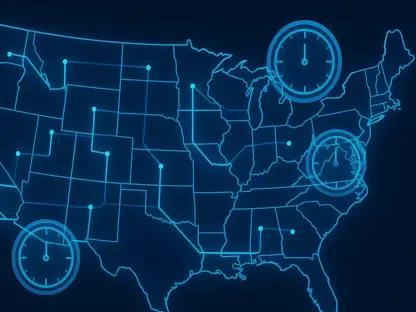

The traditional boundary between academic theory and industrial application is rapidly dissolving as engineering programs integrate massive, live datasets into their core curricula to better prepare students for the complexities of the modern workforce. At the University of Oklahoma, the Electrical and Computer Engineering department has established a groundbreaking partnership with Ookla for Good, providing graduating seniors with unprecedented access to global network performance metrics. This collaboration allows students to move beyond the sterile environment of textbook problems and controlled laboratory experiments, forcing them to confront the messy, unpredictable nature of real-world connectivity. By utilizing actual speed test results and signal strength data, these students are no longer just studying the mechanics of telecommunications; they are actively diagnosing the digital health of entire nations. This shift reflects a broader trend in higher education where data literacy and the ability to interpret large-scale digital signals are becoming as fundamental as traditional circuit design or mathematical modeling.
Bridging the Gap Between Theory and Practice
The transition from a student mindset to a professional one requires a fundamental shift in how technical problems are approached, particularly when dealing with infrastructure that serves millions of people across diverse geographic landscapes. In many classic engineering programs, projects are often self-contained and have a single correct answer, which fails to prepare graduates for the ambiguity of the telecommunications industry. This specific initiative redefines the Capstone experience by tasking students with identifying and resolving actual connectivity gaps using a repository of billions of performance measurements. Instead of building isolated physical prototypes, these seniors operate as technical consultants, analyzing broadband and mobile trends to provide actionable intelligence for infrastructure investment. This methodology ensures that the next generation of engineers understands that a network is not just a collection of hardware components but a dynamic system influenced by human behavior, economic shifts, and regional regulations.
Working with measurements generated by millions of users across the globe introduces a level of complexity that simply cannot be replicated in a simulated environment or a standard classroom lecture. In these real-world scenarios, students must account for variables such as population density, terrain interference, and varying levels of hardware availability that fluctuate between different quarters of the year. This exposure is critical because it highlights the limitations of theoretical models which often assume ideal conditions that rarely exist in the field. By navigating these massive datasets, students learn to distinguish between statistical noise and meaningful trends, a skill that is increasingly vital as the industry moves toward data-centric operations. This pedagogical approach transforms the educational process into a collaborative investigation where students take full ownership of open-ended problems, mirroring the professional responsibility they will soon encounter in their careers within the private or public sectors.
Developing Advanced Analytical Skills
A major pillar of this educational evolution is the intentional shift from the physical construction of devices to the high-level analysis of the digital environment and its performance metrics. While traditional electrical engineering focuses heavily on the assembly of physical circuits and embedded systems, the current professional landscape demands experts who can interpret the invisible layers of connectivity that power the global economy. By adopting the role of connectivity consultants, students at the university utilize a structured analytical framework to evaluate how network reliability and speed evolve over specific periods. This involves identifying geographic “dead zones” and determining whether these gaps are the result of insufficient hardware, environmental barriers, or economic factors. Such work requires a sophisticated blend of technical knowledge and deductive reasoning, as students must correlate abstract data points with the physical reality of how telecommunication towers and fiber networks are deployed.
One of the most remarkable outcomes of this data-driven curriculum is the ability of students to validate complex findings through industry-specific logic and external market trends. For instance, when students observed an unexpected surge in mobile download speeds within emerging international markets, they did not simply report the numbers but investigated the underlying causes. By cross-referencing their data with global infrastructure reports, they successfully attributed these performance spikes to the strategic deployment of advanced cellular technology generations and substantial backhaul upgrades. This level of analysis demonstrates a high degree of technical maturity, showing that the students can look beyond the raw numbers to understand the “why” behind significant performance shifts. This ability to synthesize disparate sources of information into a cohesive narrative is what separates a technician from a high-level engineer, and it represents a core objective of integrating real-world datasets into the academic experience.
Cultivating Workforce Readiness and Communication
The consensus among academic faculty and industry leaders is that this hands-on approach to data analysis bridges a critical gap that has historically left new graduates feeling underprepared for the pace of modern engineering firms. Employers today are not just looking for individuals who can solve equations; they are seeking professionals who can navigate large-scale data ecosystems and extract strategic insights that drive business decisions. By engaging with actual performance metrics, students develop a sense of “workforce readiness” that is difficult to cultivate through traditional coursework alone. Furthermore, this partnership demonstrates that connectivity data has profound utility beyond commercial interests, serving as a powerful tool for humanitarian efforts and community development. Students see firsthand how their technical analysis can help identify underserved populations, providing a social context to their work that increases engagement and helps them understand the broader impact of their technical contributions.
Beyond technical proficiency, the program emphasizes the necessity of translating complex data into clear, persuasive outcomes that can be understood by non-technical stakeholders or policy makers. In the professional world, an engineer’s finding is only as valuable as their ability to communicate its significance to those who control the resources and strategy of an organization. Students learn to articulate their findings not just in terms of latency or throughput, but in terms of human experience and regional economic potential. This focus on communication ensures that graduates are equipped to handle the multifaceted challenges of the global telecommunications landscape, where technical results must often be justified within a broader social or financial framework. By moving beyond the boundaries of traditional disciplines, the university is producing graduates who are not only technically skilled but also strategically minded, making them highly competitive in a job market that increasingly prizes the intersection of data science and engineering.
Future Considerations for Academic and Industrial Integration
Educational institutions should prioritize the establishment of long-term data sharing agreements with industry leaders to ensure that student projects remain relevant to the current technological climate. The success of this program suggests that universities must transition from static curricula to dynamic, data-driven models that can pivot as new network technologies emerge. By maintaining a repository of analytical tools and methodologies developed during these Capstone projects, departments can create a cumulative knowledge base that future cohorts can build upon, fostering a culture of continuous improvement and research. Engineering students who have already engaged with these global datasets are encouraged to apply these analytical frameworks to local municipal challenges, helping smaller communities leverage big data for infrastructure planning. This proactive approach ensures that the skills gained in the classroom are immediately applied to solve tangible problems, creating a more robust pipeline of talent for the telecommunications sector.
Moving forward, the integration of real-world connectivity data should be expanded to include multidisciplinary teams, blending electrical engineering with urban planning and public policy. This holistic view was essential for the students who analyzed international markets, as they had to consider how government regulations and local geography influenced technical performance. Academic departments should also focus on teaching the ethical implications of data analysis, ensuring that the next generation of engineers uses these powerful insights to promote digital equity across all demographic groups. As network speeds and infrastructure requirements continue to evolve, the ability to interpret and act upon real-time data will remain the most valuable asset for any professional in the field. By adopting these strategies, educational programs can ensure their graduates are not merely observers of the digital revolution, but the architects who will define the connectivity standards of the next decade.