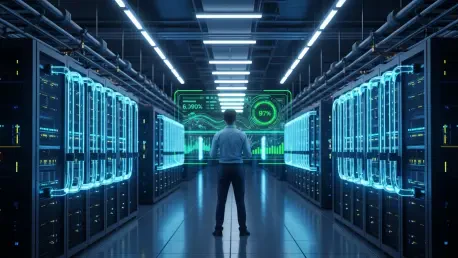

The relentless demand for high-performance computing has forced the world’s most advanced digital architects to transform industrial power into raw intelligence at an unprecedented scale. As artificial intelligence evolves from a novelty into a foundational global utility, the hardware required to sustain it has become the most valuable commodity on the planet. HIVE Digital Technologies, once known primarily for securing blockchain networks, is now at the forefront of this shift, repurposing its vast energy reserves and technical expertise to build the backbone of the next industrial revolution.
From Mining Blocks to Powering Brains: The High-Stakes Pivot of HIVE Digital
The transition from cryptocurrency mining to artificial intelligence infrastructure represents a calculated evolution for HIVE Digital. By leveraging years of experience in managing high-density power environments, the company has successfully moved beyond the volatile “crypto-winter” cycles that previously defined the sector. This strategic pivot allows the firm to capture the surging demand for high-performance computing while utilizing existing assets that were originally optimized for intensive numerical processing.
Repurposing industrial-scale power for artificial intelligence is no longer just an alternative revenue stream; it is a strategic necessity. As global markets prioritize stable, long-term infrastructure over speculative assets, HIVE has positioned itself as a specialized provider for the AI sector. This transformation ensures that the massive electrical capacity once dedicated to mining blocks is now being channeled into the sophisticated neural networks that power modern automation and machine learning.
The Bottleneck of the AI Revolution: Why Specialized Data Centers are Essential
The global shortage of advanced graphics processing units (GPUs) has created a critical need for sophisticated “onshored” infrastructure that can handle the specific demands of modern computing. Traditional data centers, designed for general web hosting and cloud storage, often lack the power density and cooling systems required to run large language models (LLMs) effectively. This technical gap has opened a significant market opportunity for specialized providers capable of hosting the next generation of high-intensity hardware.
Furthermore, the tension between massive energy consumption and corporate sustainability mandates has reached a breaking point. Companies developing AI models are under increasing pressure to source their compute power from environmentally responsible providers. HIVE’s focus on green energy integration provides a solution to this conflict, offering the high-density power required for AI development while maintaining a commitment to carbon-conscious operations that align with modern ESG standards.
Scaling the Digital Backbone: HIVE’s Infrastructure Expansion in North America
The recent expansion in Canada marks a significant milestone, as HIVE has managed a 400% surge in its AI-specific critical IT load, growing from 4 megawatts to 16.6 megawatts. This rapid scaling is concentrated in Manitoba and British Columbia, regions that offer a unique combination of reliable power and favorable climates. By securing these high-capacity sites, the company provides the physical real estate necessary to house thousands of high-power-density GPUs that would overwhelm standard facilities.
To manage the extreme heat generated by 4,000 next-generation chips, the company has implemented advanced liquid-cooling technology across its Canadian facilities. This engineering choice is vital for maintaining hardware longevity and operational efficiency during intensive AI workloads. While the Canadian expansion drives growth, HIVE maintains a diversified global footprint, balancing its blockchain operations in Bermuda and Paraguay with its focused AI development in the North American market.
Strategic Synergies: Merging Silicon with Robotics
The partnership with AMC Robotics serves as a practical testbed for AI-driven physical applications, moving the company’s value proposition beyond simple data processing. By providing a specialized “compute-as-a-service” layer, HIVE enables the development and testing of advanced robotic systems that require massive real-time data analysis. This collaboration bridge the gap between digital processing power and tangible industrial automation, creating a more integrated technological ecosystem.
Leveraging renewable energy sources has allowed the firm to offer a competitive, ESG-compliant alternative to fossil-fuel-dependent data centers. This focus on sustainability has shifted the market’s perception of the company from a software-focused entity to an institutional-grade infrastructure play. Experts suggest that this integration of silicon and physical robotics, powered by green energy, creates a unique competitive advantage that is difficult for traditional tech firms to replicate quickly.
Evaluating the Investment Landscape for AI Infrastructure Providers
Assessing “pick and shovel” plays in the AI sector requires a different framework than evaluating direct software developers. While software companies capture the headlines, the infrastructure providers who own the power and the cooling systems hold the literal keys to the industry’s growth. The trend toward onshoring high-tech processing has made localized, high-capacity data centers in North America increasingly valuable as national security and data sovereignty concerns rise.
Investors often look at metrics such as total megawatts of capacity and GPU utilization rates to determine the long-term viability of these infrastructure firms. While diversified miners face different risks than pure-play AI firms, the ability to pivot between different types of high-performance computing provides a level of operational flexibility. Ultimately, the success of these ventures depends on how efficiently they can scale their physical footprint to meet the insatiable appetite of the global AI economy.
The shift toward specialized high-density computing proved to be a decisive move for companies seeking to survive the transition from digital currencies to industrial AI. As physical infrastructure became the primary constraint for machine learning progress, the expansion of liquid-cooled facilities in renewable-heavy regions offered a clear path forward. This evolution underscored the reality that the future of intelligence depended as much on electrical engineering and thermal management as it did on code. Moving forward, the focus shifted toward optimizing these massive energy clusters to support autonomous systems and real-time data processing at scale.