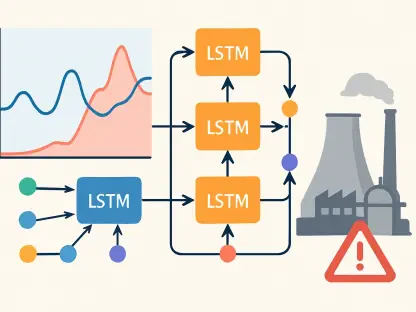

Relying on synthetic workloads or benchmark datasets often masks the noise and seasonal complexity that software engineers encounter in live production cloud environments. The pursuit of high-availability cloud services has shifted significantly as the industry moves beyond simple threshold-based alerts toward sophisticated predictive analytics that can anticipate system failures before they impact the end user. A comprehensive study by Guerron and colleagues, published in the journal Automated Software Engineering, provides a definitive look at how deep learning can stabilize quality of service in complex commercial environments. By comparing bidirectional gated recurrent units against long short-term memory networks and traditional statistical models like ARIMA, the research establishes a new benchmark for operational forecasting. This transition from reactive detect-and-repair strategies to proactive maintenance is essential for modern software-as-a-service providers who must maintain strict service-level agreements to remain competitive. The study leverages real-world operational data to prove that advanced neural architectures can effectively navigate the unpredictable fluctuations of enterprise cloud workloads, offering a more resilient framework for resource management than previously thought possible. As cloud infrastructures become more heterogeneous, the ability to forecast performance with high precision has become a non-negotiable requirement for technical leadership.
The Operational Context of Predictive Modeling
Industrial Case Study: The Social Alert Platform
The research achieved industrial significance by analyzing data from Social Alert, an enterprise-level data science platform managed by Golden S.A., an IT firm operating throughout Latin America. This platform acts as a mission-critical tool for corporate clients, performing real-time network analytics and sentiment processing to extract marketing intelligence from vast streams of unstructured digital content. Because the underlying cloud infrastructure must process these high volumes of data in real time, it experiences intense and often unpredictable resource demands that typical benchmark datasets fail to replicate. Working closely with the company’s technical leadership, the researchers were able to implement a domain-tailored quality model that reflects the actual pressures of a mid-sized IT enterprise.
The complexity of the Social Alert ecosystem, with its diverse user base and high-velocity data ingestion, provided the perfect testbed for evaluating how deep learning architectures handle the noise inherent in production-grade cloud systems. The platform must maintain high responsiveness while scaling resources dynamically to meet sudden spikes in social media activity or news cycles. By using this live environment, the study ensured that its findings would be applicable to DevOps teams who manage similar high-stakes applications. The five-month monitoring period captured a wide range of operational states, from peak commercial hours to late-night maintenance windows, providing a holistic view of the system’s temporal behavior. This grounded approach allows for a direct comparison between how traditional models and modern neural networks perform when faced with real-world variability.
Metric Taxonomy: Categorization and Preprocessing
A critical component of this empirical study was the breadth of the data captured, which spanned sixteen distinct Quality of Service metrics categorized into three specific operational dimensions: host resource consumption, storage and disk I/O, and network connectivity. For host resources, the team tracked memory usage percentages and CPU utilization, while storage metrics included disk read and write speeds alongside remaining capacity. Network connectivity was analyzed through packet counts and the overall platform uptime ratio. Data was extracted via an automated pipeline using advanced monitoring APIs, sampling system behavior at thirty-minute intervals to create a dense temporal record. This resulted in over 7,000 raw observations per metric, providing the necessary depth for training complex deep learning models.
To ensure the integrity of neural network training, the researchers applied rigorous preprocessing techniques to the raw telemetry. This involved resolving missing entries and removing a specific period of corrupted data caused by an infrastructure migration anomaly, ensuring the models learned from valid system states. All data points were then scaled using min-max normalization to a range between -1 and 1, a step vital for facilitating faster gradient convergence and preventing specific metrics from dominating the learning process due to their numerical scale. By standardizing these diverse metrics, from memory percentages to raw byte counts, the researchers created a uniform dataset that allowed the neural architectures to identify correlations across different layers of the infrastructure. This methodological rigor provided a clean foundation for comparing the forecasting accuracy of the various modeling paradigms.
Methodological Framework and Model Architecture
Robust Validation: Prequential Walk-Forward Methods
One of the most robust methodological features of this research was the rejection of standard k-fold cross-validation in favor of a prequential walk-forward approach. In time-series forecasting, randomized shuffling of data often leads to temporal leakage, where a model accidentally learns from future data points to predict the past, resulting in artificially inflated accuracy scores. The walk-forward method avoids this by partitioning the data chronologically into several folds, where the model is always trained on past data and tested on the immediate future. This process accurately mirrors a real-world deployment scenario where a monitoring system is continuously updated with new historical information to refine its future projections.
This validation strategy ensured that the performance of the BiGRU and LSTM models was measured against their ability to generalize to new, unseen system states as they occurred over time. Every experiment was repeated ten times to account for the stochastic nature of neural network initialization, and the results were averaged to provide a reliable measure of performance. By adhering to this chronological testing framework, the researchers proved that deep learning models could maintain their predictive power even as the underlying patterns of the cloud environment shifted over several months. This level of validation is critical for enterprise adoption, where reliability and consistency are prioritized over laboratory success. The resulting data provided a clear picture of how these models would function if integrated into a live automated scaling system.
Comparing Modeling Paradigms: BiGRU, LSTM, and ARIMA
The study evaluated three distinct architectures to determine the most effective method for predicting Quality of Service. The Bidirectional Gated Recurrent Unit served as the primary focus, utilizing a structure that processes input sequences in both forward and backward directions. This allows the network to capture a holistic understanding of temporal dependencies by analyzing both historical context and future trends within a specific window of time. This was compared against a traditional three-layer Long Short-Term Memory network, which has long been the standard for sequence modeling due to its ability to retain long-term information. The LSTM used a unidirectional structure with specialized dropout layers to prevent overfitting the training data.
To provide a statistical baseline, the researchers also implemented the Autoregressive Integrated Moving Average model, which represents the classical approach to time-series analysis. While ARIMA is widely used due to its simplicity and low computational requirements, it often struggles with the nonlinear and jagged data patterns found in cloud environments. The neural network configurations were tuned with specific hidden layers and the RMSprop optimizer to ensure they could handle the complexity of the Social Alert dataset. By testing these three paradigms side by side, the researchers were able to quantify the specific advantages of moving toward bidirectional neural architectures. The comparison highlighted how the structural differences between gated units and traditional statistical methods impact the accuracy of cloud health projections.
Performance Analysis and Empirical Findings
The Superiority: Deep Learning over Statistical Baselines
The empirical results were definitive, showing that the BiGRU model consistently outperformed both ARIMA and LSTM across nearly all evaluated scenarios. When compared to the statistical ARIMA baseline, the BiGRU model reduced prediction errors by a staggering margin, ranging from 80% to over 97% across all sixteen metrics. This massive improvement confirms that the multilayer, nonlinear nature of recurrent neural networks is far better suited for the complex and volatile data patterns found in production cloud environments. While ARIMA may be sufficient for stable, linear datasets, it fails to capture the sudden shifts in resource demand that occur in mission-critical SaaS platforms.
Furthermore, the BiGRU demonstrated a clear advantage over the unidirectional LSTM across most metrics, particularly those related to CPU and memory utilization. Processing data in both directions allowed the BiGRU to better anticipate changes in operational states by identifying patterns that a single-direction scan might overlook. This was especially evident in the uptime ratio and host resource consumption, where the BiGRU’s projections aligned more closely with actual system behavior during periods of high stress. The findings suggest that for general cloud monitoring, the bidirectional context provided by the GRU architecture offers a more stable and accurate forecasting tool. This performance gap highlights why the industry is increasingly moving away from basic statistical thresholds in favor of deep learning solutions.
Operational Nuance: Network Traffic and System Volatility
While the BiGRU was generally superior, the analysis revealed interesting nuances regarding network-specific metrics. The LSTM model showed a slight performance edge in several metrics related to network packet counts and data throughput. Researchers suggested that the LSTM’s more complex three-gate mechanism—comprising input, forget, and output gates—might be more effective at managing the extremely bursty and directional nature of network traffic. In these specific cases, long-term memory and the ability to selectively forget irrelevant traffic spikes seemed to provide a minor advantage over the bidirectional context of the GRU. This suggests that while the BiGRU is the better general-purpose model, certain specialized networking tasks might still benefit from traditional LSTM structures.
Conversely, when it came to highly volatile disk I/O metrics, which are characterized by extreme variance and sporadic, intense spikes, the BiGRU maintained the lowest error rates of all models tested. Disk activity in a sentiment-processing platform like Social Alert is notoriously difficult to predict because it depends on the volume of unstructured data being ingested at any given moment. The BiGRU’s structural resilience allowed it to remain stable even under these extreme conditions, proving its worth for managing the most unpredictable components of a cloud infrastructure. This ability to handle volatility without losing accuracy makes it a highly attractive option for DevOps engineers who must ensure that storage bottlenecks do not lead to service degradation or SLA violations.
Statistical Validation and Operational Efficiency
Analytical Rigor: Confirming Significant Improvements
To ensure that the observed performance gains were not merely the result of chance, the researchers employed advanced inferential statistics. They used permutational multivariate analysis of variance (PERMANOVA) to test the differences in model performance across the entire dataset. This non-parametric approach was necessary because the performance metrics did not follow a normal distribution, making traditional statistical tests less reliable. The PERMANOVA results confirmed that the superiority of the deep learning models over the ARIMA baseline was statistically significant at a 95% confidence level. This rigorous validation provides the necessary assurance for IT departments considering the transition to neural-based monitoring tools.
The researchers also utilized Principal Coordinates Analysis to visualize how each model behaved relative to the others. The resulting PCoA plots showed that the BiGRU and LSTM models clustered closely together, indicating that both deep learning approaches share a similar underlying logic and responsiveness to data patterns. In contrast, the ARIMA model was a significant outlier, visually demonstrating the technological leap represented by moving to neural architectures. This visual and statistical evidence underscored that statistical methods are no longer sufficient for the complexities of modern cloud management. By providing this level of analytical depth, the study moved beyond simple error averages to offer a comprehensive evaluation of model reliability and performance divergence.
Computational Viability: Training Efficiency and Costs
A critical consideration for the industrial adoption of deep learning is the computational cost associated with training and maintaining models. The study found that despite its bidirectional nature, the BiGRU was remarkably efficient and often faster to train than the three-layer LSTM. This efficiency stems from the simpler internal architecture of the Gated Recurrent Unit, which uses fewer gates to process data than the LSTM cell. This reduction in complexity allows for faster gradient updates during the training phase without sacrificing the model’s ability to learn intricate temporal sequences. For a midsize enterprise like Golden S.A., this means that models can be retrained frequently on fresh data without placing an excessive burden on the monitoring infrastructure.
The practical implications of this efficiency are significant, as it allows for the implementation of a continuous learning pipeline. As cloud workloads evolve and new software versions are deployed, the BiGRU can be updated to reflect the latest system behavior in a fraction of the time required by more cumbersome architectures. The researchers noted that while ARIMA remains the fastest to execute, its lack of accuracy makes it less viable for mission-critical tasks. The BiGRU offers the best balance between high-precision forecasting and computational overhead, making it the most practical solution for live production environments. This balance of speed and accuracy is the primary reason why bidirectional gated units are becoming the preferred choice for operational telemetry analysis in 2026.
Future Implications for Cloud Management
Predictive Foresight: Long-Term Projections and Scaling
The researchers extended their analysis to include multi-step forecasting, where the models predicted system behavior up to 24 time steps into the future. While accuracy naturally decreased as the forecasting horizon expanded, the BiGRU remained the most reliable model for mid-term projections of up to 12 hours. This capability is essential for proactive autoscaling, where a cloud system needs to provision virtual machines or containers well in advance of a predicted traffic surge. Having a half-day lead time allows DevOps teams to optimize resource costs by scaling down during quiet periods and scaling up before the system reaches a critical threshold.
Maintaining reliability over an extended window supports improved capacity planning and long-term infrastructure strategies. By understanding how resource demands fluctuate over a 12-hour period, organizations can make more informed decisions regarding hardware requirements and cloud service tiers. BiGRU performance in these multi-step scenarios demonstrated that deep learning is not merely for immediate alerts but can serve as a cornerstone for automated resource orchestration. This foresight is key to maintaining high availability in environments where user demands can change instantly. The stability provided by these long-term projections was identified as a major driver for reducing the total cost of ownership in cloud-native applications.
Evolutionary Roadmap: Next-Generation Monitoring Tools
The investigation concluded that bidirectional GRU models represent the current gold standard for univariate Quality of Service forecasting in production cloud environments. By successfully capturing a two-way temporal context, these models provide the stability and precision required for the transition to truly proactive cloud management. The researchers identified that moving away from reactive, threshold-based monitoring significantly reduces the risk of service-level agreement breaches. This shift was deemed necessary for the commercial viability of modern SaaS platforms, as it allows for more graceful handling of resource contention. To support the broader engineering community, the authors released a comprehensive replication package that includes the original datasets and the exact model configurations used throughout the study.
The implementation showed that while individual metrics could be forecast with high accuracy, the next phase of cloud monitoring would likely involve multivariate models that account for the interdependencies between CPU, memory, and network traffic. The study emphasized that future research should focus on integrating attention mechanisms and transformers to further improve the handling of long-range dependencies in volatile metrics. As the industry looked toward 2027 and 2028, the foundation laid by this BiGRU research served as a primary roadmap for developing autonomous, self-healing cloud infrastructures. The transition was seen as a vital step in evolving from human-led monitoring to data-driven, automated orchestration that could handle the scale and speed of modern digital services. Final assessments indicated that the adoption of bidirectional deep learning would remain the most effective strategy for operational cloud forecasting in the near term.