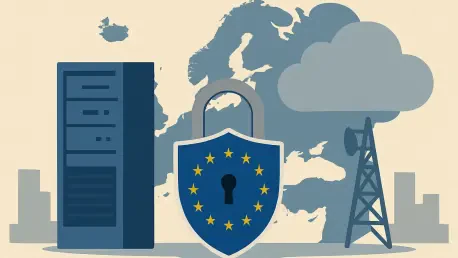

European legislators are preparing to redefine the boundaries of the digital world as the formal presentation of the Tech Sovereignty Package approaches on May 27. This ambitious legislative framework is designed to fundamentally shift how the continent manages its digital footprint, moving away from a decade-long reliance on external infrastructure. By targeting the current dominance of major American cloud providers, who currently manage approximately 70% of the European market, the European Union is signaling a decisive turn toward strategic autonomy. This initiative does not merely aim to foster local competition but serves as a protective barrier for the most sensitive public-sector data, ensuring that information remains within jurisdictional borders. The move highlights a growing discomfort with the reach of foreign laws over European soil, prompting a structural overhaul of how cloud services are procured and deployed across the member states. This strategy marks a significant departure from previous years, reflecting a more assertive stance on digital governance and national security.
Navigating the Shift Toward Strategic Autonomy
Data Classification: Securing the Public Sector
The proposed regulations within the Tech Sovereignty Package introduce a sophisticated tier-based system for data management that moves beyond simple binary choices of domestic versus foreign hosting. By identifying specific high-stakes sectors like healthcare, national security, and financial regulation, the European Commission is establishing clear boundaries for where data must physically reside and who can manage it. This classification strategy ensures that the most sensitive public-sector information is hosted exclusively on European soil, utilizing infrastructure that is fully compliant with local privacy standards. While the private sector currently remains outside the immediate scope of these mandates, the ripple effects are expected to encourage a voluntary shift among commercial enterprises seeking to align with government standards. This targeted approach allows the EU to mitigate risks without completely severing ties with global cloud leaders, creating a balanced but firm regulatory environment that prioritizes safety over convenience.
Implementing such a granular classification system requires a significant technological upgrade for government agencies that have historically relied on integrated suites from American providers. Transitioning these systems involves not only migrating petabytes of data but also ensuring that the new domestic platforms can match the processing power and scalability of their global counterparts. European tech firms are being tasked with developing specialized cloud environments that can handle the complex demands of modern public administration while maintaining strict isolation from foreign legal reaches. This transition is seen as a necessary evolution to prevent unauthorized data access and to maintain the integrity of public services during times of international tension. As the 2026-2028 roadmap for implementation begins to take shape, the focus is shifting toward creating interoperability standards that allow for a seamless transition between various domestic providers, ensuring that no single European entity gains a monopoly that could mirror the current foreign dominance.
Legal Friction: Countering the U.S. Cloud Act
A primary catalyst for the current legislative push is the ongoing legal tension created by the U.S. Cloud Act, which grants American authorities the power to demand data from U.S. companies regardless of where the physical servers are located. This extraterritorial reach has long been a point of contention for European policymakers who view it as a direct violation of European data privacy rights and national sovereignty. To counter this perceived overreach, the EU is mandating that sensitive data be stored with providers that are not subject to such foreign warrants, effectively creating a “legal firewall” around its digital infrastructure. This strategy is not just about physical location but about the legal jurisdiction under which the cloud provider operates, forcing a clear separation between American-owned entities and European data repositories. By removing the legal vulnerability associated with foreign-controlled infrastructure, the EU aims to protect its citizens and public institutions from clandestine surveillance and data harvesting.
The conflict over data access rights has forced a re-evaluation of how international treaties govern the digital space, as the EU seeks to establish more robust protections through the Tech Sovereignty Package. As domestic providers gain more traction, the emphasis is moving toward creating a unified legal framework that harmonizes data protection laws across all member states, making it harder for foreign entities to find legal loopholes. This legal fortification is complemented by technical measures, such as enhanced encryption protocols where only the data owner holds the keys, further insulating the information from third-party requests. The goal is to create a secure digital haven where European laws are the sole authority, thereby reducing the influence of the U.S. legal system on European operations. This move toward legal independence is viewed as a critical component of broader geopolitical strategy, ensuring that the bloc remains resilient in an increasingly fragmented global internet landscape and maintains its own rules.
Developing a Resilient European Ecosystem
Open Source: The Foundation of Independence
To move away from the proprietary ecosystems of major foreign tech firms, European governments are funneling significant investments into open-source solutions and local infrastructure projects. This investment strategy focuses on building transparent, community-vetted software stacks that provide the same level of functionality as popular commercial platforms without the risk of vendor lock-in or hidden backdoors. By championing open-source technologies, the EU is fostering a more competitive and diverse market where smaller European startups can contribute to and benefit from a shared digital foundation. This collaborative approach not only enhances security through transparency but also stimulates local economic growth by keeping investment capital within the European tech industry. As these domestic alternatives mature, they are increasingly being integrated into the core operations of major public institutions, demonstrating that high-performance cloud computing can be achieved without relying on the dominant giants of the past years.
Scaling these open-source initiatives requires a long-term commitment to research and development, as well as the creation of specialized training programs to build a workforce capable of managing these new systems. The EU’s current strategy involves creating innovation hubs where public and private sectors can collaborate on developing the next generation of cloud technologies, from distributed storage solutions to advanced cybersecurity tools. These hubs are designed to accelerate the deployment of sovereign technologies, ensuring that the transition from foreign to domestic providers does not lead to a decrease in service quality or reliability. Furthermore, the push for open standards allows for greater flexibility, enabling different government departments to tailor their digital tools to specific needs while remaining within the broader European security framework. This shift toward a more modular and transparent digital architecture is a direct response to the rigid, closed ecosystems offered by foreign giants, providing the agility needed.
Geopolitical Stability: Reducing External Reliance
The drive for digital protectionism is deeply intertwined with broader geopolitical shifts and the desire for European self-sufficiency in an unpredictable global landscape. Historical tensions, including trade disputes and disagreements over defense contributions, have taught European leaders the risks of being overly dependent on a single foreign partner for critical infrastructure. By securing its own data and building independent cloud capabilities, the EU is insulating itself from the fluctuations of international politics and the potential use of technology as a tool for economic or political leverage. This movement toward strategic autonomy is not an isolationist policy but a defensive measure designed to ensure that European interests are protected regardless of the political climate in Washington or elsewhere. The Tech Sovereignty Package serves as a cornerstone of this new doctrine, providing the legal and economic tools necessary to maintain control over the continent’s most valuable digital assets.
Achieving this level of independence requires navigating complex diplomatic waters, as the EU must balance its sovereignty goals with the need for continued international cooperation on global issues like cybersecurity and trade. The move toward domestic hosting is part of a larger trend where regions are seeking more control over their digital borders, often referred to as digital regionalism. For the European Union, the goal was to lead by example, showing that it is possible to maintain a high level of security and privacy without sacrificing the benefits of a globalized economy. By setting high standards for data protection and infrastructure resilience, the EU is positioning itself as a global leader in digital ethics and governance, potentially influencing how other nations approach their own digital sovereignty. The ongoing transformation of the European cloud landscape was a necessary step toward ensuring that the bloc remains a powerful and independent player on the world stage for many years to come.
The European Union’s approach to securing its data from foreign cloud giants represented a fundamental shift in the global digital order, prioritizing long-term strategic autonomy over short-term convenience. By implementing a rigorous data classification system and mandating local hosting for sensitive public-sector records, the bloc successfully created a defensive perimeter against foreign legal overreach and surveillance. This transition was bolstered by substantial investments in domestic open-source alternatives and a unified regulatory front that challenged the market dominance of American technology firms. Ultimately, the Tech Sovereignty Package provided the necessary framework for European nations to regain control over their digital infrastructure, fostering a more resilient and self-sufficient ecosystem. Looking forward, the focus shifted toward expanding these sovereignty principles to the private sector and ensuring that European technology continued to evolve in alignment with democratic values and privacy rights. This evolution ensured that the continent was well-prepared to face the challenges of an increasingly digital world without compromising its core principles.