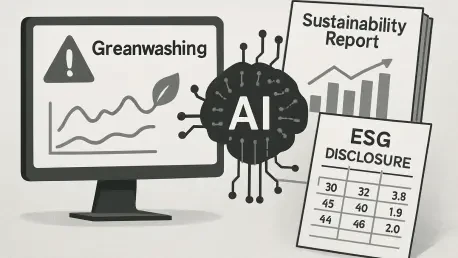

Machine learning algorithms can effectively identify numerical inconsistencies by comparing the optimistic narrative sections of sustainability reports with the raw data tables found in ESG disclosures. This capability has become vital in 2026 as the global demand for corporate transparency reaches a fever pitch, forcing organizations to move beyond mere rhetoric toward verifiable environmental performance. For years, the practice of greenwashing—portraying a company or its products as environmentally friendly through misleading claims—has undermined the integrity of the sustainable finance movement. As corporations struggle to balance profitability with decarbonization targets, the temptation to polish disclosures with vague qualifiers and selective data has grown. However, the sheer density of modern environmental reports, which often span hundreds of pages across multiple platforms, makes manual verification impossible for regulators and retail investors alike. Artificial Intelligence (AI) has stepped into this vacuum, providing a scalable, objective framework for auditing environmental promises. By shifting the burden of proof from the consumer to high-speed computational models, the technology is fundamentally altering the power dynamics between corporate marketing departments and the public they serve, ensuring that sustainability is a measurable reality rather than a branding exercise.
Analyzing Corporate Narratives Through Natural Language Processing
Natural Language Processing (NLP) functions as the primary engine for deconstructing the linguistic strategies used in corporate sustainability reporting. These models are meticulously trained to differentiate between concrete, time-bound commitments and the broad, unsubstantiated descriptors that often characterize greenwashing. In the current reporting cycle, AI systems frequently flag terms such as “green,” “eco-friendly,” and “planet-positive” when they are used in isolation without supporting evidence. Statistical analysis reveals that a significant portion of environmental claims made by consumer goods companies rely on these vague generalizations, which are often legally defensible but practically meaningless. By isolating these linguistic patterns, NLP allows auditors to see through the “green haze” of marketing and focus on whether a company is actually providing the geographic boundaries, specific dates, and quantifiable metrics required to validate its statements. This systematic filtering process is essential for distilling thousands of pages of text into a clear, comparable dataset that highlights which firms are providing substance and which are merely relying on the positive connotations of environmental terminology.
The effectiveness of NLP extends beyond simple keyword detection into the more complex realms of sentiment and entity analysis. Modern AI models can detect a “sentiment-performance mismatch,” where the tone of a disclosure is disproportionately optimistic relative to the modest improvements in a company’s carbon footprint or waste reduction. If a corporation uses superlative language—describing its sustainability efforts as “industry-leading” or “revolutionary”—while reporting only a one-percent decrease in emissions, the AI assigns a high risk score for deceptive communication. Furthermore, Named Entity Recognition allows these systems to map specific environmental claims to exact facilities or product lines, preventing the common tactic of using a single “flagship” green project to mask the poor environmental performance of a global operation. This granular level of scrutiny ensures that a company cannot use the successes of a small subsidiary to provide a halo effect for its more polluting divisions. By correlating sentiment with specific entities, AI provides a multidimensional view of corporate honesty that was previously out of reach for human analysts.
Evaluating Climate Pledges and Value Chain Accountability
The credibility of “Net-Zero” commitments is a focal point for AI-driven auditing, particularly as companies navigate the mid-decade milestones established for the 2020s. Many organizations have historically announced ambitious targets for the late 2040s while failing to provide the interim objectives necessary to track progress in the near term. AI systems are now programmed to deconstruct these pledges by extracting critical variables such as base years, specific percentage reduction targets, and the actual methodologies used for carbon offsets. If a company begins to shift its language in successive reports—moving from hard percentage targets to broader, less measurable goals—the AI flags this as “moving the goalposts.” This longitudinal tracking is crucial for holding executives accountable for the promises made by their predecessors. By analyzing the evolution of a pledge from its inception to the current year, AI reveals whether a company is accelerating its climate action or simply refining its rhetoric to account for missed targets, providing investors with a clear trajectory of genuine corporate commitment.
A major litmus test for any genuine climate strategy in 2026 is the transparent reporting of Scope 3 emissions, which represent the indirect impact of a company’s entire value chain. For many manufacturing and retail giants, these emissions account for over ninety percent of their total carbon footprint, yet they are the most frequently omitted or underreported metrics in sustainability disclosures. AI analysis is particularly adept at identifying these omissions by cross-referencing a company’s industry peers and historical supply chain data. When an AI system detects that a “Net-Zero” claim excludes Scope 3 data while competitors in the same sector include it, the discrepancy is immediately highlighted as a material gap in transparency. This capability is transforming how stakeholders view environmental risk, as it exposes the reality that a company cannot be truly “green” if its supply chain remains carbon-intensive. By forcing the inclusion of the entire value chain into the analytical framework, AI prevents corporations from outsourcing their pollution to third-party suppliers while claiming environmental leadership at the corporate level.
Identifying Deceptive Patterns Through Machine Learning
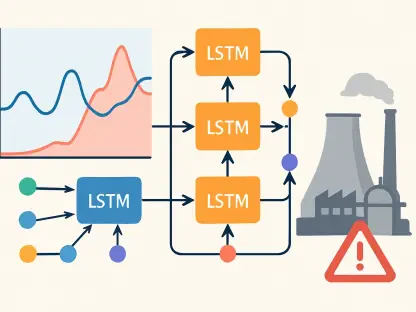
Machine learning (ML) shifts the focus from linguistic analysis to the underlying structural relationships between narrative claims and hard data. These algorithms are specifically trained to identify “text-to-data mismatches,” where the encouraging story presented in a report’s executive summary is not supported by the complex ESG data tables found in the technical appendices. For example, an ML system can calculate the rate of change in a company’s water usage over a five-year period and compare it to the narrative’s claim of “aggressive conservation efforts.” If the data shows a stagnant or increasing trend in water consumption, the system identifies the narrative as misleading. This automated verification process creates a “trustworthiness score” for every disclosure, allowing stakeholders to quickly identify which sections of a report are backed by empirical evidence. This level of rigor is especially important for the financial sector, where investment decisions are increasingly tied to sustainability performance and where the cost of being misled can run into the billions of dollars.
Beyond identifying simple mismatches, advanced machine learning models utilize historical datasets of documented greenwashing cases to recognize recurring archetypes of deception. One such pattern is the “hidden trade-off,” where a company emphasizes a significant reduction in carbon emissions while ignoring a simultaneous increase in toxic waste or biodiversity loss. Another common pattern is the “lesser of two evils” claim, where an inherently polluting industry highlights a minor green feature to distract from its core environmental impact. By benchmarking new sustainability reports against these established patterns, AI can categorize potential risks with a high degree of accuracy before the reports even reach the public. Interestingly, the internal adoption of these same ML tools is helping corporations improve their own performance. Studies in 2026 suggest that companies using AI for operational planning show a smaller gap between their disclosed environmental goals and their actual impacts, as the technology enables more accurate data tracking and more efficient resource management from within the organization.
Recognizing Technical Constraints and Human Nuance
Despite the transformative power of AI, the technology is not without significant limitations that require careful human oversight. One of the most persistent challenges is the occurrence of false positives, where the system may flag technical jargon or legally required cautious language as a sign of evasiveness. In highly regulated sectors, companies are often mandated to use specific, often dry, terminology that an AI might mistake for a lack of transparency or a deliberate attempt to hide facts. Furthermore, a perceived mismatch between a narrative and a data table might stem from a legitimate change in carbon accounting methodologies or a shift in reporting standards that the AI does not yet fully comprehend. Without human context, these flags could unfairly damage a company’s reputation or lead to unnecessary regulatory scrutiny. Therefore, the most effective greenwashing detection systems are designed as “human-in-the-loop” platforms, where AI identifies suspicious signals and human experts perform the final qualitative assessment to ensure that the context of the disclosure is fully understood.
Data quality and regional bias also present substantial hurdles for automated environmental oversight. Most AI models are trained on high-quality disclosures from Western markets, which may lead them to overlook the specific nuances of greenwashing in emerging economies or niche industries. For instance, a sustainability report from a company operating in a developing nation might use different reporting frameworks or face unique localized environmental challenges that the AI interprets as a lack of compliance. Additionally, AI often lacks visibility into “internal” corporate shifts, such as private carbon pricing mechanisms or early-stage research and development investments, which may not yet be reflected in the public disclosures the system is programmed to scan. This lack of access to private data means that while AI is excellent at analyzing what a company says to the world, it cannot always see the genuine progress happening behind closed doors. Maintaining a balanced perspective requires recognizing that AI is a tool for transparency, not an infallible judge of corporate intent or future potential.
Integrating AI Into Global Risk and Compliance Frameworks
For the financial sector in 2026, AI-driven greenwashing detection has transitioned from a niche curiosity to a critical component of risk management. Deceptive environmental claims carry immense reputational and regulatory risks that can lead to sudden stock price volatility, investor lawsuits, and heavy fines. Institutional investors are now integrating AI-generated “integrity scores” into their broader financial frameworks to protect their portfolios from the fallout of potential greenwashing scandals. By identifying inconsistencies early, these tools allow asset managers to engage with corporate leadership more effectively, demanding better data or clearer commitments before a crisis occurs. This proactive approach to risk management is particularly vital for ESG-focused funds, which must prove to their own clients that the underlying assets truly meet the sustainability criteria promised in the fund’s prospectus. AI provides the verification layer that ensures the “green” in a green fund is supported by more than just a clever marketing campaign and a leaf-themed logo.
On the regulatory front, agencies like the Securities and Exchange Commission (SEC) and its international counterparts are increasingly deploying automated systems to monitor market compliance. As the rules surrounding ESG disclosures become more stringent, the volume of filings makes manual review of every document an impossibility for government agencies. AI allows regulators to scan the entire market in real-time, flagging companies that appear to be outliers in their reporting accuracy or those whose claims deviate significantly from industry standards. This automated oversight serves as a powerful deterrent, as corporations realize that their disclosures are being scrutinized by systems that do not sleep and cannot be charmed by polished presentations. The synergy between machine-generated data insights and regulatory enforcement is creating a more level playing field, where companies that invest in genuine sustainability are no longer at a competitive disadvantage against those that simply invest in better public relations.
Strategic Implementation: The Path Toward Market Transparency
To navigate this new era of automated accountability, corporations must adopt a strategy of extreme specificity in their environmental communications. The most effective defense against a greenwashing flag is the use of precise, time-bound, and evidence-supported data that leaves little room for interpretation. Businesses should consider running their own marketing materials and sustainability reports through detection algorithms before they are released to the public. This internal auditing process allows firms to identify vague language, unsupported claims, or data inconsistencies that might trigger a regulatory investigation or a loss of investor confidence. By treating sustainability disclosures with the same level of technical rigor as financial filings, companies can build genuine brand equity and ensure that their environmental messaging is robust enough to withstand the scrutiny of the most advanced AI models. The goal is to move toward a “data-first” communication strategy where every adjective is backed by a corresponding data point in an accessible ESG table.
The landscape of corporate reporting underwent a fundamental shift as the integration of machine learning and natural language processing became the standard for environmental oversight. Stakeholders across the globe recognized that the era of vague promises and selective disclosures had reached its end, replaced by a system where transparency was enforced by code. This evolution was not merely about catching bad actors; it was about providing the clarity necessary for capital to flow toward truly sustainable solutions. By filtering out the noise of greenwashing, AI allowed the market to reward companies that made genuine, difficult changes to their operational models. As the technology matured, it became clear that the synergy between machine objectivity and human judgment was the only way to ensure a stable and honest transition to a low-carbon economy. The truth behind corporate greenwashing was finally brought to light, not by a single revelation, but by the persistent and systematic analysis of the data that companies themselves provided to the world.