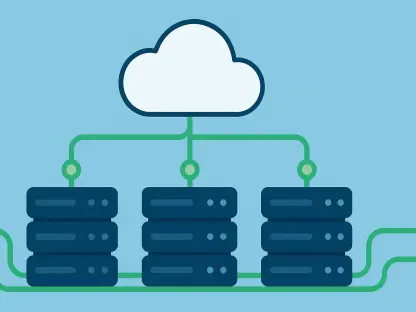

The persistent struggle to harmonize high-value proprietary business logic with the chaotic sprawl of decentralized cloud repositories has finally reached a critical tipping point in the enterprise technology sector. SAP’s strategic acquisition of Dremio, a prominent pioneer in the “agentic lakehouse” category, represents a definitive pivot toward resolving the structural fragmentation that has long plagued corporate information architecture. For several decades, large organizations have found themselves trapped between the rigid precision of their internal resource planning systems and the unorganized, vast datasets residing in external clouds and legacy silos. This move is not merely a technical expansion but a declaration that the future of business intelligence depends on the ability to streamline “AI-ready” environments without the traditional burden of massive data relocation. By weaving Dremio’s capabilities into its ecosystem, SAP is signaling that the most effective way to manage corporate intelligence is not to move everything into a single repository, but to unify diverse sources through a high-performance, federated architecture. This analysis delves into the mechanics of this merger, examining how the adoption of open standards and the elimination of integration friction will redefine the landscape of enterprise automation.
Bridging the Gap: From ERP Silos to Modern Data Ecosystems
The current enterprise landscape is witnessing a pivotal shift in how corporate intelligence is orchestrated and deployed across global operations. For years, the fundamental problem for Chief Information Officers has been the “data gravity” associated with massive Enterprise Resource Planning (ERP) installations, which often act as black boxes of high-value information. While these systems contain the lifeblood of the company—financial records, supply chain logs, and customer profiles—this data has historically been difficult to blend with the real-time streams and unstructured information found in modern cloud environments. The acquisition of Dremio is a calculated response to this disconnect, aiming to provide a bridge that allows intelligence to flow freely across these disparate domains.
This integration promises to transform the way organizations perceive their digital assets by creating a “Business Data Cloud” that treats internal and external data as a singular, accessible resource. Instead of forcing a company to undergo a multi-year migration project just to run a sophisticated predictive model, the new architecture focuses on connecting to data where it currently lives. This approach minimizes the risk of losing vital business context during the transfer process, ensuring that the semantic integrity of the information remains intact. Consequently, the move positions SAP as a more agile partner for enterprises that are weary of the costs and delays associated with traditional data warehousing strategies.
The Evolution of Enterprise Data Management and the Rise of the Lakehouse
To grasp the full weight of this acquisition, one must evaluate the historical progression of how large-scale enterprises have handled their information assets over the past few decades. In the early stages of digital transformation, the industry relied heavily on monolithic data warehouses that utilized rigid Extract, Transform, Load (ETL) pipelines. While these systems provided structure, they often stripped away the nuanced business context required for advanced reasoning, leaving analysts with simplified snapshots rather than a comprehensive view of the business. As data volumes began to explode, many firms turned to “data lakes,” which offered massive scalability but frequently turned into disorganized “swamps” where finding relevant information was nearly impossible.
The industry has now entered the era of the “lakehouse” model—a hybrid innovation that seeks to marry the governance and performance of a warehouse with the low-cost flexibility of a data lake. This transition is being driven by the realization that modern artificial intelligence requires more than just raw compute power; it requires structured, reliable infrastructure. Most enterprise AI projects in recent years have faltered because the underlying data lacked the necessary semantic clarity to support automated decision-making. By incorporating Dremio’s lakehouse technology, SAP is directly addressing these past failures, aiming to rectify the “integration friction” that has historically throttled the speed of large-scale digital initiatives.
Unlocking the Value of Decentralized Data through Open Standards
Embracing Apache Iceberg: The Foundation for Federated Intelligence
A critical technical pillar of the SAP-Dremio synergy is the wholehearted commitment to Apache Iceberg, an open-source table format that is rapidly ascending as the universal standard for large-scale analytical datasets. By pivoting toward an Iceberg-native strategy, SAP is effectively dismantling the “walled garden” philosophy that once dominated the enterprise software market. This technology facilitates what is known as “federated analytical reach,” a capability that allows organizations to query and analyze data directly at its source. Whether the information resides on an on-premises server, a specialized third-party cloud, or a regional departmental repository, it can be accessed without the expensive and time-consuming process of physical relocation.
This shift represents a significant tactical evolution for SAP, as it fills a previous gap in the company’s portfolio regarding open-standard support. By adopting a format that is not tied to any single vendor, SAP ensures that its customers can maintain a fluid exchange of information across their entire digital estate. This transparency is essential for modern enterprises that operate across multiple jurisdictions and cloud providers, as it prevents vendor lock-in while providing a stable foundation for global governance. The move toward Iceberg also suggests that the value in the data market is shifting away from proprietary storage formats and toward the orchestration layers that can manage information regardless of its physical location.
Strategic Neutrality: Navigating a Competitive Data Warehouse Market
This acquisition also grants SAP a distinct strategic advantage in a market currently dominated by giants like Snowflake and Databricks. While SAP continues to maintain collaborative partnerships with these platforms, the inclusion of Dremio introduces a “data-in-place” philosophy that serves as a unique differentiator. Unlike many competitors that often prioritize the ingestion of data into their own proprietary storage environments to maximize performance and billing, Dremio functions as a neutral, federated layer sitting above the storage tier. This allows SAP to offer a unified semantic layer that can communicate across multiple different warehouses and lakes simultaneously.
For the modern enterprise, this neutrality translates into tangible operational benefits, such as drastically reduced implementation times—shifting timelines from months of migration to days of configuration. By owning this core technology rather than simply partnering with external providers, SAP secures its position as the primary orchestrator of business logic. It allows customers to continue using their existing multi-cloud investments while still benefiting from a centralized intelligence layer. This “best-of-both-worlds” approach is particularly attractive to large corporations that have already invested heavily in various storage solutions but struggle to create a cohesive view of their entire operation.
Contextual Precision: Overcoming the Limitations of LLMs with Structured Business Logic
While Large Language Models (LLMs) have captured the public imagination through their ability to generate human-like text, they remain fundamentally limited when it comes to handling complex numerical forecasting and structured business tasks. To accurately predict a global supply chain disruption or optimize cash flow across multiple currencies, an AI agent needs more than just linguistic prowess; it requires precise, context-rich data that follows strict business rules. Dremio’s technology provides the “semantic fabric” that feeds these AI systems the specific definitions they need to operate with high accuracy.
In highly regulated sectors such as financial services and healthcare, this level of precision and control is non-negotiable. Dremio’s architecture allows for the processing of data on-premises, which is a vital feature for organizations that must comply with strict data residency and privacy mandates. By keeping the data in its original, secure location while still making it accessible for AI-driven insights, SAP is offering a solution that balances innovation with compliance. This capability ensures that advanced automation can be applied even to the most sensitive areas of a business without exposing the organization to unnecessary legal or security risks.
The Road Ahead: Agentic AI and the Convergence of ERP and Analytics
As the industry looks toward the near future, the convergence of operational ERP systems and analytical lakehouse models is expected to accelerate significantly. The market is transitioning toward “agentic AI”—autonomous systems that do not merely provide answers to user queries but actively perform business tasks based on real-time data inputs. This evolution will likely spark a wave of innovation focused on “brownfield” environments, where complex webs of legacy systems and regional data silos must be unified without a complete system overhaul. The industry is moving away from the “all-in-cloud” migration mandates of the past in favor of more pragmatic, hybrid architectures that prioritize metadata management and data governance.
Furthermore, as the underlying resources of storage and compute continue to become commoditized, the real competitive edge for software providers will lie in the “semantic layer.” This is the space where business logic, definitions, and data relationships are defined and maintained. By integrating Dremio, SAP is positioning itself to lead in this specific area, ensuring that its AI agents are the most “business-aware” in the market. The goal is to move beyond simple data retrieval and toward a state where the software understands the nuance of every transaction, enabling a level of automation that was previously thought to be impossible in large, complex organizations.
Strategic Imperatives for Organizations Navigating the New Data Landscape
For IT leaders and executive teams, the implications of this acquisition provide a clear roadmap for digital modernization in the coming years. The most important takeaway is that the era of mandatory data movement as a prerequisite for insight is effectively over; organizations should now prioritize platforms that offer federated access and support open standards. Leaders should focus their energy on building a robust semantic layer that clearly defines what their data represents in a real-world business context, as this foundation will determine the ultimate success of their AI investments. While existing footprints in other data warehouses remain valuable, it is critical to begin aligning new workloads with a unified fabric that can span the entire enterprise.
Best practices for the next phase of digital growth involve adopting a “data-in-place” strategy to reduce latency and lower the total cost of ownership. This approach not only saves money on migration and egress fees but also maintains a much higher standard of compliance and security. Organizations should evaluate their current vendors based on their willingness to embrace openness and interoperability, as the closed ecosystems of the past are becoming increasingly obsolete in a world driven by decentralized intelligence. By focusing on governance and the semantic definition of data, businesses can ensure they are ready to leverage the full power of the next generation of autonomous business agents.
Reimagining the Future of Enterprise Intelligence
The acquisition of Dremio by SAP stood as a transformative milestone that successfully addressed the long-standing “data gravity” problem within the corporate world. By integrating a federated and open-standard data layer, the organization ensured its place as the primary hub for business intelligence during a period of rapid AI adoption. This move signaled that the role of the ERP had shifted from managing internal processes to mastering the complex, decentralized ecosystems that defined the modern global economy. As the boundaries between operational tasks and analytical insights blurred, the integration proved that a unified data landscape was the key to unlocking industrial innovation.
Ultimately, the strategy provided a blueprint for how legacy giants could adapt to a world where data was no longer a static asset but a fluid, ubiquitous resource. The transition toward the “agentic lakehouse” model allowed enterprises to finally harness the full potential of their information without the traditional constraints of physical location or proprietary formats. By prioritizing open standards and federated access, the industry moved toward a more transparent and efficient model of intelligence. The successful merger reflected a broader realization that the most successful organizations of the future were those capable of turning fragmented data into a cohesive, actionable, and intelligent engine for growth.