
The global energy landscape has arrived at a critical juncture where the traditional reliance on human intuition in the drilling sector is being rapidly augmented by sophisticated digital intelligence. For decades, the success of a drilling operation depended heavily on the subjective experience of seasoned rig crews, which inevitably led to inconsistencies across different shifts and geographical locations. To address these persistent challenges, Nabors Drilling Technologies and Corva AI have expanded their collaborative efforts to launch a revolutionary system known as RigCLOUD Powered by Corva. This integrated technological ecosystem merges high-performance edge computing with an advanced artificial intelligence platform, establishing a comprehensive “single source of truth” for oil and gas operations. By providing objective data insights, the system assists teams in making more informed decisions that are rooted in factual analysis rather than mere gut feeling or historical anecdote.
Resolving Data Fragmentation and Human Subjectivity
For years, the drilling industry struggled with fragmented data ecosystems where critical information was often trapped in isolated silos across various vendor platforms and multiple screens. This lack of integration meant that a crew working a day shift might interpret drilling parameters in a fundamentally different way than the night crew, resulting in erratic performance metrics across even a single fleet of rigs. Without a unified method for visualizing and analyzing information, drilling contractors found it nearly impossible to scale operational efficiency or maintain a consistent standard of excellence from one well to the next. The inability to synchronize these workflows across disparate teams hindered the industry’s ability to capitalize on the vast amounts of raw data being generated daily at the wellsite. By consolidating these disparate streams into a singular interface, operators can finally eliminate the friction caused by technical barriers.
A significant hurdle identified by industry veterans was the historical absence of standardized performance metrics, which led to frequent disagreements over operational outcomes. Different software applications often utilized varied mathematical formulas to calculate essential indicators, such as the Rate of Penetration or the precise timing of a pipe connection sequence. These technical discrepancies made it difficult for drilling contractors and operators to reach a consensus on performance levels, frequently complicating the execution of performance-based contracts. By implementing a centralized analytics engine that calculates every key performance indicator using a unified logic, the industry is moving past subjective interpretations and focusing on undisputed operational facts. This shift toward numerical transparency ensures that all stakeholders are aligned, reducing the potential for conflict while fostering a culture of accountability based on shared data rather than individual opinion.
Sophisticated Infrastructure for High-Speed Intelligence
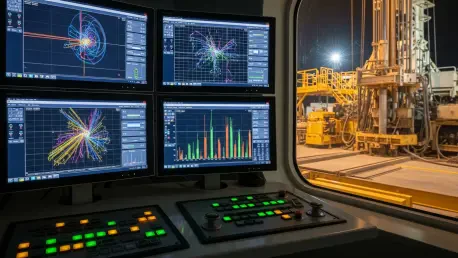
The structural foundation of this digital integration relies on a multi-layered architecture designed to process massive volumes of operational data with minimal latency. It begins directly at the rig site, where specialized sensors capture raw streams of information that are immediately filtered and processed by an on-site edge computing system. This localized processing ensures that the data is of the highest quality and security before it ever reaches the cloud environment, which is crucial for maintaining operational continuity. Such a configuration allows a rig to operate with high-speed intelligence even in the most remote or challenging environments where internet connectivity might be intermittent or limited. By prioritizing local computation, the system minimizes the risk of data loss and ensures that time-sensitive insights are available to the crew without the delays typically associated with long-distance data transmission or saturated satellite bandwidth.
What truly distinguishes this platform is the sophisticated manner in which data flows through the Corva analytical environment to generate predictive insights. Rather than simply displaying raw numbers within a static application, the information is continuously scrutinized by machine learning models that are trained to detect potential problems before they manifest. These algorithms are capable of identifying early indicators of downhole vibrations or calculating the optimal mechanical settings required to maximize machinery efficiency and lifespan. These actionable insights are then transmitted back to the rig’s operating system, enabling automated adjustments that keep the entire drilling operation on its intended trajectory without requiring constant manual intervention from human operators. This proactive approach to rig management transforms the role of the driller from a manual laborer to a supervisor of intelligent systems, significantly reducing the likelihood of equipment failure.
Establishing Neutrality Through Universal Performance Standards
One of the most significant breakthroughs resulting from the partnership is the establishment of a neutral foundation for measuring operational success across the entire energy sector. Since the system employs a single, consistent analytics engine to derive every performance metric, all parties involved in the drilling process are presented with the exact same data points. This uniformity eliminates the confusion that traditionally arose from using multiple software tools that might provide conflicting answers for the same operational task. For instance, when the system measures the duration of a pipe connection, it utilizes a definitive and agreed-upon logic that leaves no room for debate between the drilling contractor and the operator. By removing the ambiguity from these critical measurements, the platform enables a more collaborative working environment where progress is measured against a fixed, transparent yardstick rather than moving targets.
The challenge of standardization becomes even more pronounced when managing a diverse fleet of rigs from different manufacturers, each with its own naming conventions and data formats. Every rig builder typically employs a proprietary language for data points, which historically made it incredibly difficult for operators to compare performance across a heterogeneous fleet. The integrated platform solves this by acting as a universal data dictionary, effectively translating various technical dialects into a standardized format that is easily understood by all. This flexibility allows the technology to be deployed on any rig, regardless of whether it is owned by Nabors or another drilling contractor, providing a truly agnostic solution for the modern operator. This ability to bridge the gap between different hardware types ensures that digital transformation is not restricted to a specific brand of equipment but can be implemented across an entire portfolio.
Empowering Field Personnel with Live Operational Visibility
The practical benefits of this technological integration are most visible on the rig floor, where the people operating the equipment now have access to unprecedented levels of detail. Drillers are equipped with a suite of specialized applications that provide real-time 2D and 3D visualizations of the well path alongside continuous safety calculations designed to prevent hazardous collisions. Having this granular information available at their fingertips allows the crew to monitor their own performance as it happens, rather than having to wait for a summarized report at the conclusion of the day. This immediate visibility into the drilling process empowers the on-site team to identify inefficiencies or safety risks instantly, allowing for rapid corrections that protect both the personnel and the wellbore. The transition from reactive to proactive monitoring represents a fundamental shift in how rig-site activities are managed on a minute-by-minute basis.
Access to real-time data has also sparked a significant cultural change within rig crews, fostering an environment of continuous improvement and healthy internal competition. When personnel can see their own efficiency levels and connection speeds compared to previous shifts or industry benchmarks, it encourages a sense of ownership and professional pride in their work. The system further supports this autonomy by providing AI-generated setpoints for the machinery, which reduces the need for the crew to constantly contact a remote office for operational guidance or permission. By providing the rig floor with the advanced tools necessary to monitor and optimize their own performance, the entire operation becomes more agile, resilient, and self-sufficient. This decentralization of decision-making ensures that those closest to the action are the ones best equipped with the knowledge to drive efficiency and maintain safety standards.
Modernizing Workflows Through Scalable Digital Solutions
The ongoing collaboration between Nabors and Corva signifies a broader industry shift toward more open and cooperative ways of working within the energy sector. By moving away from closed, proprietary systems that often restricted data access, these organizations are making advanced artificial intelligence tools more accessible to a wider range of stakeholders. This open-architecture approach drastically reduces the time required to extract meaningful insights from raw data and ensures that the technological ecosystem can evolve as new innovations emerge. The ability to deploy these sophisticated tools across any fleet makes it a highly scalable solution for companies that are looking to modernize their workflows without being tied to a single vendor. This democratization of high-level analytics is paving the way for a more integrated and technologically advanced drilling landscape where the best tools are available to all participants.
In the long term, this digital integration provided a robust foundation for building safer and more accountable drilling operations across the globe. The implementation of continuous monitoring for equipment vibrations and collision risks introduced a layer of safety that manual processes were simply unable to replicate with the same consistency. Furthermore, the adoption of objective, neutral data frameworks established a fair and transparent basis for performance-based contracts, where financial incentives were tied directly to verified operational efficiency. Moving forward, companies successfully prioritized the integration of automated analytics to streamline their decision-making processes and reduce human error. These organizations effectively transitioned away from traditional, fragmented data models toward a more holistic view of their drilling assets. This strategic pivot allowed the industry to achieve a level of transparency and performance that redefined the standards for energy extraction.