
Designing a high-performance management dashboard often feels like a race against the clock where every millisecond spent waiting for sequential database queries translates into a direct loss of user engagement and system efficiency. In the modern landscape of software development, users expect instantaneous feedback, and developers are constantly pushed to optimize data retrieval methods to meet these soaring expectations. However, the path to performance is frequently blocked by the very tools designed to facilitate data access. When a developer attempts to speed up a data-heavy page by launching multiple asynchronous queries at once, a familiar and frustrating runtime exception often brings the entire operation to a grinding halt. This scenario creates a significant technical tension between the need for high-speed parallelism and the architectural safety measures built into Entity Framework Core.
The challenge lies in the way traditional object-relational mapping handles data state. While the instinct of an engineer is to utilize the full power of multi-core processors by wrapping database calls in a parallel task collection, Entity Framework Core imposes a strict barrier. Attempting to share a single context instance across multiple threads results in a crash that points to a violation of thread safety. This is not a simple bug that can be ignored; it is a fundamental architectural signal that the framework is protecting the integrity of the data. To move forward without risking corruption, a shift in strategy is required, moving away from shared contexts and toward a more robust, factory-based approach that enables true concurrency without compromising stability.
Beyond Sequential Latency: Navigating Modern Application Demands
Modern web applications are increasingly complex, often requiring the aggregation of vast amounts of data from disparate tables to provide a comprehensive view of business operations. When a user logs into a corporate portal, the system might need to fetch current inventory levels, pending sales orders, regional performance metrics, and recent system logs all at once. If these operations are performed sequentially, the user experience suffers as each query waits for the previous one to complete its round trip to the database. This “sequential tax” becomes more expensive as the database grows and the complexity of the joins increases, leading to a noticeable lag that can frustrate users and decrease the perceived reliability of the application.
To combat this latency, many developers naturally turn to the asynchronous capabilities of the .NET runtime. The goal is to initiate all necessary queries simultaneously, allowing the database engine to process them in parallel and returning the results as they become available. In theory, this should reduce the total loading time to the duration of the longest single query. However, when these queries are executed using a standard, scoped DbContext, the application often encounters a catastrophic failure. The framework detects that multiple operations are attempting to use the same internal state at the same time, triggering an exception that forces the developer to reconsider the entire data access layer. This common hurdle illustrates the inherent difficulty of balancing the desire for speed with the necessity of thread isolation in a stateful environment.
Furthermore, the pressure to optimize is not just about user satisfaction but also about resource utilization. In a cloud-native environment, reducing the time a request spends in a waiting state can lead to lower costs and higher throughput for the overall system. If an application can process data more efficiently through parallelism, it can handle a higher volume of traffic with the same infrastructure footprint. Yet, the barrier of thread safety in Entity Framework Core remains. Understanding why this limitation exists is the first step toward implementing a solution that provides both the performance of parallel execution and the safety of a well-architected data access strategy.
The Technical Barrier: Why Entity Framework Core Enforces Strict Thread Isolation
To understand why a factory is necessary, one must look deep into the internal workings of the DbContext, which is fundamentally a stateful object designed around the Unit of Work pattern. At its core, the context is responsible for more than just sending SQL commands to a server; it maintains an internal Change Tracker that monitors every entity retrieved from the database. This tracker keeps a record of the original values, current modifications, and the overall status of each object to determine exactly what needs to be updated when a save operation is triggered. Because this internal state is not synchronized for concurrent access, allowing multiple threads to modify it simultaneously would create race conditions, leading to unpredictable behavior and silent data corruption that might not be detected until much later.
Beyond the internal state management, there are significant constraints at the database provider level. Most relational database systems and their associated drivers use a request-response communication model that is restricted to one command per connection at a time. When a DbContext is instantiated, it is typically tied to a single database connection. If two asynchronous tasks attempt to send queries through that same connection at the same time, the underlying protocol is violated. While some providers offer features like Multiple Active Result Sets to mitigate this, these solutions often come with their own performance penalties and do not address the thread-safety issues of the Change Tracker itself. Microsoft designed Entity Framework Core to be lean and high-performing, choosing to omit global locking mechanisms that would slow down every operation for the sake of the few who require parallelism.
Consequently, the responsibility for ensuring thread safety is placed squarely on the developer. The framework assumes that a single context will be used by a single execution flow at any given time. This design choice ensures that the context remains fast for the vast majority of use cases, where operations are naturally sequential. However, it also means that any attempt to bypass these rules through manual multi-threading will be met with an exception designed to prevent the application from entering an unstable state. Recognizing that the context is a short-lived, isolated tool for a single unit of work is crucial for moving toward a more advanced architectural pattern that supports concurrent operations.
The Mechanics: How Concurrent Query Execution Achieves True Isolation
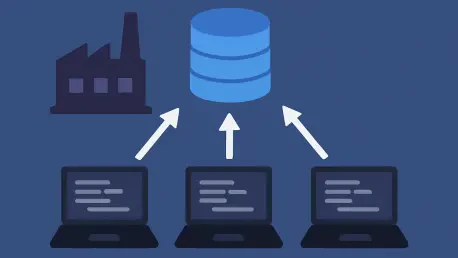
Executing queries in parallel without triggering runtime errors requires a fundamental shift in how database contexts are managed within an application. Rather than trying to force a single context to handle multiple simultaneous requests, the solution involves providing every concurrent task with its own independent environment. This is where the IDbContextFactory becomes an essential component of the architecture. By serving as a specialized engine for generating fresh, short-lived instances of the context, the factory ensures that each query has its own dedicated Change Tracker and its own separate database connection. This total isolation allows the underlying database engine to process multiple requests truly simultaneously, without any cross-thread interference.
While some developers might attempt to solve concurrency issues by using manual synchronization techniques, such as semaphores or locks, these methods often prove counterproductive. A semaphore can indeed prevent a crash by ensuring that only one thread accesses the context at a time, but it does so by forcing the queries back into a sequential line. The threads end up waiting for one another, negating the very performance benefits that parallelism was intended to provide. In contrast, the factory pattern eliminates the need for waiting. When a parallel operation is initiated, the application can spawn several contexts at once, allowing each one to run at full speed on its own dedicated resources.
The transition to using a factory also simplifies the lifecycle management of the database context. Because each context is created for a specific, narrow task, it can be disposed of immediately after the query is complete. This “create-and-dispose” cycle prevents the context from growing too large over the course of a long-running request, which can otherwise lead to memory bloat and slowed performance as the Change Tracker struggles to manage an ever-increasing number of tracked entities. By utilizing the factory, developers gain a level of granular control that is simply not possible with a standard scoped context, enabling the construction of highly responsive and memory-efficient data layers.
Architectural Trade-offs: Expert Perspectives on Thread Safety and Performance
Senior .NET architects frequently discuss the trade-offs involved in moving toward a factory-based data access model, noting that the benefits of stability and speed far outweigh the minimal overhead of object instantiation. Experience in high-load production environments has shown that attempting to bypass the thread-safety limitations of Entity Framework Core leads to “flaky” code—software that works perfectly during local development but fails unpredictably under heavy traffic. These failures are often difficult to debug because they depend on the precise timing of thread execution, making the factory pattern not just a performance optimization, but a critical requirement for building reliable enterprise-grade systems.
Experts also emphasize that the factory pattern aligns more closely with modern cloud-native and microservices architectures. In a world where background processing and asynchronous data aggregation are the norms, decoupling the lifecycle of the data context from the lifecycle of the individual HTTP request provides necessary flexibility. It allows developers to initiate database operations from background threads or event handlers without worrying about the state of the primary request context. This separation of concerns ensures that a failure in one part of the data aggregation process does not necessarily cascade and corrupt the state of other ongoing operations, leading to a more resilient overall system.
Furthermore, the debate over the performance cost of creating multiple DbContext instances has largely been settled by benchmarks showing that the framework handles these allocations extremely efficiently. The time taken to instantiate a new context is negligible compared to the network latency involved in a database round trip. Therefore, the argument for using a single shared context for the sake of “saving memory” or “reducing CPU cycles” is rarely valid in a modern context. Instead, the focus has shifted toward using the right tool for the job, with the factory pattern standing out as the superior choice for any scenario involving complex, concurrent, or long-running data operations.
Implementation Strategies: Developing Robust Factory and Pooling Patterns
Transitioning an application to use the factory pattern involves a straightforward change in how the database context is registered during the startup sequence. By using the AddDbContextFactory method instead of the standard AddDbContext, the framework registers the IDbContextFactory as a singleton service. This means that the factory remains available for the entire duration of the application’s life, ready to produce new context instances whenever a service requires one. Once the factory is registered, other services can simply inject it via their constructors and use it to create a context within a “using” block. This pattern ensures that the context is automatically disposed of and its connection returned to the database driver as soon as the specific task is finished.
For high-throughput systems where even the minor cost of object allocation needs to be minimized, Entity Framework Core offers an even more advanced strategy known as DbContext Pooling. By registering a pooled factory through the AddPooledDbContextFactory method, the framework maintains a “warm” pool of pre-initialized context instances. When the application requests a new context, the factory provides one from the pool, after resetting its internal state to ensure no data from a previous operation leaks into the new task. This approach combines the absolute safety of the factory pattern with the extreme efficiency of resource recycling, making it ideal for systems that process thousands of database interactions every second.
Finally, applying these patterns correctly requires a shift in how developers think about the “Unit of Work.” In a standard web application, the entire request is often treated as a single unit, but in a parallel environment, each individual query or task becomes its own mini-unit of work. By embracing this granularity, developers can build systems that are significantly more responsive and scalable. Whether through standard factories or pooled instances, the ability to run safe, isolated, and parallel queries is a hallmark of professional-grade .NET development, ensuring that the application remains free from the concurrency-related crashes that plague less robust implementations.
The landscape of 2026 showed that the adoption of DbContext factories became the gold standard for high-concurrency systems. Developers realized that the small overhead of object allocation was a minor trade-off for the immense gains in stability and performance. The industry moved toward resilient patterns where isolation was prioritized over the convenience of shared state. Architects observed that systems utilizing these factories faced fewer production outages related to thread contention. This shift proved that understanding the underlying mechanics of the framework led to better software design. The reliance on manual locks faded as the community embraced the built-in tools provided for safe parallel execution. Ultimately, the transition to isolated context management represented a pivotal shift in how data-intensive applications were built and maintained.