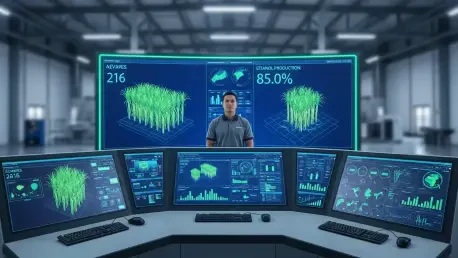

The Indian sugar industry, long characterized by seasonal volatility and traditional manual oversight, is currently undergoing a radical metamorphosis into a high-tech sector powered by machine learning and predictive modeling. For generations, mill operators functioned with a delayed understanding of their own supply chains, reacting to crop failures or market crashes only after the damage was already done. Today, this landscape is unrecognizable as massive data lakes are finally being tapped to navigate an increasingly low-margin environment. Advanced digital platforms are integrating artificial intelligence to help mill owners transform centuries of historical records into a precise roadmap for future profitability. This technological pivot ensures that the industry remains resilient despite the accelerating challenges of climate change and the unpredictable fluctuations of global demand. By moving away from anecdotal evidence toward data-driven certainty, the sector has entered a new era where every decision is backed by solid algorithmic evidence.
Predictive Analytics: Transforming Strategic Decision-Making
Agricultural Forecasting: Precision Yield and Plot Management
One of the most significant shifts involves the transition from historical observation to real-time predictive forecasting that empowers farmers and millers alike. Instead of relying on broad industry averages that often mask local variations, mills now employ sophisticated satellite imagery and localized weather models to predict sugarcane yields at a granular, plot-level basis. This technology allows mills to identify moisture stress and nutrient deficiencies months before a harvest actually begins, enabling them to issue specific irrigation advice or adjust procurement strategies well in advance of a crisis. By managing agricultural risks before they manifest into total crop loss, the industry is building a formidable buffer against the increasingly unpredictable weather patterns that once threatened traditional farming. This proactive stance not only stabilizes the supply chain but also fosters a deeper partnership between industrial processors and the agricultural community that supports them every day.
Strategic Diversion: Balancing Ethanol and Market Demands
Beyond the fields, artificial intelligence plays a vital role in helping executives determine the most profitable balance between refined sugar production and ethanol diversion. This complex puzzle involves navigating strict government mandates, shifting policy signals, and the inherently volatile global market prices for energy and food. Predictive models now act as live simulations, allowing leadership to visualize the financial impact of their manufacturing choices in real-time before a single machine is toggled. As India pushes toward aggressive ethanol blending targets for its national energy transition, these digital tools ensure that mills can meet energy commitments while simultaneously protecting their bottom lines. The ability to simulate various market scenarios allows for a more agile response to regulatory changes, ensuring that the industry remains a pillar of national self-reliance. This strategic flexibility is essential for maintaining liquidity in a market where timing is often just as important as the quality of the raw materials harvested.
Optimizing Industrial Operations and Financial Margins
Operational Intelligence: Real-Time Factory Monitoring
The historical gap between data generation and executive action has long been a hurdle in sugar milling, but artificial intelligence is closing that distance by creating a live nervous system for the factory. Historically, data on crushing rates and boiler efficiency might take days to be analyzed through manual spreadsheets, but modern platforms provide immediate visibility across the entire operation. This allows mill managers to intervene the moment sugar recovery rates drop, rather than waiting for a weekly report that only highlights past failures. In an industry where a fraction of a percentage point in recovery can mean the difference between significant profit and devastating loss, this level of connectivity is a genuine game-changer. By providing a transparent view of the factory floor, these systems encourage a culture of accountability and continuous improvement. The resulting operational stability reduces waste and ensures that every ton of cane is processed with the highest possible efficiency and minimal environmental footprint.
Resource Optimization: Predictive Maintenance and Logistics
Economic efficiency is further bolstered through the implementation of predictive maintenance and precision resource planning across the entire supply chain. Sugar milling involves massive fixed costs and heavy machinery, making it essential to avoid unexpected equipment failures that could halt the crushing process during peak season. Artificial intelligence identifies potential mechanical issues before they occur and optimizes complex logistics, such as matching truck arrivals to actual field conditions rather than rough estimates. By fine-tuning energy consumption and labor allocation, mills are utilizing data as a strategic asset to unlock efficiency gains that capital expenditure alone could never achieve. This systemic optimization extends to the management of byproduct streams, ensuring that bagasse and molasses are utilized to their full economic potential. The integration of these disparate data points into a single dashboard allows for a level of control that was previously unimaginable, turning traditional factories into highly optimized industrial hubs.
Sustainable Integration: Future Industry Evolution
The transition toward a holistic, end-to-end digital integration successfully repositioned the farm, the factory, and the energy market as a single, interconnected ecosystem. Predictive intelligence moved beyond being a competitive edge and established itself as a baseline requirement for surviving the volatility inherent in modern global trade. By transforming decades of raw data into actionable insights, the sector demonstrated that even the most traditional industries found ways to thrive through technological innovation. Stakeholders who invested in these digital infrastructures early saw a stabilization of their margins and a reduction in operational waste. Moving forward, the industry must prioritize the standardization of data protocols to ensure that smaller cooperative mills can also access these transformative benefits. Continued investment in local talent to manage these AI systems became the next logical step for long-term sustainability. This technological evolution ultimately proved that the marriage of agriculture and high-tech was the most effective path toward national energy security and rural economic prosperity.