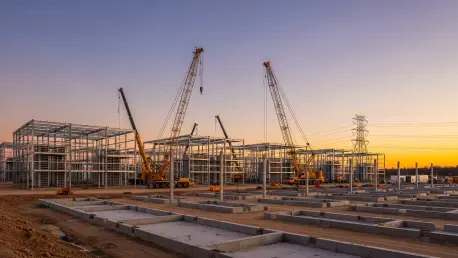

The sight of massive construction cranes standing idle across Northern Virginia and the Silicon Valley marks a startling departure from the decades-long expansion that defined the digital age as the tech industry faces an unprecedented reckoning with the physical limits of the environment. Major industry leaders including Amazon, Microsoft, and Google have begun a strategic retreat from several multi-billion dollar data center projects that were once considered essential to the global artificial intelligence race. This pivot reflects a growing realization that the digital economy can no longer operate in a vacuum, detached from the finite availability of electricity and cooling water that keeps these massive server farms operational. As the demand for generative AI and complex machine learning models continues to surge, the infrastructure required to support them has hit a wall of resource scarcity that is forcing a total re-evaluation of how technology companies plan for a sustainable future.
The Tangible Impact: Environmental Strain and Power Realities
The massive computing power required for modern AI models has turned data centers into some of the most resource-intensive industrial facilities on the continent, surpassing even traditional manufacturing in some regions. During 2025, North American facilities consumed approximately one trillion liters of water—a volume comparable to the annual supply of New York City—primarily to cool the thermal energy generated by high-density hardware. This reliance on local freshwater and power grids creates a difficult feedback loop where technological progress directly contributes to environmental stress in the regions that host these facilities. While the hardware becomes more specialized and powerful, the thermal energy it produces requires constant cooling, placing a relentless burden on regional power grids and municipal water supplies that were never designed to handle such concentrated demand. This physical reality is now a primary constraint on growth.
This surge in physical demand has exposed a widening gap between corporate sustainability promises and the actual environmental footprint of the tech sector’s latest infrastructure projects. Although companies like Alphabet have publicly committed to achieving a carbon-free operational status by 2030, the reality on the ground tells a much more complicated story of rising emissions and increased fossil fuel reliance. Recent data indicates that emissions from major tech firms have increased by over 50 percent since the start of the current decade, largely due to the rapid deployment of power-hungry AI clusters that require constant, baseload energy. Analysts are now expressing deep skepticism regarding whether these “net-zero” targets are truly attainable while the industry continues to prioritize computational speed over resource efficiency. The tension between maintaining a competitive edge in AI and adhering to environmental mandates has reached a breaking point.
Transparency and Risk: The Demand for Site-Specific Reporting
Institutional investors are no longer satisfied with broad corporate reports that aggregate environmental data into national or global averages, arguing that such metrics hide the localized impact of specific facilities. Groups led by Trillium Asset Management are pushing for a new era of site-specific transparency, demanding that tech giants provide granular details regarding the water and energy consumption of individual data center locations. Shareholders are concerned that building massive facilities in drought-prone or energy-stressed regions carries significant financial and operational risks that are currently obscured by opaque reporting standards. If a local utility cannot provide the necessary water for cooling during a heatwave, the entire facility faces the risk of a forced shutdown, which directly impacts the company’s bottom line and service reliability. This push for clarity is intended to force companies to acknowledge the true cost of their physical expansion in vulnerable areas.
A significant challenge in establishing this transparency is the lack of standardized reporting across the industry, which allows some organizations to omit large portions of their environmental footprint. Meta, for example, has faced criticism from environmental watchdogs for reporting resource consumption primarily for the data centers it owns directly, often leaving out the impact of leased spaces or sites currently under development. These reporting gaps make it exceedingly difficult for government regulators and local planners to assess the cumulative strain that the tech sector places on national infrastructure. Without a unified framework for measuring water usage and energy efficiency across the entire supply chain, the industry risks losing the trust of the public and the financial markets. The demand for honest disclosure is becoming a prerequisite for securing the permits and community support needed to maintain a physical presence in any given region.
Local Resistance: Community Pushback and Legislative Barriers
The era of passive community acceptance for data center development has come to an abrupt end as residents in states like Texas and Maine mobilize to protect their essential resources from industrial depletion. In these jurisdictions, the competition for freshwater and electricity has become a zero-sum game, pitting the needs of multi-billion dollar tech corporations against the requirements of local agriculture and residential households. Public protests and legal challenges have become common, stalling projects that were once fast-tracked by local governments eager for tax revenue. This rising tide of civic resistance culminated in a landmark ban in Maine, where legislators moved to prohibit large-scale data center developments to safeguard the state’s pristine freshwater reserves for future generations. These events serve as a warning to the rest of the industry that the social license to operate is no longer guaranteed and must be earned through demonstrably sustainable practices.
In response to these mounting pressures, the tech industry began prioritizing a model of resource replacement and circular efficiency over the traditional strategy of unchecked capacity growth. Companies recognized that the path forward required returning every drop of consumed water back to local ecosystems and investing heavily in renewable energy projects that added new capacity to the grid rather than simply drawing from existing supplies. This transition involved implementing advanced liquid cooling technologies and repurposing waste heat for local heating networks, thereby proving to skeptical communities that data centers could contribute to regional resilience. Success in the digital economy eventually became defined not by the number of servers deployed, but by the ability to justify corporate existence within a resource-constrained world. By embracing accountability and structural innovation, the sector established a blueprint for future infrastructure that balanced technological ambition.