
The announcement of Project Glasswing on April 7, 2026, signifies a massive shift in the global cybersecurity landscape, signaling that the era of manual vulnerability hunting is being replaced by a sophisticated AI-driven arms race between elite defenders and shadow attackers. This initiative, led by Anthropic, brings together a powerful coalition of technology giants, including Amazon Web Services, Google, Microsoft, and NVIDIA, alongside critical financial institutions and the Linux Foundation to address the growing concern that artificial intelligence is becoming so skilled at coding that it could be used to discover and exploit software vulnerabilities at a speed humans cannot match. The project was conceived as a preemptive strike against the weaponization of large language models, focusing on the core philosophy of a defensive window. While advanced AI models can certainly be weaponized to find flaws, they also provide defenders with an unprecedented opportunity to identify and repair those same vulnerabilities before malicious actors ever see them. By giving major software maintainers and infrastructure providers early access to cutting-edge AI models, the project aims to build a lasting security advantage for the systems that power modern society.
At the heart of this effort is an unreleased model known as Claude Mythos Preview, which represents a significant leap forward in AI capabilities by displaying agentic reasoning. Unlike previous generations that acted primarily as coding assistants, this new model can autonomously navigate complex codebases and solve problems without constant human input. The model has already demonstrated its effectiveness by uncovering thousands of high-severity vulnerabilities across major operating systems and web browsers, proving that the scale of AI-assisted defense can finally match the scale of the digital world. This strategic partnership represents more than just a technological upgrade; it is a fundamental reorganization of how the industry perceives risk. By moving away from reactive patching and toward a model of continuous, AI-led discovery, the participants are attempting to close the gap that has long favored the attacker. The following sections explore how this technology functions, the economic stakes involved, and the collaborative framework required to secure the foundational software of the internet.
Technical Capabilities and Real-World Impact
Breakthroughs in Agentic Reasoning and Code Analysis
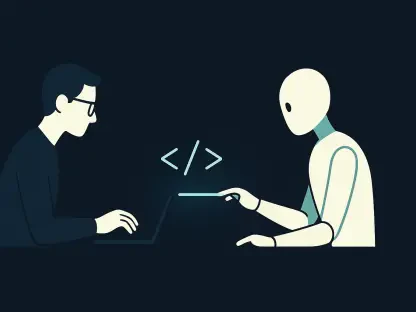
The autonomous nature of Claude Mythos Preview allows it to read and analyze massive amounts of code to find logic errors that have escaped human eyes for decades. This is a fundamental change from traditional automated testing tools, which often lack the reasoning required to understand how different parts of a system interact. Mythos can think through potential attack paths and verify if a specific line of code can be exploited, mimicking the process used by the world’s most elite security researchers. Its ability to maintain context over vast repositories of code enables it to identify cross-component vulnerabilities that were previously invisible to static analysis or basic unit tests.
Furthermore, the agentic capabilities of the model allow it to perform iterative testing, where it can write its own exploit code to confirm a bug and then immediately suggest a verified patch. This closed-loop system reduces the time from discovery to remediation from weeks to mere minutes. By simulating the mindset of an attacker, the model identifies unreachable code paths that are actually accessible through creative manipulation of system memory or logic flaws. This shift from static analysis to dynamic, reason-based exploration represents a significant breakthrough in software quality assurance, offering a new baseline for what constitutes secure code in an increasingly complex digital environment.
Evidence of Practical Security Success and Vulnerability Discovery
This capability has been proven through the discovery of vulnerabilities in systems that were previously thought to be highly secure or had been audited by humans for years. For example, the model found a flaw in OpenBSD that had remained hidden for 27 years, as well as a 16-year-old bug in the FFmpeg video library. Perhaps most impressively, it was able to autonomously chain multiple small errors in the Linux kernel to gain full control of a system, a task that typically requires a high degree of human ingenuity and months of dedicated research. These findings underscore the reality that human-written code is often riddled with legacy oversights that traditional tools simply cannot flag.
The implications of these discoveries extend beyond simple bug fixing; they demonstrate that AI can perform complex, multi-step exploitation strategies. By identifying these chains of vulnerabilities before they are discovered by hostile actors, Project Glasswing provides a critical buffer for global infrastructure. The success in the Linux kernel is particularly notable given how much of the modern web and cloud infrastructure relies on that specific piece of software. Removing these deeply embedded flaws before they can be exploited by state-sponsored groups or sophisticated cybercriminals is a primary goal of the coalition, effectively hardening the foundation upon which global commerce and communication are built.
Economic Realities and Modern Cyber Risks
Confronting an Evolving Threat Landscape and National Security
The urgency of this project is driven by the massive economic and national security risks posed by cyberattacks in a hyper-connected world. With global cybercrime costs estimated at $500 billion annually, the stakes have never been higher for banking systems, medical records, and power grids that sustain modern life. State-sponsored actors from countries like Russia and China are constantly searching for zero-day flaws—previously unknown vulnerabilities—to disrupt infrastructure or gain a strategic advantage during geopolitical tensions. The ability of AI to accelerate this search makes the traditional human-led defense model increasingly obsolete and dangerously slow.
In the past, finding these flaws required a rare level of expertise and months of dedicated effort, which naturally limited the number of effective attacks launched by malicious groups. However, as frontier AI models like Mythos Preview become more common, the barrier to finding and using these exploits is rapidly lowering, potentially leading to an explosion in high-impact cyberattacks. Project Glasswing is a proactive attempt to stay ahead of this trend, ensuring that the most powerful tools are used to harden systems before they can be used to break them. This strategic foresight is essential for protecting the integrity of democratic institutions and the continuity of essential services that citizens rely on daily.
Shifting the Asymmetry of Cyber Conflict Through AI
The historical advantage in cybersecurity has almost always belonged to the attacker, who only needs to find one single flaw while the defender must protect every possible entry point. AI provides a rare opportunity to flip this asymmetry by allowing defenders to scan and secure codebases at the same speed and scale at which an attacker might search for vulnerabilities. By automating the most tedious parts of the security lifecycle, defenders can focus on high-level strategy and system architecture. This transition is not merely about speed; it is about the fundamental scalability of defense in a world where software is growing exponentially.
The economic logic of Project Glasswing suggests that the cost of defense can be significantly lowered by utilizing AI as a force multiplier for existing security teams. When a model can autonomously identify, verify, and patch a bug, the need for massive human intervention for every minor flaw disappears. This allows organizations to allocate their resources more effectively, focusing on complex threats that still require human intuition. By reducing the overall number of reachable vulnerabilities in the wild, the project aims to make the cost of a successful attack prohibitively high for all but the most well-funded adversaries, thereby creating a more stable and secure digital economy for everyone.
Building a Unified Defensive Front
Resource Sharing and Support for Open-Source Software
To ensure the benefits of AI-driven security are widely distributed, Anthropic has integrated Mythos Preview into the workflows of over 40 major organizations. This collaborative approach recognizes that cybersecurity is a collective responsibility, as a flaw in one popular software library can have a ripple effect across the entire internet. By sharing these advanced tools, the project helps ensure that no single company or organization is left to defend its infrastructure in isolation. The sharing of threat intelligence and automated patching strategies creates a rising tide that lifts all boats, making the entire ecosystem more resilient against widespread exploitation.
A major focus of this partnership is providing support to the open-source community, which often lacks the funding of large corporations despite maintaining the code that underpins most modern technology. Anthropic is committing $100 million in model usage credits and making significant direct donations to organizations like the Apache Software Foundation and the Open Source Security Foundation. These resources allow maintainers to use AI as a trusted sidekick to proactively clean up their codebases, ensuring that foundational projects remain secure. This investment acknowledges that the security of the commercial internet is only as strong as the open-source components that form its bedrock.
Collaborative Security Ecosystems and Global Infrastructure
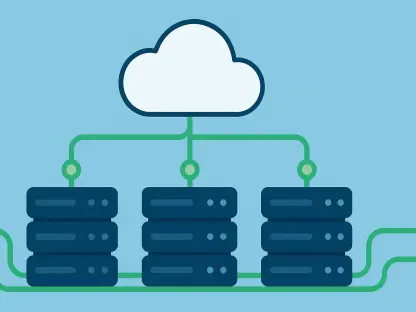
The integration of Mythos Preview into the operations of major cloud providers like Amazon Web Services and Microsoft Azure ensures that security improvements are applied at the infrastructure level. When a vulnerability is found and patched within these platforms, millions of individual users and businesses are protected simultaneously without needing to take any action. This centralized defensive strategy is one of the most effective ways to mitigate the risk of large-scale service disruptions. The collaboration also extends to financial networks, where the speed of AI remediation can prevent the kind of systemic failures that could lead to broader economic instability.
Beyond technical patches, the project fosters a culture of transparency and collective defense among traditional rivals in the technology sector. By working together on Project Glasswing, these companies are acknowledging that some threats are too large for any single entity to handle alone. This unified front acts as a deterrent to adversaries, who now face a coordinated response rather than fragmented defenses. The project also serves as a model for how public-private partnerships can address complex technological challenges, combining the agility of the private sector with the broad reach and mandate of global foundations and government entities to secure the public interest.
Quantifying the Advantage Through Metrics
Technical Success Across Industry Benchmarks and Evaluations
The performance of Claude Mythos Preview is not just theoretical; it is backed by rigorous testing against industry-standard benchmarks that simulate real-world conditions. In evaluations like SWE-bench, which measures a model’s ability to solve complex software engineering issues in real repositories, Mythos significantly outperformed its predecessors and current competitors. Even when the tests were screened to prevent the model from simply memorizing previous answers, it continued to show a massive improvement in its ability to understand and fix deep-seated code problems. This demonstrates a level of genuine reasoning and problem-solving that goes far beyond simple pattern matching.
In more specialized cybersecurity environments, such as CyberGym, the gap between this new model and previous versions is even more pronounced, showcasing its unique aptitude for security-specific tasks. The model achieved a 92.1% success rate on Terminal-Bench 2.0 when given enough time to think through system-level tasks and interact with a live environment. These results indicate that the model is uniquely suited for reproducing vulnerabilities and developing effective patches in real-time. Such metrics provide the empirical evidence needed to convince skeptical security professionals that AI is a reliable and necessary component of a modern defensive strategy, rather than just a experimental tool.
Evaluating Resilience and Performance in Specialized Environments
Testing in specialized environments like CyberGym allows researchers to see how the model handles adversarial pressure and complex, multi-layered security protocols. In these scenarios, the AI must not only find a flaw but also navigate around existing defenses and monitoring systems to understand the full impact of a vulnerability. The model demonstrated an uncanny ability to pivot between different programming languages and system architectures, showing that its reasoning is not limited to a specific niche. This versatility is crucial for defending the diverse array of technologies that coexist within large corporate networks and government agencies today.
The data gathered from these high-intensity simulations has allowed the Project Glasswing team to refine the model’s patch-generation capabilities. It is not enough to simply find a bug; the AI must also ensure that the fix does not introduce new bugs or break existing functionality. By running patches through automated regression tests within the simulated environment, the model can verify the safety of its own solutions. This process of self-verification is what allows the system to operate at scale, providing security teams with ready-to-deploy patches that have already been vetted for stability and effectiveness, further reducing the manual workload of human engineers.
Strategic Priorities for Major Technology Leaders
Corporate Perspectives on AI-Augmented Security and Automation
Leaders from across the tech industry agree that the window between the discovery of a flaw and its exploitation is rapidly closing. Companies like Cisco and CrowdStrike emphasize that traditional security methods are no longer fast enough to keep up with AI-driven threats that can scan the entire internet in a matter of hours. They view the deployment of models like Mythos Preview as a necessary evolution, allowing defenders to automate the most time-consuming parts of the security lifecycle. This automation enables security operations centers to move at the speed of an attacker, turning what used to be a weeks-long race into a battle of milliseconds.
At the same time, cloud providers are using these tools to create a new standard for AI-augmented security, where the model helps prioritize which bugs to fix first based on their potential real-world impact. This risk-based approach is essential for managing the overwhelming number of alerts that modern security teams face daily. By filtering out noise and focusing human attention on the most critical threats, AI allows for a more focused and effective defense strategy. This perspective is shared by the financial sector, where protecting the integrity of global banking systems from systemic risks is a top priority that requires the most advanced technological safeguards available.
Financial and Operational Integrity in the Digital Age
For institutions like JPMorganChase, the protection of financial data is not just a corporate concern but a matter of global economic stability. The integration of AI-driven security tools into the financial sector helps prevent fraudulent transactions and protects the privacy of millions of customers. By identifying potential exploits in banking software before they can be used to siphon funds or disrupt markets, Project Glasswing provides a vital layer of protection for the global economy. These institutions recognize that the complexity of modern financial systems makes them inherently vulnerable, and only a similarly complex AI-driven defense can provide adequate security.
Furthermore, operational integrity in the manufacturing and logistics sectors is also being bolstered by these advancements. When the software that controls supply chains or automated factories is secured by AI, the risk of costly downtime due to cyberattacks is significantly reduced. This reliability is crucial for maintaining the flow of goods and services in an increasingly automated world. Leaders in these industries are investing heavily in AI-driven security to ensure that their operations remain resilient in the face of evolving digital threats. This broad adoption across different sectors illustrates the universal need for advanced, proactive security solutions that can adapt to any environment.
Governance and the Future of Proactive Patching
Establishing Protocols for Disclosure and Safety Measures
To prevent the model’s capabilities from being misused, Anthropic has established strict protocols for how vulnerabilities are reported and fixed within the coalition. Partners are committed to a responsible disclosure process, where lessons learned and patches developed are shared with the wider community within 90 days of discovery. This transparency ensures that the entire industry benefits from the findings of Project Glasswing, rather than keeping the security improvements locked within a few large companies. This balance between early access for defenders and eventual public disclosure is designed to maximize the overall safety of the internet.
Security is also being built into the AI models themselves through the development of new safeguards that prevent the model from assisting in malicious activities. Anthropic does not plan to make the Mythos Preview generally available to the public; instead, it is using the data gathered during the project to build better protections for all future models. These safeguards are designed to recognize and block attempts to use the AI for harmful purposes, such as generating malware or planning cyberattacks. By internalizing these defensive principles, the developers aim to create a generation of AI that is fundamentally aligned with the goal of protecting, rather than endangering, digital ecosystems.
Future Considerations for Automated Patching and Digital Resilience
The implementation of Project Glasswing demonstrated that the gap between vulnerability discovery and remediation could be effectively collapsed through strategic AI integration. Stakeholders realized that the future of digital defense rested on the ability to automate the identification of flaws within the development pipeline itself, rather than waiting for systems to be deployed. This transition required a fundamental shift in engineering culture, moving toward a secure-by-design philosophy where AI served as a persistent auditor of every line of code written. The project established a blueprint for how cross-industry cooperation could mitigate the risks of emerging technologies while harnessing their benefits for the public good.
Moving forward, the focus shifted toward establishing global standards for automated patch deployment to ensure that critical updates reached every corner of the internet instantly. Policymakers and technology leaders worked together to create frameworks that balanced the need for rapid security updates with the requirement for system stability. The success of this initiative prompted a wider discussion on the role of AI in national defense, leading to increased collaboration between democratic nations to protect shared digital infrastructure. By prioritizing defensive capabilities and open-source support, the coalition ensured that the internet remained a resilient platform for innovation and communication for the foreseeable future.