
Meta Platforms has fundamentally reshaped its operational trajectory by committing an additional twenty-one billion dollars to its partnership with specialized cloud provider CoreWeave, ensuring it remains at the forefront of the computational revolution. This massive capital injection signifies more than just a procurement order; it represents a comprehensive structural shift in how social media giants manage the sheer volume of data required for modern generative intelligence. By extending the total value of this collaboration into the tens of billions, the company is effectively insulating itself against the volatility of the global semiconductor market. Investors have greeted this expansion with optimism, interpreting the move as a necessary safeguard for the specialized hardware that will define the next decade of digital interaction. As the landscape becomes saturated with high-performance models, securing dedicated capacity is no longer an option but a prerequisite for survival in a market where compute is power.
Part 1: Strategic Planning and Infrastructure Flexibility
The primary objective of this expansive agreement is to establish a guaranteed pipeline for high-end computing power that extends all the way through 2032. By locking in this specific capacity at a fixed scale, Meta successfully mitigates the risks associated with future hardware shortages and the relentless global scramble for next-generation Nvidia chips. This foresight allows the organization to plan its roadmap with a level of certainty that few competitors can currently match in the present environment. Relying solely on internal data center construction often leads to bottlenecks caused by power grid constraints or construction delays, making this external procurement a critical safety valve. Furthermore, this commitment signals to the market that the company is prepared to outspend rivals to maintain its dominance in algorithmic efficiency. Securing this infrastructure ensures that the development of large-scale models remains unhindered by potential supply chain shocks or geopolitical tensions.
Part 2: Strategic Planning and Scalability Gains
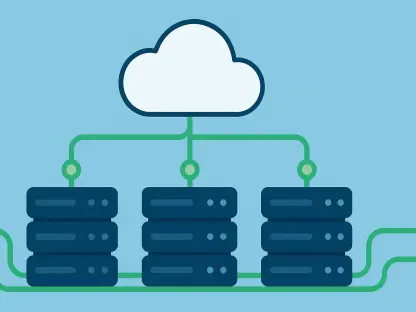
Implementation of this hybrid infrastructure strategy enables the social media titan to seamlessly integrate its proprietary data centers with specialized external cloud clusters. This flexibility is essential for scaling sophisticated generative AI tools and highly complex recommendation engines across platforms such as Facebook and Instagram. As user expectations for personalized content and real-time interactive experiences grow, the underlying compute requirements expand exponentially. CoreWeave’s specialized focus on GPU-intensive workloads provides the necessary throughput to handle these massive datasets without compromising on latency or performance quality. By diversifying its processing environment, the organization avoids the pitfalls of a monoculture infrastructure, ensuring that even if one segment faces maintenance or technical hurdles, the broader ecosystem remains functional. This multi-provider approach creates a resilient foundation that supports continuous innovation while maintaining a high standard of service for its global users.
Part 1: Market Dynamics and Supply Chain Stability
This massive expansion serves as a transformative milestone for CoreWeave, which has successfully pivoted from its origins in cryptocurrency mining to become a cornerstone of the modern AI infrastructure sector. By securing Meta as a primary secondary client, the specialized cloud provider has drastically reduced its financial reliance on its initial anchor customer, Microsoft. This move provides a necessary level of corporate stability and validates CoreWeave’s position as a formidable alternative to traditional cloud behemoths like Amazon or Google. The diversification of the client base ensures that the provider can continue to attract significant investment and maintain its focus on high-performance computing clusters tailored specifically for machine learning. For the broader industry, this partnership demonstrates that the market for dedicated AI cloud services is deep enough to support specialized firms. It also highlights a shift where hardware availability is the most significant barrier to entry for any firm.
Part 2: Market Dynamics and Managing Growth Risks
High stakes characterize the contemporary AI market, particularly as CoreWeave employs an aggressive debt-financing model to accelerate its growth and hardware acquisition. The company has borrowed billions of dollars to purchase the expensive, specialized equipment required by tech conglomerates, making its business viability dependent on sustained, long-term demand. Meta’s multi-year commitment offers a reliable cash flow stream that allows the provider to service these substantial debts while continuing to expand its physical footprint. However, this strategy remains sensitive to any potential shifts in hardware efficiency or a cooling of the broader market sentiment. If specialized chips were to become significantly more efficient or if the demand for massive language models were to plateau, the financial pressure on leveraged infrastructure providers could intensify. Nevertheless, the current trajectory suggests that the appetite for high-density compute will remain robust as companies continue to build their technical moats.
Future Implementation: Navigating the Global AI Arms Race
The final strategic considerations for stakeholders involved prioritizing the optimization of these newly acquired hardware assets to ensure that the massive capital outlay translated into tangible product improvements. It was observed that organizations which successfully integrated specialized external compute with proprietary silicon enjoyed a significant reduction in model training time and operational overhead. Future-proofing required a shift in focus toward software-defined infrastructure that could dynamically allocate resources across different cloud environments based on real-time demand. Industry leaders suggested that the key to long-term sustainability lay in developing more efficient algorithmic architectures that reduced the reliance on brute-force scaling alone. By the end of this investment cycle, the transition toward a more resilient and decentralized AI supply chain became the standard for firms seeking to maintain global relevance. This approach allowed the organization to move more quickly in response to emerging user behaviors.