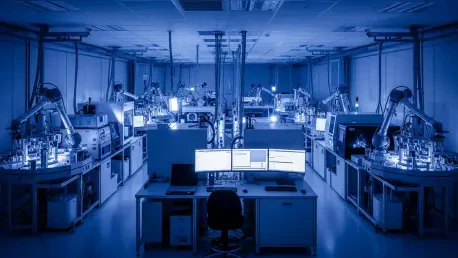

The traditional laboratory environment has undergone a radical transformation as the demand for novel therapeutics outpaces the physical limitations of manual research, leading to the rise of sophisticated high-throughput screening platforms. In this modern era of drug discovery, the ability to rapidly interrogate millions of chemical and biological compounds is no longer a luxury but a fundamental requirement for staying competitive in a fast-moving market. These automated ecosystems represent a complex convergence of precision robotics, advanced fluid dynamics, and high-level digital orchestration, all working in unison to minimize the variables that often lead to experimental failure. By replacing human intervention with robotic consistency, researchers can achieve a level of scalability and reproducibility that was previously unimaginable. This industrialization of biology allows for the continuous operation of assays, transforming the benchtop experiment into a streamlined, data-driven pipeline where every movement is optimized for maximum efficiency and every sample is tracked with absolute digital fidelity.
Mechanical Infrastructure and Robotic Movement
The physical foundation of any automated screening platform resides in its mechanical infrastructure, where robotic arms and sophisticated track-based conveyors serve as the primary conduits for material transport. These systems are engineered to handle microplates with sub-millimeter precision, ensuring that each well is perfectly aligned for subsequent processing steps like dispensing or reading. The use of high-performance robotic grippers and multi-axis arms allows for the seamless transfer of plates between various specialized modules, such as temperature-controlled incubators, lid-removal stations, and analytical readers. Unlike human operators, these mechanical components do not suffer from fatigue or procedural drift, which dramatically reduces the likelihood of handling errors that could compromise an entire experimental run. As laboratories look toward 2027 and beyond, the emphasis has shifted toward increasing the speed of these movements without sacrificing the delicate handling required for fragile biological samples or sensitive chemical reagents.
Beyond simple movement, the modern mechanical architecture of high-throughput systems focuses heavily on modularity and long-term operational reliability. Laboratories frequently opt for “hotel” style storage units or carousel systems that allow for the massive parallelization of plate processing, enabling the system to manage thousands of plates simultaneously in various stages of the workflow. The integration of smart sensors throughout the robotic track allows the platform to detect potential obstructions or misalignments before they lead to mechanical failure, thereby maximizing system uptime. This architectural flexibility is critical because it allows researchers to reconfigure their hardware footprint as specific project needs evolve, adding or removing modules such as plate washers or centrifugal separators without necessitating a complete system overhaul. Reliability remains the most significant metric of success in this layer, as a single mechanical breakdown in a fully integrated line can stall the production of thousands of data points, making redundant design and predictive maintenance essential features of the 2026 laboratory.
Precision Fluidics and Reagent Management
Liquid handling represents the most technically demanding aspect of the screening process, requiring the accurate and precise delivery of chemical libraries and biological materials at an increasingly smaller scale. As the industry moves from 384-well plates to 1536-well formats and even higher densities, the volume of liquid being transferred has plummeted to the nanoliter range, making traditional pipetting methods nearly obsolete for high-end applications. To overcome the challenges of surface tension and evaporation at these minute scales, many current platforms utilize acoustic droplet ejection technology, which employs ultrasonic energy to propel droplets from a source plate to a destination plate without any physical contact. This method eliminates the need for disposable plastic tips, thereby reducing environmental waste and preventing the cross-contamination that can occur with tip-based systems. By utilizing sound waves to move liquid, laboratories can maintain the integrity of their compound libraries while achieving a level of precision that is essential for generating high-quality dose-response curves.
The economic implications of advanced fluidics are just as profound as the technical benefits, as the ability to operate at the nanoliter scale significantly lowers the cost per data point. Many biological reagents, such as primary cells or specialized enzymes, are prohibitively expensive or difficult to produce in large quantities; therefore, minimizing the volume required for each assay is a top priority for budgetary management. Furthermore, modern liquid handling systems are equipped with sophisticated tracking software that monitors reagent levels in real-time, alerting operators to potential shortages before they impact the screening schedule. This level of oversight ensures that expensive compound libraries are used with maximum efficiency, preventing the depletion of rare molecules. The integration of high-speed dispensers that can fill an entire 1536-well plate in seconds further removes bottlenecks, ensuring that the fluidics layer remains perfectly synchronized with the rapid movements of the robotic transport system, thus maintaining a steady flow of prepared samples to the detection instruments.
Analytical Detection and Signal Conversion
Once the biological or chemical reactions have been initiated within the microplates, the detection layer serves as the critical interface where physical phenomena are converted into digital information. This stage utilizes a variety of optical and physical sensors to quantify the results of the assay, with the choice of modality depending strictly on the nature of the experiment being performed. Fluorescence remains a primary tool due to its extreme sensitivity and versatility, although luminescence is frequently preferred for assays where low background noise is a priority. Absorbance measurements continue to be a staple for colorimetric tests, providing a reliable standard for many biochemical screens. The primary challenge in the detection phase is ensuring that the instruments can scan high-density plates at a speed that matches the rest of the automated pipeline. If a detector takes several minutes to read a single plate while the rest of the system produces plates every thirty seconds, a backlog is created that degrades the overall throughput of the facility.
To mitigate these potential bottlenecks, current detection instruments are designed with high-speed scanning heads and multi-detector arrays that allow for the simultaneous reading of multiple wells. These devices are calibrated to maintain an exceptional signal-to-noise ratio, which is vital for distinguishing meaningful biological hits from the inherent variability of the assay system. Once the raw signal is captured, it must be immediately processed through standardized digital filters to ensure that the data is clean and ready for analysis. The integration of these readers into the broader platform requires highly compatible software interfaces that can export data in real-time to centralized management systems. This ensures that researchers can monitor the progress of a screen as it happens, allowing for immediate intervention if the signal quality begins to drift. The reliability of this analytical step is the ultimate determinant of the screen’s success, as the quality of the insights derived from the platform is directly limited by the precision of the initial signal conversion.
Digital Integration and Workflow Orchestration
The orchestration of an automated high-throughput screening platform is managed by a centralized digital infrastructure that functions as the “brain” of the entire operation. This software layer is responsible for dynamic scheduling, which involves calculating the most efficient sequence of events for every plate in the system to ensure that no single module is left idle for long. In a complex environment where multiple different assays might be running concurrently, the scheduler must account for the specific incubation times and processing requirements of each unique protocol. If a mechanical component or a dispenser experiences a minor delay, the intelligent scheduling software can reroute other plates in real-time, preventing a localized issue from causing a total system shutdown. This level of autonomous management allows for “walk-away” operation, where a laboratory can function overnight without direct human supervision, greatly increasing the total output of the facility while reducing the cost of labor.
Data integrity and traceability represent the final, yet perhaps most vital, component of the digital orchestration layer. Every action taken by the robotics, every microliter dispensed, and every signal captured by the detectors is recorded in a comprehensive audit trail that provides a complete history of each sample. This data is normalized and integrated into laboratory information management systems, where it can be cross-referenced with compound databases to identify promising drug candidates. By maintaining a rigorous digital record, laboratories can ensure compliance with regulatory standards and facilitate the reproducibility of their findings. The transition from raw data to actionable insight is further accelerated by the use of advanced analytics that can automatically flag outliers or technical failures, allowing scientists to focus their attention on the most promising results. This seamless integration of physical hardware and digital management has effectively turned the modern laboratory into a high-precision data factory, capable of uncovering the next generation of medical breakthroughs with unprecedented speed.
Strategic Implementation and Future Considerations
The successful deployment of high-throughput screening platforms required a strategic focus on the elimination of operational bottlenecks and the rigorous synchronization of heterogeneous hardware components. During the initial phases of implementation, it was discovered that the greatest gains in efficiency were achieved not through the speed of individual components, but through the seamless transition of materials between different modules. Researchers and engineers prioritized the development of standardized communication protocols that allowed instruments from different manufacturers to interact without data loss or mechanical latency. This collaborative approach to system design ensured that the fluidics, robotics, and detection layers functioned as a single, cohesive unit rather than a collection of isolated tools. By focusing on the total workflow rather than individual machine performance, organizations were able to scale their screening efforts to levels that supported the rapid development of specialized therapies and personalized medicine initiatives.
Looking toward the immediate next steps in the evolution of this technology, the focus has shifted toward the deeper integration of predictive algorithms and autonomous experimental design. The historical data generated by these platforms provided a foundation for software that could now suggest modifications to assay conditions in real-time, further optimizing the use of reagents and time. This shift toward self-optimizing systems represented a move away from static protocols toward more flexible, intelligent screening environments. Scientists began to implement modular hardware updates that supported the use of complex 3D cell models and organ-on-a-chip technologies within the high-throughput framework, allowing for more biologically relevant data early in the drug discovery process. These advancements ensured that the infrastructure remained adaptable to the changing landscape of genomic research and pharmaceutical development, providing a robust platform for future scientific inquiry. The focus remained on refining the interaction between biological complexity and industrial efficiency to reduce the time from laboratory discovery to clinical application.