
The sheer volume of clinical data generated during a single hospital stay can often overwhelm even the most experienced practitioners, yet the traditional reliance on text-heavy reports often leaves patients feeling disconnected from their own health narratives. This disconnect is primarily driven by the inherent complexity of physiological metrics that, when presented as raw numbers or dense blocks of jargon, fail to convey the urgency or the nuances of a medical condition. As the healthcare industry navigates the current digital transformation, the strategic shift toward data visualization has emerged as a critical bridge between professional expertise and patient understanding. By converting abstract data into intuitive graphics, medical providers are moving away from antiquated communication methods that prioritized record-keeping over clarity. This evolution does not merely simplify information; it fundamentally reshapes the dynamic between the doctor and the individual, fostering a collaborative environment where patients are no longer passive recipients of care. Instead, they become active participants who can clearly see the trajectory of their health, allowing for more informed decision-making and a stronger commitment to long-term wellness goals.
Moving Beyond the Limitations of Paper Records
The historical reliance on manual filing systems and handwritten clinical notes created a landscape fraught with systemic inefficiencies that often compromised the quality of patient care. For decades, the medical field operated within a framework where critical information was frequently obscured by illegible handwriting or buried within disorganized physical folders, making it difficult for multi-disciplinary teams to coordinate effectively. These legacy methods lacked the robust audit trails necessary for modern data protection, leaving sensitive information vulnerable to loss or unauthorized access. Furthermore, the manual entry of data into paper charts was inherently prone to human error, which could lead to cascading inaccuracies in a patient’s medical history. These errors were not merely administrative nuisances; they represented real risks to patient safety, as misunderstood dosages or missed allergy notations could have life-altering consequences. The transition to digital infrastructure was necessitated by the need to eliminate these physical barriers and create a more resilient, transparent, and accurate method of documenting the complexities of human health.
Beyond the immediate risks of physical errors, the cognitive burden of interpreting text-heavy spreadsheets and dense clinical summaries served as a significant barrier to effective communication. Patients frequently found themselves staring at pages of laboratory results without any context to determine whether a specific value represented a minor fluctuation or a critical health concern. Digital tools, particularly modern electronic health records, have revolutionized this experience by organizing disparate data points into user-friendly and interactive dashboards. These systems allow healthcare providers to bypass the friction of manual data retrieval, offering real-time access to a comprehensive view of a patient’s status. By automating the organization of data, clinical workflows have become significantly more streamlined, allowing doctors to spend less time navigating paperwork and more time engaging in meaningful dialogue with their patients. This shift ensures that the focus remains on the individual’s health journey rather than the administrative hurdles of data management.
Leveraging Biological Advantages for Visual Communication
Human neurobiology is fundamentally optimized to process visual information with a speed and efficiency that far exceeds the brain’s capacity for decoding written text. A substantial portion of the cerebral cortex is dedicated specifically to interpreting visual stimuli, which explains why the human mind can identify patterns and anomalies in a graph within milliseconds. When medical professionals utilize visual frameworks to explain a diagnosis or a treatment plan, they are essentially communicating in a language that the patient’s brain is pre-wired to understand. This biological advantage allows for the rapid transmission of complex concepts, such as the mechanism of a disease or the impact of a specific pharmaceutical intervention, without the need for extensive verbal explanation. By aligning communication strategies with the natural strengths of human perception, providers can ensure that the core message of a consultation is not lost in a sea of technical terminology or abstract numbers.
Visual tools enable a paradigm shift in how patients perceive their health, moving from a fragmented view of isolated data points to a holistic understanding of their physiological trends. Instead of attempting to interpret a chronological list of individual blood pressure readings, a simple trend line can immediately illustrate the overall trajectory of a chronic condition over several months. This macro-level perspective makes abstract health risks feel more tangible and immediate, often providing the necessary psychological impetus for patients to commit to significant lifestyle modifications. When an individual can see a visual representation of their progress—or the potential consequences of inaction—the motivation to adhere to a prescribed regimen increases substantially. This clarity reduces the anxiety associated with the unknown, as the visual evidence provides a clear and undeniable map of where the patient has been and where their current choices are likely to lead them.
Utilizing Specialized Graphic Formats for Clinical Clarity
The effectiveness of medical communication is often dependent on selecting the most appropriate graphic format to address a specific diagnostic or therapeutic challenge. For example, scatter plots have proven to be exceptionally useful in identifying subtle correlations between medication dosages and the emergence of side effects that might otherwise go unnoticed in a standard narrative report. These visualizations allow both the doctor and the patient to see patterns over time, facilitating a more nuanced adjustment of treatment plans based on empirical evidence rather than anecdotal feedback. Similarly, decision matrices and mind maps are utilized to help patients navigate the complex trade-offs inherent in choosing between various treatment paths, such as the decision between invasive surgery and long-term pharmacological management. These tools break down high-stakes choices into manageable components, ensuring that the patient understands the risks and benefits of each option before a final path is selected.
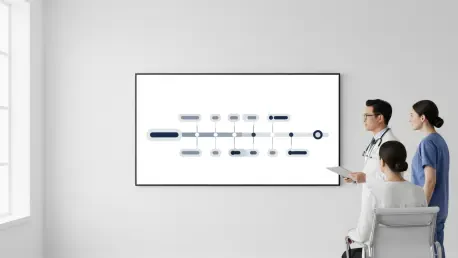
In addition to diagnostic tools, medical timelines provide an essential historical context that helps patients track the long-term progression of a disease or the success of a multi-year recovery plan. These chronological visualizations allow for the integration of various milestones, such as previous surgeries, changes in medication, and significant symptomatic shifts, into a single, cohesive narrative. By using these customized graphics, healthcare organizations ensure that the information provided is deeply personalized to the individual’s unique medical history rather than being a generic summary. This high level of personalization significantly reduces the risk of patient confusion and fosters a deeper sense of trust between the provider and the recipient of care. When every graph and chart is tailored to the specific experiences of the patient, it reinforces the “why” behind every clinical recommendation, making the treatment plan feel like a collaborative roadmap rather than a set of arbitrary instructions.
Enhancing Patient Engagement through AI Integration
A primary objective of the current shift toward digital visualization is the improvement of patient engagement, which has been consistently linked to superior clinical outcomes across all specialties. Automated communication systems now leverage these visual data points to send personalized reminders and follow-up instructions directly to a patient’s mobile device. These notifications often include simplified graphics that summarize recent progress, ensuring that the individual remains connected to their health goals between office visits without adding to the administrative workload of medical staff. This constant digital connection creates a feedback loop that encourages consistency in medication adherence and routine health monitoring. By making the data accessible and visually appealing, healthcare providers have successfully reduced the rate of missed appointments and treatment drop-outs, leading to a more efficient use of medical resources and better overall community health.
The integration of artificial intelligence is further transforming medical communication by enabling the creation of predictive visuals that focus on future health outcomes rather than just historical data. AI algorithms are currently capable of analyzing massive, multi-dimensional datasets to identify the earliest markers of chronic illness or malignant growth long before these patterns would be detectable through manual review. These emerging technologies provide patients with real-time dashboards that simulate how specific behavioral changes, such as dietary adjustments or increased physical activity, will impact their future longevity and quality of life. This forward-looking approach shifts the focus of medical consultations from reactive treatment to proactive prevention. By visualizing potential future scenarios, patients are given a powerful tool to visualize the benefits of their current health choices, making the long-term rewards of healthy living feel much more immediate and attainable.
Navigating the Complexities of Implementation and Accessibility
The transition to a visual and digital model of medical communication involved navigating significant obstacles, particularly concerning the maintenance of data privacy and the mitigation of the digital divide. Protecting sensitive patient information in an era of interconnected systems required the implementation of high-level encryption protocols and stringent access controls to ensure compliance with modern legal and ethical standards. Healthcare organizations recognized early on that the benefits of visualization could only be realized if the underlying data remained secure and the trust of the patient population was preserved. Consequently, continuous investment in cybersecurity infrastructure became a foundational requirement for any facility looking to modernize its communication strategy. These measures were essential for preventing data breaches that could undermine the integrity of the entire digital health ecosystem and cause irreparable harm to patient confidentiality.
Beyond technical security, the industry also focused on the critical task of retraining the workforce to effectively manage and interpret the data streams generated by artificial intelligence. It was not enough to simply implement new software; medical professionals had to be equipped with the skills to translate complex visual data into actionable advice for their patients. Furthermore, ensuring that these sophisticated visual tools were accessible to all socioeconomic groups remained a top priority to prevent the exacerbation of existing health disparities. Organizations worked to design interfaces that were intuitive for individuals with varying levels of technical literacy, ensuring that the move toward digital health remained inclusive. By addressing these challenges head-on, the medical community successfully built a more transparent and patient-centered model of care. The systematic removal of communication barriers resulted in a more informed public and a healthcare system that operated with unprecedented levels of clarity and efficiency.