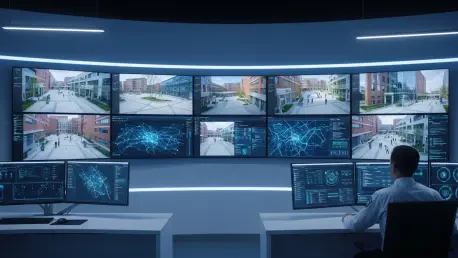

Security personnel at major educational institutions have historically operated on a reactive basis, responding to alarms or calls for help only after an incident has already unfolded and potentially caused harm. Traditional surveillance systems largely served as digital archives, useful for investigations but often powerless during the critical seconds of a developing crisis. However, the current landscape of campus safety is undergoing a fundamental transformation as artificial intelligence redefines the parameters of what is possible. By moving beyond simple motion detection, modern AI-driven platforms can interpret complex visual data in real-time, allowing security teams to anticipate threats before they escalate into emergencies. This shift from hindsight to foresight represents a significant milestone in public safety, particularly in environments with high foot traffic and diverse populations. Institutions are now leveraging these tools to create a comprehensive safety net that remains vigilant every second of the day, ensuring that help is dispatched the moment a deviation from the norm is identified.
Transforming Surveillance: From Passive to Predictive
Advanced Detection: Visual Recognition and Object Tracking
One of the most impactful applications of this technology involves the deployment of visual recognition algorithms capable of identifying specific objects, such as firearms or unauthorized vehicles, with remarkable precision. Unlike human operators who may suffer from fatigue or overlook details on a wall of monitors, AI models process every frame of video with consistent accuracy and speed. When a potential weapon is detected in a parking lot or a corridor, the system can instantly flag the location, zoom in for verification, and alert campus police with high-resolution imagery. This capability drastically reduces response times, often providing law enforcement with information before a single 911 call is placed. Furthermore, these systems are designed to minimize false positives by distinguishing between harmless objects and genuine threats through continuous learning. The reliability of these alerts allows security departments to allocate their resources more effectively, focusing on high-priority incidents while maintaining a broad overview of the entire campus ecosystem.
Behavioral Analysis: Identifying Anomaly and Risk
Beyond object detection, sophisticated behavioral analytics are now being utilized to identify unusual patterns that might indicate a developing altercation or a medical emergency. For instance, an AI system can recognize the specific signature of a physical fight or a sudden crowd surge in a dining hall, triggering an immediate notification to nearby officers. Similarly, loitering in restricted areas during late-night hours can be flagged automatically, allowing for a proactive wellness check or security intervention before a break-in occurs. These systems are increasingly integrated with privacy-first protocols, ensuring that facial recognition is used ethically or replaced by skeleton-tracking technology that monitors movement without storing personal biometric data. This balance between security and privacy is crucial for maintaining trust within the academic community while significantly hardening the campus against potential risks. By identifying these pre-incident indicators, security teams can de-escalate situations through early intervention, fundamentally changing the safety dynamics of the educational environment.
Response Orchestration: Integrating Systems for Rapid Action
Unified Protocols: Communication and Access Management
The true power of artificial intelligence in campus security is realized when it acts as the central nervous system for a suite of interconnected safety technologies. Modern platforms no longer operate in isolation; instead, they integrate video surveillance with electronic access control, public address systems, and emergency notification software. When a high-level threat is confirmed by AI analytics, the system can automatically initiate a series of pre-programmed actions, such as locking down specific wings of a building or flashing visual alerts on digital signage. This automated orchestration eliminates the human error often associated with high-stress situations, where manual coordination can lead to delays. Moreover, the integration extends to local law enforcement agencies, providing them with live video feeds and digital floor plans the moment they are dispatched. This level of transparency ensures that first responders arrive on the scene with situational awareness, knowing exactly where the threat is located and which areas are already secured.
Strategic Implementation: Resilience and Security Standards
Administrators moved toward a more proactive stance by conducting comprehensive audits of their existing hardware to ensure compatibility with modern AI software layers. They prioritized the adoption of open-platform systems that allowed for seamless data exchange between disparate security components, from fire sensors to smart locks. Investing in staff training became a cornerstone of this transition, as security officers learned to interpret AI-driven insights and manage automated workflows with confidence. Educational leaders also established clear ethical guidelines and transparency reports to keep the campus community informed about how data was used and protected. These steps ensured that the technology remained a tool for empowerment rather than a source of surveillance anxiety. By focusing on interoperability and human-in-the-loop decision-making, institutions successfully built a resilient framework that adapted to evolving security challenges. The shift toward these intelligent systems provided a scalable solution for campus safety, fostering an environment where students and faculty felt secure.