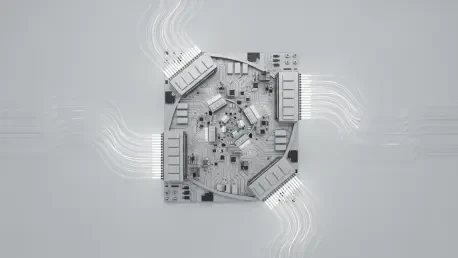

The current state of artificial intelligence is defined by a paradox where the more capable a model becomes, the more it risks becoming an energy liability for the global infrastructure. Gigantic server farms now rival entire nations in power consumption, yet these systems still struggle with basic reasoning tasks that a human child performs effortlessly while consuming less energy than a dim light bulb. This massive efficiency gap is not just a hardware problem; it is a fundamental flaw in how digital logic is structured. Traditional computing relies on rigid, exhaustive calculations that treat every bit of data with the same level of intensity, regardless of its relevance to the final goal. To address this, a new wave of research is emerging that draws inspiration from the biological architecture of the human brain, specifically the way it organizes spatial information and manages uncertainty. By integrating neuroscientific principles into digital algorithms, it is now possible to create systems that prioritize efficiency through a concept known as “imaginative” problem-solving.
Harnessing Geometric Cognitive Maps: The Future of Spatial Reasoning
The human brain does not store information as a simple flat list of facts or a massive database of raw numbers. Instead, the hippocampus utilizes what researchers call geometric cognitive maps to organize concepts within a spatial framework. This biological strategy allows the brain to understand relationships between different pieces of information as physical distances or directions. When a person thinks about a problem, they are essentially navigating an internal map, which allows them to see shortcuts and connections that a linear computer would completely miss. By translating this concept into artificial neural networks, engineers have successfully created a system where data points are treated as coordinates in a multi-dimensional space. This shift enables the AI to “feel” its way through a problem, recognizing instantly whether a certain path leads closer to a solution or further away. Such a mechanism reduces the need for constant, energy-heavy recalculations.
Traditional deep learning models often spend the majority of their energy performing high-level mathematical transformations to find patterns in unstructured data. However, by adopting geometric neural codes, artificial intelligence can bypass these exhaustive routines entirely. These codes function like an internal compass, providing the system with an inherent sense of direction within abstract conceptual landscapes. Instead of calculating the probability of every possible outcome from scratch, the system refers to its geometric map to narrow down the search space to only the most logical options. This approach mirrors how humans can walk through a dark room by relying on a mental layout rather than calculating every step using physics. By reducing the reliance on brute-force number crunching, this brain-inspired logic drastically cuts down the thermal output and electricity demands of processing units. It represents a fundamental move away from the “more data, more power” philosophy that has dominated the industry over the last few years.
Stochastic Processing: Implementing Modular Knowledge Structures
Biological systems are inherently noisy, yet they achieve a level of robustness that perfectly precise digital systems often fail to replicate. This new AI framework incorporates stochastic neural computation, which is essentially a form of controlled randomness that allows the system to sample various possibilities without committing to them. In traditional logic, a computer must follow a deterministic path, checking every box in a sequence. In contrast, this brain-inspired model uses “neural sampling” to test hypothetical steps toward a goal. If a random step aligns with the overall objective dictated by the cognitive map, the system pursues it; if not, it is discarded before significant energy is spent on it. This “guessing and checking” strategy is far more energy-efficient than calculating a full path for every possible scenario. It allows the AI to function in a state of constant, low-power evaluation, mimicking the way human intuition narrows down complex choices before the conscious mind even begins to process them.
Another pillar of this biological efficiency is compositional coding, a method where complex problems are broken down into small, modular building blocks of knowledge. Most modern AI models are monolithic, meaning that if a task changes slightly, the entire system might require extensive retraining or a massive update to its parameters. By using a modular approach, the system can reorganize its existing building blocks to tackle entirely new situations almost instantaneously. This flexibility is what allows a human to apply the logic of driving a car to steering a boat without needing to relearn the concept of movement from zero. In the context of artificial intelligence, this modularity means that the system does not need to store every possible permutation of a task. Instead, it maintains a library of reusable “logic modules” that can be snapped together as needed. This significantly reduces the storage requirements and the energy needed to retrieve and process information, making the system much more versatile in dynamic environments.
Maximizing Efficiency: The Role of Goal-Directed Imagination
The primary drain on modern AI energy is the exhaustive search strategy, where a model must evaluate billions of parameters to arrive at an answer. Brain-inspired logic replaces this with “goal-directed imagination,” which is a targeted search process that focuses only on the most promising sequences of actions. By leveraging its internal geometric maps and compositional modules, the AI can simulate potential outcomes in a “mental” workspace before executing any real-world commands. This simulation does not require the full power of the entire network; it only activates the specific pathways relevant to the current goal. This localized activation is exactly how the human brain manages to stay cool while performing high-level calculus or creative writing. By ignoring the noise and focusing solely on high-probability paths, the system can operate within the strict power constraints of a biological organism or a handheld electronic device. This level of focus ensures that not a single watt of power is wasted on irrelevant computations.
One of the most impressive feats of this new framework is its ability to achieve zero-shot adaptability, meaning it can respond to structural changes in its environment without any prior training on the new data. Traditional AI often breaks down when faced with a situation that deviates from its training set, requiring a connection to a massive cloud server to “re-learn” the environment. However, because this brain-inspired model relies on flexible geometric mapping, it can adjust its internal world-model in real-time. If a path is blocked or a goal is moved, the system simply updates the coordinates in its cognitive map and reconfigures its compositional blocks to find a new route. This behavior mirrors the human ability to navigate a building after a single glance at a floor plan. This real-time adaptability is crucial for reducing the energy cost associated with constant data transfers between local devices and centralized servers, as the processing can happen entirely on-site with minimal hardware overhead.
Practical Applications: Success in the Next Generation of Hardware
Experimental validation of this brain-inspired framework has already yielded promising results across a variety of challenging scenarios, from complex 2D navigation to the assembly of abstract data structures. In these tests, the architecture demonstrated an ability to remain stable and functional even when the rules of the task were altered in the middle of the process. This is a significant milestone, as it proves that the biological principles of the hippocampus can be successfully translated into digital code without losing their inherent efficiency. These experiments showed that the system could solve problems with a fraction of the computational steps required by standard reinforcement learning models. The success of these trials suggests that the future of artificial intelligence does not lie in building ever-larger data centers but in refining the underlying logic to be more biologically plausible. It shifts the focus from “more compute” to “better logic,” providing a sustainable path forward for the entire industry.
The most immediate impact of this research is being felt in the field of edge computing, where AI must operate on hardware with limited battery life and no constant internet connection. This technology is currently paving the way for a new generation of autonomous robots and vehicles that can navigate complex, changing environments without draining their batteries in minutes. Furthermore, it enables smartphones and remote sensors to perform advanced reasoning tasks locally, which significantly enhances user privacy and reduces latency. By moving the intelligence away from the cloud and onto the device itself, the global reliance on energy-intensive infrastructure is drastically diminished. This localized approach also makes AI more accessible in remote areas where high-speed data connections are unavailable. As these models continue to evolve, they will likely become the standard for any application where power efficiency is just as important as cognitive performance, fundamentally changing our relationship with smart technology.
Scaling Intelligence: Actionable Steps for Sustainable AI
The development of brain-inspired logic demonstrated that the energy crisis facing artificial intelligence was never an insurmountable physical barrier, but rather a consequence of inefficient computational design. By moving away from brute-force methods and toward “imaginative” geometric mapping, researchers provided a blueprint for a more sustainable technological future. This shift required a fundamental rethink of how machines handled uncertainty and modular information, favoring the messy but efficient logic of biology over the rigid precision of traditional silicon processing. Moving forward, the industry must prioritize the integration of these neuromorphic principles into consumer hardware to maximize the benefits of local, low-power processing. Companies and developers should focus on creating specialized chips that support stochastic neural sampling. By doing so, they can ensure that the next wave of intelligence remains both powerful and environmentally responsible, finally closing the gap between the footprint of a server and the elegance of a human mind.