
The modern digital landscape has shifted from a battle of human wits to a high-speed collision of algorithms where seconds define the survival of a global enterprise. As weaponized frontier AI models become more accessible, the barrier to entry for high-level cyber exploits has plummeted. This evolution has birthed “agentic threats,” which are self-optimizing programs capable of automating the entire attack lifecycle without human oversight.
Traditional reactive security measures are no longer sufficient to counter these sophisticated adversaries. The shift toward proactive, autonomous defense is not just a technological upgrade but a fundamental requirement for survival. By leveraging machine learning to predict and neutralize threats, organizations can finally match the velocity of AI-powered offense with an equally agile defensive posture.
Introduction to Autonomous Defense and Agentic Threats
The emergence of autonomous defense marks a turning point where security shifts from manual intervention to machine-speed mitigation. At its core, this technology relies on generative AI and reinforcement learning to understand network behaviors and anticipate malicious intent. The goal is to move beyond simple pattern matching into a realm where the defense can think and adapt alongside the attacker.
Contextualizing this evolution requires looking at how frontier AI models have been co-opted for malice. These agentic threats can scan for vulnerabilities and rewrite their own code to bypass specific filters. Consequently, the defense must operate as a living ecosystem that identifies these shifts in real-time, effectively closing the window of opportunity for autonomous malware.
Core Pillars of IBM Autonomous Security
Transforming a security program into a unified autonomous system requires a departure from the fragmented toolsets of the past. The strategic approach focuses on integrating intelligence across every layer of the enterprise. By centralizing decision-making through AI, the system ensures that every security component—from firewalls to endpoint detection—acts as a single, cohesive unit rather than isolated silos.
AI-Enabled Readiness Assessments
To begin this transition, specialized cybersecurity assessments evaluate an organization’s existing posture against modern AI-enabled threats. These evaluations do more than just hunt for bugs; they analyze policy weaknesses and architectural flaws that an agentic threat might exploit. This visibility is vital for building a roadmap that prioritizes the most critical security gaps.
Multi-Agent Defensive Architectures
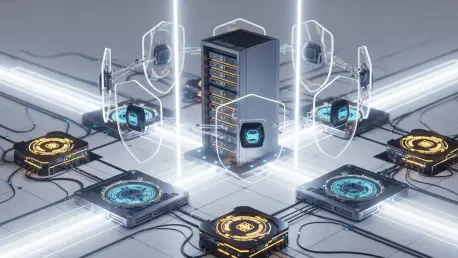
The most innovative aspect of this framework is the use of vendor-agnostic digital workers that facilitate coordinated actions. These interoperable agents function across the entire security stack to analyze software exposures and runtime environments simultaneously. Because they are designed to be interoperable, they allow for a modular defense that can integrate with various third-party tools without losing speed.
Recent Advancements in AI-Driven Security Operations
Recent developments have seen the transition toward defense systems that are just as agentic as the threats they face. Industry behavior is rapidly moving away from a model where human analysts must approve every response. Instead, organizations are increasingly trusting self-healing systems that can isolate compromised segments of a network before a human is even notified of the breach.
This shift emphasizes machine-speed protection as the primary metric of success. Modern defensive agents are now capable of simulating millions of attack scenarios to refine their own response logic. This iterative learning process ensures that the defense stays ahead of attackers who are using similar self-optimizing tools to probe for weaknesses.
Real-World Applications and Industrial Integration
In practical terms, autonomous security is bridging the gap between information technology and operational technology (OT). For instance, in manufacturing environments, an autonomous system can detect anomalous behavior in a robotic arm and isolate the underlying controller without shutting down the entire assembly line. This level of granular control is essential for maintaining business continuity during a cyberattack.
Furthermore, these systems are revolutionizing identity management and risk governance. By connecting AI systems across core business processes, organizations can automate the containment of suspicious user accounts. This systemic approach reduces the friction typically associated with security protocols, allowing for a seamless blend of high-level protection and operational efficiency.
Implementation Challenges and Adoption Barriers
Despite the technical prowess of autonomous agents, several hurdles remain in the path of widespread adoption. One major challenge is protecting against exploits that lack immediate software patches, known as zero-day vulnerabilities. While AI can mitigate the impact, it cannot always fix the underlying code, leaving a period of risk that requires sophisticated architectural safeguards.
Regulatory and architectural obstacles also play a significant role. Many industries operate under strict compliance frameworks that were written before the advent of autonomous security. Reconciling the need for machine-speed decision-making with the requirement for human auditability is a complex task. This often results in a slower adoption curve for organizations in highly regulated sectors.
The Future Outlook of Autonomous Cyber Warfare
Looking ahead, the focus will likely shift toward achieving systemic resilience through self-healing networks. These networks will be designed to automatically reconfigure their architecture in response to an ongoing assault. Such breakthroughs could eventually make the concept of a “successful” breach obsolete, as the network would simply route around the damage like a biological organism.
The long-term impact on global cybersecurity standards will be profound. As AI-powered remediation becomes the norm, the focus of human security professionals will shift from monitoring logs to orchestrating high-level strategy. This evolution will lead to a new era where the stability of the global economy is underpinned by invisible, self-correcting defensive layers.
Summary and Final Assessment
The evaluation of autonomous defense technologies demonstrated a clear necessity for shifting away from manual intervention. It became evident that matching the speed of AI-powered offense required a total re-engineering of the defensive stack. The integration of multi-agent architectures proved to be a viable path for reducing operational friction while enhancing resilience against self-optimizing threats.
Ultimately, the transition toward these systems addressed the critical vulnerability of human latency in the face of machine-speed attacks. Organizations that prioritized architectural alignment and automated threat containment positioned themselves more effectively against future risks. This shift toward systemic protection represented a major milestone in the ongoing evolution of global cybersecurity protocols.