
The velocity at which digital tools evolve often masks the structural decay occurring in their foundations, as evidenced by the unprecedented rise of autonomous intelligence. Within a mere two months, an open-source project named OpenClaw amassed over 250,000 GitHub stars, outstripping the historic growth of industry titans like React and establishing itself as a potential operating system for personal AI. This rapid adoption signals a massive appetite for autonomous agents, yet it masks a structural vulnerability that most developers are overlooking. While these agents perform tasks with impressive speed, they are currently operating in a state of digital amnesia, where every insight and decision risks being discarded the moment a process ends. This phenomenon creates a barrier between experimental success and enterprise-grade reliability.
The 60-Day Sprint to a Quarter-Million GitHub Stars
OpenClaw’s ascent was not just a statistical anomaly; it represented a fundamental pivot in the software development lifecycle toward agentic autonomy. Developers flocked to the platform to build tools that could handle everything from complex scheduling to autonomous coding. However, the speed of this adoption has outpaced the development of supporting infrastructure, leading to a precarious situation where the intelligence is robust but the memory is fleeting. The community’s focus on immediate performance has inadvertently sidelined the necessity for data longevity, creating a landscape of powerful but forgetful digital assistants.
This explosion of interest highlights a shift in user expectations, where AI is no longer a chat box but an active participant in digital workflows. As OpenClaw provides the scaffolding for these agents, it sets the stage for a new era of computing where the agent acts as an intermediary between the user and a vast array of web services. Yet, without a plan for data persistence, this “operating system” remains more of a temporary execution environment than a true foundation for personal or corporate intelligence. The industry is currently building on shifting sands, where the more an agent learns, the more it has to lose.
Defining the Ephemeral Nature of Personal AI Operating Systems
The transition of AI from experimental curiosities to core enterprise assets has introduced a paradox of data loss. At the GTC conference, the conversation shifted toward the concept of Personal AI, where agents act as extensions of the user or the corporation. However, because these agents typically function within temporary, sandboxed environments, the “dark data” they generate—logs, decision-making artifacts, and unique skills—remains invisible to the broader organization. This lack of a durable record means that when an agent crashes or updates, the institutional knowledge it gained vanishes, preventing the compound value that autonomous systems are supposed to provide.
Furthermore, the ephemeral nature of these agents creates a barrier to long-term optimization. Every time an agent restarts without a persistent memory, it must relearn contexts or re-evaluate parameters that were already established in previous sessions. This waste of compute and time is the antithesis of the efficiency gains that autonomous AI promises to deliver to the modern enterprise. To truly realize the vision of a digital surrogate, an agent must be able to carry its history forward, transforming isolated interactions into a cohesive and evolving intelligence.
The Structural Fragility of Sandboxed Intelligence and the Governance Gap
Current security frameworks like NVIDIA’s NemoClaw use kernel-level sandboxing to prevent AI agents from exceeding their authority, a necessary step for runtime governance. This ensures that an agent cannot access unauthorized directories or execute malicious code without explicit permission. Yet, this very isolation creates a dark data trap: files and context created inside these secure zones are inherently temporary. Without a dedicated storage layer that exists outside the sandbox, even the most secure agent is a liability because its work is not preserved. The focus on containment has come at the expense of continuity.
This results in a scenario where an organization has total control over what an agent does in the moment, but zero visibility or record of what it achieved once the session concludes. The governance gap exists not in the lack of control, but in the lack of visibility. When security protocols prioritize isolation to the point of data destruction, the enterprise loses the audit trail necessary to justify the agent’s existence. Effective governance must eventually include not just the restriction of action, but the preservation of evidence.
Expert Perspectives on the Three Pillars of Production-Grade AI
The consensus among industry leaders at events like NVIDIA’s Hack for Impact is that the hackathon phase of AI—where temporary data is tolerated—must end for enterprise adoption to succeed. Experts argue that production-ready systems must be built on three non-negotiable architectural requirements. Persistence stands as the first pillar, ensuring that an agent’s life’s work survives software migrations and infrastructure resets. This allows an agent to maintain a continuous narrative of its tasks, evolving into a more capable asset over time rather than a recurring expense.
Second is Traceability, which transforms outputs into verifiable records to satisfy legal and compliance standards like HIPAA or SOC 2. In a world where AI decisions have real-world consequences, the ability to reconstruct the specific reasoning behind an action is paramount for liability management. Finally, Recoverability ensures that an agent’s complex state can be restored after a failure through encrypted, immutable backups. This safety net prevents the total loss of operational progress, allowing for a resilient digital ecosystem that can withstand the inevitable disruptions of modern cloud computing environments.
Building a Permanent Memory: The Decoupled Storage Framework
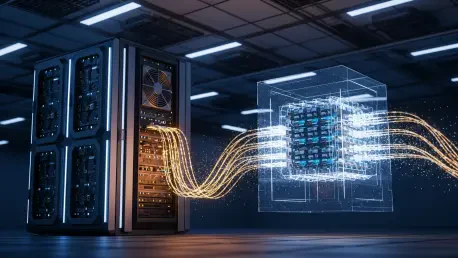
To solve the dark data crisis, organizations must move toward a decoupled architecture that separates the governed runtime from a durable storage layer. This strategy involves implementing a “persistent hard drive” for AI agents where every artifact is assigned a stable URL and integrated into standard workflows. By treating AI output as a persistent asset rather than a temporary side effect, companies can ensure that the intelligence generated by an agent remains accessible long after the original process has terminated. This separation of concerns allows for high-security execution without sacrificing the historical data that drives value.
Developers should prioritize an append-only data model to ensure audit trails cannot be altered, while simultaneously automating the export of agent memory to cloud storage. This approach creates a digital footprint that is both secure and useful for future training and refinement. By making agent outputs portable and permanent, businesses can turn isolated AI actions into a continuous stream of searchable, valuable intelligence. This architectural shift is the primary requirement for moving from simple automation to truly autonomous institutional knowledge systems.
The resolution of the dark data crisis required a fundamental shift in how developers prioritized long-term utility over immediate performance. Forward-thinking organizations adopted specialized data management protocols that treated every autonomous decision as a permanent record rather than a disposable output. This transition enabled a new era of institutional intelligence, where the collective experience of hundreds of AI agents was finally harnessed for strategic planning and optimization. As systems became more resilient through decoupled storage, the focus moved toward fine-tuning the synergy between human oversight and agentic independence. The implementation of these storage layers provided the missing link between temporary automation and permanent innovation, ensuring that digital amnesia was replaced by a robust, searchable history of machine-led progress. This evolution allowed the industry to move beyond the excitement of GitHub stars and toward the reality of indispensable, memory-rich AI infrastructure.