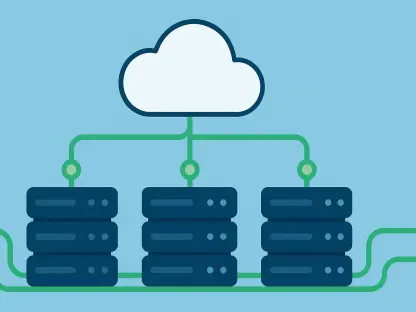

Market gravity shifted more quietly than past framework hype cycles yet more decisively, redirecting attention from component syntax to the colder economics of where data sits, how it moves, and which party pays the complexity bill when users expect speed, reliability, and reach across devices and networks. This report examines that shift as a strategic choice among three viable paradigms—hypermedia, reactivity, and local-first—and argues that data placement now sets the tempo for performance, developer experience, and operational risk more than any singular framework decision.
The industry’s center of mass is no longer defined by “SPA or not” but by data gravity: server-held truth, client–server split, or client-held authority with background sync. Each option unlocks different strengths and imposes different limits, and the market response has not been a single winner but a steady hybridization with clear inflection points. The key questions today are how to reduce surface area without sacrificing capability, how to keep latency off the critical path, and how to align skills with risk across a stack that spans browsers, servers, and edge runtimes.
From Framework Fandom to Data Gravity: How the Web’s Center of Mass Is Shifting
Scope, Significance, and Where This Matters Most
Three product classes anchor the choice: content-heavy CRUD systems whose lifeblood is forms and lists; highly interactive applications that reward micro-interactions and real-time state; and offline or collaborative tools that must survive network gaps. Each class pulls data gravity toward a different pole.
The stakes tie directly to time-to-market, hiring realities, and resilience. Choosing server-centric flows lowers the amount of bespoke client code to write and debug. Choosing reactive splits unlocks polished UX at the cost of orchestration. Choosing local-first unlocks instant reads and writes and robust offline paths but demands distributed thinking and sync stewardship.
Segments and Players Defining Today’s Choices
Reactivity spans React, Angular, Vue, Svelte, and Solid, reinforced by full-stack frameworks such as Next.js, Nuxt, SvelteKit, and Astro. These stacks coordinate client state with services and increasingly push work back to servers with streaming and server-first routing.
Hypermedia coalesces around HTMX, Hotwire’s Turbo and Stimulus, and Unpoly, paired with mature server-side templating. The contract is HTML over the wire, with partials and forms as first-class integration points, and small, focused JavaScript where needed.
Technological Influences and Guardrails on the Landscape
Local-first draws power from SQLite-in-the-browser via WebAssembly (wa-sqlite, libSQL), replication engines like ElectricSQL, PowerSync, and Replicache, and back ends such as Postgres. Supporting layers include service workers, edge and serverless platforms, GraphQL and REST gateways, and React Server Components.
The platform and infrastructure define the guardrails: WebAssembly, Streams, Cache Storage, Background Sync, and IndexedDB/OPFS in the browser; server-side streaming, partial rendering, edge runtimes, and HTTP/3 on the server. Security headers, CSP, OAuth/OIDC, WCAG, and Core Web Vitals budgets shape safe defaults and keep complexity in check.
Momentum Check: What’s Driving Change and What the Numbers Suggest
Trendlines Rewriting Client–Server Responsibilities
One-size-fits-all SPA assumptions receded as teams rediscovered progressive enhancement and server-centric flows. Full-stack frameworks now rebundle rendering and routing on the server while letting clients hydrate selectively where it matters.
In parallel, HTML-over-the-wire experienced a renaissance, validating partial updates and form-first lifecycles for large swaths of app logic. Local-first matured from research into shipping substrates with SQL in the browser, CRDT-backed edits, and shape-based replication. The API layer fragmented: JSON stayed central, but HTML responses and sync protocols now coexist.
Adoption Signals, Performance Indicators, and Near-Term Forecasts
Usage proxies—package downloads, surveys, and job postings—show sustained dominance for reactive stacks, steep growth for hypermedia tooling, and fast-rising but smaller bases for local-first engines. Hiring language maps cleanly to these paradigms, signaling real deployments rather than experiments.
Performance signals to track include TTFB, time-to-interaction, offline coverage, and error budgets under stress. The near-term picture favors hybridization: server-driven navigation, selective client reactivity, and durable local caches. Expect continued vendor investment in syncing substrates, RSC-aligned hosting, and HTML-first DX tooling.
The Trilemma, Unpacked: Complexity, Capability, and Resilience in Tension
Hypermedia Centered: Server as Source of Truth
Hypermedia leans on server-rendered pages and partials delivered as HTML fragments and composed by link-and-form lifecycles. The client remains thin, with targeted JavaScript for bespoke behaviors and progressive enhancement where necessary.
This model reduces client complexity, centralizes debugging, and embraces “real REST” by transmitting representational state. The tradeoff is reduced granularity for client-local state and higher reliance on server round-trips for intricate interactions, though many workflows remain well served.
Reactivity Split: Client-State Engines Coordinated with Services
Reactive stacks build a stateful UI that synchronizes with services via REST or GraphQL, now augmented by RSC and streaming to lessen hydration costs. Data libraries coordinate caches, invalidation, and effects while components express fine-grained interactivity.
The strength is expressiveness: dynamic UIs, complex flows, and animation-rich feedback loops. The cost is layered complexity—cache invalidation, synchronization strategies, and performance tuning—plus a cognitive load that spans browser lifecycles, routing, and service boundaries.
Local-First Gravity: Client Databases with Background Sync
Local-first treats the client as a database node, running local SQL and synchronizing via shapes or CRDTs. Writes and reads are instant, the network is background reconciliation, and UI logic talks to a uniform SQL surface.
Benefits include offline-first behavior, consistent latency, and a simpler data access story at the component level. Tradeoffs arrive in the sync plane: authorization over replication shapes, conflict semantics, and a tighter coupling between data modeling and security guarantees.
Hybrids and Convergence Paths
Hybrids emerge where they pay off most. React can treat local SQL as primary state, using sync as the substrate and rendering as pure composition. Alternatively, HTMX can partner with a service worker and a local SQL cache to deliver HTML-first UX with offline speed.
Server-side moves continue inside reactive stacks through RSC, server mutations, and partial hydration. Choosing blend points—navigation, forms, background data, collaborative edits—lets teams adopt strength where it matters and keep complexity contained elsewhere.
Compliance, Safety, and Data Stewardship Across Paradigms
Privacy, Residency, and Data Minimization
Data gravity maps to risk surfaces. Server-centralized architectures limit data footprints to controlled environments, while local-first replicas widen exposure but narrow latency. Residency and logging differ: server-rendered HTML may concentrate traces on infrastructure, while clients may hold cached PII.
Mitigations include selective replication, encryption at rest and in transit, token scopes aligned with shapes, and consent-aware local processing. A DPIA lens helps determine what must stay centralized and what can safely move to devices.
Security and Access Control in Each Model
Hypermedia flows emphasize sessions and CSRF protection, with CSP and templating helping contain XSS. Because clients stay thin, fewer secrets live in the browser, simplifying key management.
Reactive clients handle tokens, caches, and more surface for XSS and supply-chain risk. Sync-driven systems add shape authorization, row and column controls, and replay protection; keys and versioning must fit merge semantics to avoid privilege drift during reconciliation.
Accessibility and Performance Standards as Policy Enforcers
WCAG-aligned patterns favor semantic HTML and predictable interactions, which hypermedia models naturally support. Reactive interfaces can meet the bar but require deliberate ARIA, focus, and state announcements to avoid regression.
Core Web Vitals budgets function as practical guardrails, nudging teams to defer hydration, stream HTML, or move work off the critical path. Telemetry, SLOs, and error budgets translate architectural bets into enforceable operational targets.
The Road Ahead: Emerging Tech, Disruptors, and Where Value Accrues Next
Innovation Vectors to Watch
Sync substrates now look like a distinct product category, packaging collaboration primitives and conflict resolution for general use. Expect more shape design tools, lineage tracking, and admin controls that make distributed data operable.
HTML-first DX continues to gain steam with partial diffing, form semantics, and isomorphic validation. On the reactive side, smarter hydration— islands, selective reactivity, server-driven state transfer—keeps shaving milliseconds without sacrificing UI richness.
Market Shapers and Adoption Catalysts
Economic pressure favors simpler stacks that do more with fewer specialists, yet competitive pressure demands rich UX. Hosting platforms optimize for server components and streaming; managed sync back ends court teams that want local-first benefits without building a replication layer.
Community defaults now lean to SSR by default with opt-in interactivity, while certain domains normalize the idea that data wants to be local. This dual motion rewards architectural fluency over tool loyalty.
Scenario Planning and Risk Mitigation
Double down on a primary paradigm when product fit is clear: forms-first workflows suggest hypermedia, interaction-led products point to reactivity, and offline collaboration argues for local-first. Pilot hybrids where clear pain exists, such as navigation cost or flaky-network usage.
Estimate cost of change using migration slices, observability shifts, and incident playbooks. Invest in DX guardrails—templates, linters, preview environments—and record decisions with ADRs to preserve context as teams evolve.
Bottom Line and Playbook: Choosing Where Your Data Should Live
A Pragmatic Rubric for Selection
Choose hypermedia when server-side documents cover most interactions and simplicity wins. The result is centralized debugging, consistent security posture, and resilient performance on median networks with minimal client code.
Choose reactivity when granular client state, high-frequency feedback, and custom flows dominate. Accept the orchestration overhead to gain fine control and the ability to tune user-perceived performance at the component level.
Recommendations by Context and Maturity
For greenfield efforts, lead with the paradigm that fits today’s dominant interaction pattern, then blend others surgically. For incremental modernization, replace navigation and forms with server-driven flows first, then introduce selective reactivity or local caches where latency hurts.
Team skill mix should govern pacing: HTML-first teams thrive in hypermedia; SPA veterans navigate reactive layers; distributed-systems readiness unlocks local-first gains. Operational posture matters too: monitoring, gradual rollouts, and fallback modes stabilize change.
Consolidated Takeaways and Next Actions
Pilot a minimal slice in each paradigm to surface org-specific costs—pick a form-heavy flow, a high-interaction panel, and an offline-capable task. Standardize boundaries for navigation, forms, background data, and permissions before scaling to avoid bespoke patterns.
Invest in data semantics literacy across roles: synchronization, conflict handling, and rendering boundaries. This discipline turns data gravity from an accidental outcome into a durable design choice that pays dividends in speed, resilience, and maintainability.
The analysis pointed to a market past the framework wars and centered on data placement, identified three durable paradigms with clear tradeoffs, and highlighted hybrid paths as the practical mainstream; organizations that treated data gravity as the first decision, set performance and safety guardrails, and adopted change incrementally found faster delivery, fewer regressions, and architectures that aged more gracefully.