
Software leaders have wrestled with a paradox that faster code generation barely moves delivery speed because coordination and review absorb the gains, and OpenAI’s Symphony proposes a fix by shifting AI from a per‑developer helper into a governance‑aware execution layer that lives inside the pipeline rather than beside it. The specification turns issue trackers such as Linear into orchestration control planes that schedule and supervise agents like Codex, binding work intake, branching, CI, and review under one roof. This frame matters: it focuses on how work flows, not just how code gets typed. Analysts describe Symphony as infrastructure, not a gadget—stateful, persistent, and policyable. That orientation aligns with a key operational truth. Scaling outcomes depends less on local productivity and more on systemic flow, auditability, and resilience when many moving parts interact.
From Personal Assistant to Shared Infrastructure
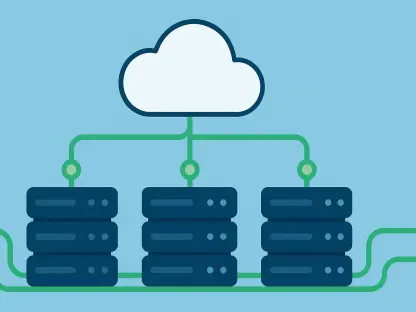
Symphony signaled a structural shift: AI agents operated as shared services rather than ad hoc sidekicks. In this model, the control plane schedules tasks, persists progress, retries on errors, and reconciles state across repos and branches. Observers likened it to a lightweight operating system for delivery because it mediates resources, governs autonomy, and enforces handoffs. The payoff came from reduced context switching. OpenAI’s internal notes suggested engineers plateaued at three to five concurrent interactive sessions, while orchestration absorbed that overhead and steadied throughput. Crucially, this was not a feature add-on. It was an operating model change that recast AI as pooled capacity, subject to the same policies and service boundaries as CI runners or artifact stores.
Building on this foundation, value accrued when agents ran under governed workflows rather than being launched from chat windows. That meant work began in tickets with clear acceptance criteria and continued through branches that matched policy, not personal habit. The control plane treated agents as schedulable units, with autonomy caps, watchdogs for idle or crashed runs, and lifecycle hooks to pause, escalate, or retire work. By making progress auditable and stateful, Symphony aimed to prevent drift between intent and execution. Analysts such as Sanchit Vir Gogia and Biswajeet Mahapatra framed this approach as the difference between tool use and infrastructure adoption: one optimizes a desk; the other organizes a factory floor.
What Symphony Actually Orchestrates
Concretely, Symphony pulled issues from a tracker, spun up isolated workspaces per ticket, and paired agents with repository context and policies. It monitored CI status, rebased branches to mainline, and attempted conflict resolution. When agents stalled or crashed, it restarted jobs with preserved state and logged the failure modes. Pull requests advanced to human review with links to the originating ticket and a trace of decisions made along the way. By embedding agents inside the SDLC spine—issue tracking, branching strategy, CI/CD—manual session wrangling fell away. OpenAI cited internal teams that saw shipped pull requests rise by as much as 500% within three weeks, cautioning that raw volume did not equal finished features or quality.
This approach naturally led to fit‑for‑purpose boundaries. Orchestration excelled at well‑framed tasks—refactors with clear scopes, dependency upgrades gated by tests, or feature toggles with crisp acceptance criteria. It struggled with ambiguous objectives, unclear user intent, or cross‑cutting product tradeoffs that required synchronous discussion. Symphony did not replace interactive coding; it complemented it. The economic signal changed: when creating a change set felt cheaper, teams could land more, smaller PRs, shrinking batch size and potentially accelerating feedback. That benefit, however, hinged on strong ticket hygiene, coherent branching, and review discipline. Poor inputs propagated faster, so misalignment showed up as rework and churn rather than blocked starts.
Operating Guardrails: Measurement, Risk, and Workforce
Measurement had to evolve with orchestration. Lines of code and PR counts masked whether users received usable functionality on time and with stability. The more relevant signals centered on lead time to a deployable feature, defect escape and post‑release incident rates, and recovery times when issues surfaced. Rework and churn exposed mis‑scoped tickets; peer‑review friction flagged bottlenecks as volume surged. Developer experience metrics—cognitive load, context switching, and perceived flow—rounded out the picture. Together, these indicators tethered Symphony’s promise to outcomes that mattered for customers and for operability, discouraging vanity reporting and encouraging grounded, actionable dashboards.
Security and governance set the real adoption bar. Enterprises needed end‑to‑end audit trails for agent actions, fine‑grained autonomy controls, and safe handoffs when agents created or reassigned work. Identity and policy integration had to be first‑class so orchestration did not become a shadow layer outside the SDLC backbone. Ownership of agent decisions, traceability across toolchains, and separation of duties were non‑negotiable, especially alongside legacy systems. The human dimension also demanded attention. As routine integration work automated, junior engineers risked fewer hands‑on reps. Effective programs paired orchestration with structured reviews, rotating design walkthroughs, and targeted mentorship. Teams that adopted this posture established a RACI for agent decisions, piloted in one repo with rigorous ticket templates, codified SLOs for PR latency and incident response, rehearsed failure modes with chaos drills for agents, and refreshed training so growth pathways remained healthy. Taken together, this staged, policy‑anchored rollout offered a practical path to harness Symphony’s throughput while maintaining quality and trust.