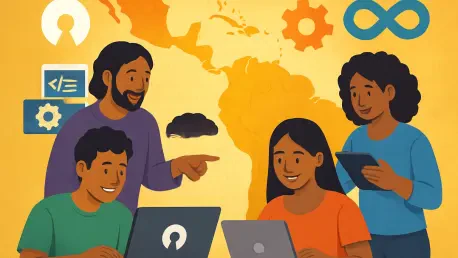

Across dozens of campuses, cultural centers, and public institutions from Caracas to Cumaná to Madrid, simultaneous sessions were poised to turn curiosity into capability by installing free systems, demystifying tools, and linking neighbors across borders through shared code. The 22nd Latin American Festival of Open-Source Software Installation did not stop at advocacy; it placed bootable USBs on tables, welcomed laptops of every vintage, and delivered a clear message about technological self-determination. FLISOL’s model hinged on active participation: students, civil servants, creative professionals, and first-time users walked in with devices and left with functioning systems, tutorials, and local contacts. This approach offered a tangible alternative to proprietary lock-in by pairing hands-on installs with guidance from practitioners. It also mapped a growing consensus: open technologies, now grounded in AI and hardware, are not fringe—they are infrastructure.
Caracas as a Flagship: Partnerships With Teeth
Caracas served as a focal point and a test case for community-government synergy, anchored by Venezuela’s National Center for Information Technologies under the Ministry of Science and Technology. In partnership with the Central University of Venezuela and the Teresa Carreño Theater, organizers knit together venues, audiences, and expertise. April 29 at UCV’s Faculty of Sciences unfolded from 8:30 a.m. to 3:00 p.m. with exhibitions, demos, and an installation table dedicated to real machines and real troubleshooting. Workshops moved beyond core utilities to production-grade tasks: AI-assisted web template design, professional animation workflows in Blender, and live audio production on GNU/Linux. Entry remained free, but capacity limits required prior registration via atencion@cnti.gob.ve—a small barrier that also signaled high demand.
Building on this foundation, the April 30 slate shifted upstage to the Teresa Carreño Theater, where masterclasses in the José Félix Ribas room framed “sovereign technology” as a practical discipline rather than a slogan. The day’s emphasis connected policy with implementation: how national platforms, open standards, and community support reduce maintenance costs and enable rapid iteration. The Canaima OS 8.4 rollout grounded those ideas with on-site technical assistance for upgrades and fresh installs, reinforcing a lifecycle mindset for public and personal devices alike. By spotlighting AI and Open Hardware alongside operating systems, the Caracas program expanded the definition of open adoption from software substitution to full-stack capability. The result tied institutional credibility to grassroots momentum without dampening experimentation.
Regional Momentum and Strategic Stakes
Momentum in Venezuela reached beyond the capital, reflecting a decentralized map aligned with Latin American and Spanish nodes. Earlier April gatherings in San Juan de los Morros, Maturín in Monagas, Cumaná, Mérida, and Valencia showed how the bring-your-device fabric works outside major hubs. Attendees didn’t just sample distros; they configured audio interfaces, calibrated GPUs for Blender, and tested AI-supportive stacks that respect local bandwidth and hardware constraints. This mattered because the most common blockers—driver issues, bootloaders, dual-boot anxiety—were solved on the spot, lowering the cost of switching. The same pattern echoed across the wider network: short talks paired with installation clinics, mixing new adopters with maintainers who knew which kernel versions and repositories avoided friction.
The thematic shift to Artificial Intelligence and Open Hardware moved the festival past advocacy and into capacity building. It clarified why digital sovereignty is not a posture but a pipeline: model training that can run on community servers, microcontroller projects stitched into local industry, and national distributions such as Canaima 8.4 tuned for public-sector realities. The playbook is concrete. Organize hands-on labs that ship working toolchains. Prioritize drivers, firmware, and codecs that users need for creative and civic work. Document installs so upgrades are no longer events but routines. In practice, this approach insulated institutions from vendor pivots and fostered skills that circulate within neighborhoods and agencies. The festival’s strongest signal came from its outcomes—devices configured, teams formed, and a path cleared for sustained experimentation.