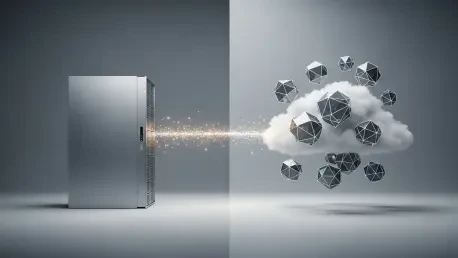

The persistent threat of sophisticated ransomware attacks has forced modern enterprises to rethink the traditional boundaries between local hardware reliability and the elastic security of the public cloud. As organizations struggle to manage fragmented data silos across multiple geographic locations, the demand for a unified defense mechanism has never been more pressing or technically complex. The recent strategic integration between Druva and Dell PowerProtect Data Domain addresses this exact friction point by bridging the gap between established on-premises infrastructure and contemporary software-defined protection. This collaboration is not merely a technical update but a structural shift in how large-scale businesses approach the concept of data durability and availability. By anchoring the defense strategy in a hybrid model, IT departments can now leverage the specialized performance of local deduplication appliances while simultaneously benefiting from a fully managed, air-gapped repository that exists entirely outside the reach of a primary network compromise.
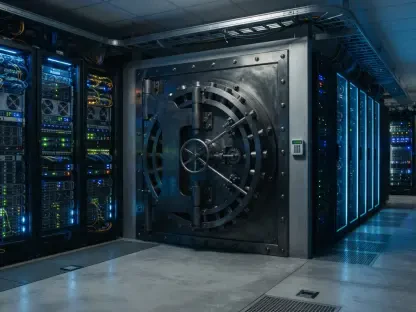
Building on this structural shift, the integration prioritizes the “best of both worlds” philosophy to solve the recurring conflict between recovery speed and data isolation. While local storage arrays like the Dell PowerProtect Data Domain are unmatched for high-speed restores within a data center or remote office, they remain theoretically vulnerable if an attacker gains administrative access to the internal network. Druva mitigates this risk by extending the local data lifecycle into a secure, immutable cloud environment that serves as a definitive recovery point. This secondary layer functions as a digital vault, ensuring that even if a local environment suffers a catastrophic failure or a malicious encryption event, a clean copy of the data remains accessible via a separate authentication path. This approach allows enterprises to maintain their existing hardware investments while upgrading their security posture to meet modern compliance standards, effectively turning a legacy storage asset into a gateway for a more resilient, cloud-forward ecosystem.
Engineering a Unified Defense: From Local Storage to Cloud Sovereignty
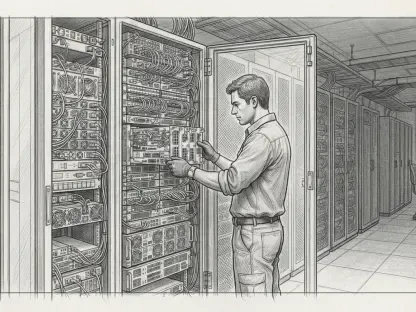
The technical synergy between these two platforms focuses on reducing the operational overhead that typically plagues hybrid cloud environments during a crisis. Instead of toggling between disparate management consoles, administrators can oversee the entire protection lifecycle through a single SaaS control plane that provides comprehensive visibility into both local and cloud-based backups. This unified interface streamlines the identification of anomalies and accelerates the decision-making process when a recovery is required to meet strict Recovery Time Objectives. By utilizing the Dell hardware as a high-speed landing zone for immediate operational needs and the Druva cloud as a long-term, air-gapped security layer, organizations can achieve a level of granular control that was previously difficult to implement. This dual-layered architecture is particularly effective for distributed enterprises with numerous remote offices where local IT expertise may be limited, but the need for robust, centralized data governance remains critical for overall business continuity.
The evolution of this partnership signals a broader trend toward “unified resilience,” where the distinction between infrastructure management and cybersecurity continues to blur into a single discipline. As this integration moves from its current limited availability into a general release, the focus for IT leadership should shift toward optimizing these hybrid workflows to eliminate data blind spots. To maximize the value of this collaboration, organizations should begin auditing their current recovery playbooks to identify which critical datasets require the immediate performance of local hardware versus those that must be prioritized for cloud-based air-gapping. Future considerations should involve the automation of recovery testing to ensure that the bridge between Dell appliances and the cloud remains functional and verified before a real-world incident occurs. Implementing a tiered recovery strategy that utilizes these integrated tools will provide a more predictable and scalable path for protecting information assets through the end of the decade and beyond.
The implementation of these advanced data protection strategies resulted in a significant reduction in total cost of ownership for several early adopters. By offloading long-term retention to a managed cloud environment, these organizations avoided the constant cycle of purchasing and maintaining additional on-premises hardware. The transition to a SaaS-based management model further decreased the manual labor required for patching and upgrading backup software, allowing personnel to focus on more strategic security initiatives. This shift demonstrated that modern cyber resilience is achieved not just through better hardware, but through the intelligent orchestration of existing resources and cloud-native innovation. As the partnership matured, the seamless data movement between the data center and the cloud became a standard benchmark for enterprise reliability. The collective experience of these organizations confirmed that a hybrid approach, when executed with precision, provided a level of security that neither local nor cloud solutions could achieve in total isolation.