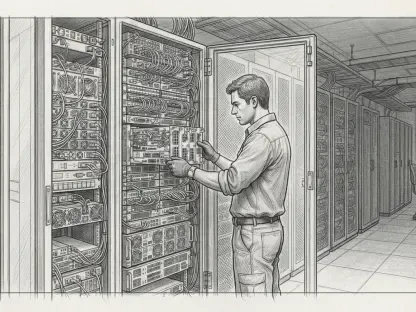

Enterprise data strategy is no longer just about storing massive amounts of information; it has become a high-stakes race to transform dormant bytes into instant, profitable intelligence. The landscape of enterprise data management is currently undergoing a fundamental transition, moving away from the fragmented ecosystems that have defined the last decade. For years, organizations have juggled a complex patchwork of data warehouses, specialized analytical engines, and streaming systems to meet the growing demands of business intelligence. However, this siloed approach has reached a breaking point, giving rise to what market analysts describe as the Lakehouse Era. This shift toward open lakehouse architectures and high-performance analytical engines is solving the dual challenges of massive data volume and escalating infrastructure costs. By merging the flexibility of data lakes with the performance of warehouses, enterprises are positioning themselves to extract timely, actionable value from their data at an unprecedented scale.
The Evolution: From Fragmented Legacy Stacks to Integrated Solutions
To understand the significance of the lakehouse shift, one must look at the historical context of data infrastructure. Technologies such as Postgres clusters, Hadoop, and early real-time engines served as the foundational blocks for massive data storage and operational slicing. While revolutionary at the time, these systems were designed for an era when data volumes were smaller and query complexity was lower. As enterprises expanded to petabyte scales and managed hundreds of thousands of tables, these legacy frameworks began to falter under the weight of their own fragility. These past developments matter because they created an insights paradox where companies collected more data than ever but lacked the engineering capacity to use it effectively due to the massive overhead required to maintain aging, brittle pipelines.
Recent market data suggests that the maintenance of these legacy environments consumes nearly sixty percent of data engineering budgets. This financial drain has accelerated the adoption of more unified solutions that can handle both batch and real-time workloads within a single architectural framework. By moving away from specialized, disconnected tools, organizations are finally able to bridge the gap between raw data collection and final business insight. This evolution represents a broader industry trend toward consolidation, where the goal is no longer just storage, but the immediate accessibility of data for diverse stakeholders across the entire corporate structure.
Maximizing Performance: Minimizing Operational Overhead
The Critical Balance: Query Speed and Infrastructure Cost
A defining aspect of the modern analytical landscape is the inextricable link between performance and fiscal responsibility. In the past, achieving high-speed results required a premium price tag, often leading to ballooning costs in traditional cloud data warehouses. Today, the market demand has shifted toward achieving faster queries at a significantly lower price point. Modern analytical engines are disrupting this space by offering native SQL capabilities and efficient handling of complex joins without the need for expensive pre-computation hacks. The industry is seeing a trend where technical upgrades are driven by hard financial outcomes; when an organization can slash infrastructure costs by seventy percent while improving performance, the move to a lakehouse architecture becomes a fiscal necessity rather than a mere technical preference.
Enabling Ad Hoc Analytics: A Competitive Growth Engine
The role of data has evolved from static, retrospective reporting to a dynamic resource for real-time experimentation. Modern product teams and analysts no longer have the patience for systems that require weeks of data modeling or pre-computation. The current trend favors on-the-fly analytics, allowing for rapid iteration on customer metrics, fraud detection, and advertising effectiveness. By providing the ability to run ad hoc queries on raw data instantly, lakehouse architectures eliminate the data bottleneck that previously stifled innovation. This agility is now viewed as a critical competitive advantage, as it allows businesses to ask new questions and receive immediate answers, fostering a culture of continuous improvement and rapid decision-making across all departments.
Overcoming Complexity: Radical Architectural Simplification
One of the most overlooked challenges in data engineering is the accumulation of knowledge silos created by bespoke indexing strategies and custom translation layers. While these workarounds were once necessary to extend the life of aging platforms, they resulted in systems that only a handful of specialists could manage. The shift toward lakehouse architectures emphasizes radical simplification, favoring platforms that provide native capabilities like updating data in place and running direct joins in storage. By eliminating the need for a patchwork of tools, enterprises reduce operational risk and accelerate delivery cycles. This transition removes the technical debt associated with legacy systems and allows teams to focus on innovation rather than maintenance.
The Future of Data Management: Emerging Industry Trends
The trajectory of data management is defined by the pragmatism of coexistence and the adoption of open standards. The industry is moving away from the one-size-fits-all mentality toward a strategic hybrid approach. Open storage formats, such as Apache Iceberg, are becoming the standard foundation for low-cost, massive datasets, while high-performance engines are layered on top for latency-sensitive workloads. Market forecasts suggest that from 2026 to 2028, the integration of automated data tiering will become a standard feature in most enterprise stacks. Experts predict that as these technologies mature, the barrier between real-time streaming and batch processing will continue to blur, creating a truly unified environment for all data personas.
Strategies: Implementing a High-Efficiency Data Architecture
To successfully transition to a lakehouse model, organizations should focus on several actionable strategies. First, prioritize the adoption of open storage formats to prevent vendor lock-in and ensure long-term flexibility. Second, identify high-impact, latency-sensitive workloads that would benefit most from a high-performance engine, rather than attempting a big bang migration of all legacy systems at once. Third, empower non-technical stakeholders by providing tools that support native SQL and ad hoc exploration, reducing the reliance on specialized engineering teams. By following these best practices, businesses can transform their data from a costly burden into a streamlined asset that drives meaningful breakthroughs and informed executive decisions in an increasingly competitive global market.
Embracing the New ErStreamlined Data Analytics
The shift to lakehouse architectures represented a fundamental transformation in how business value was created through digital assets. By integrating the best features of lakes and warehouses, enterprises moved into an era where query times were measured in seconds and development cycles were compressed from months into days. The core themes of speed, cost-efficiency, and simplicity were no longer optional luxuries but essential components of a modern data strategy. As the era of the data bottleneck came to a close, organizations that embraced these high-performance, simplified architectures possessed the clarity and agility needed to lead their industries. This transition also necessitated a shift in organizational culture, where data literacy became a baseline requirement for all leadership roles. Ultimately, the move to a lakehouse was not just a technical upgrade; it was a strategic commitment to data-driven growth that reshaped the internal logic of corporate decision-making for years to come.