
Chloe Maraina is a distinguished Business Intelligence expert who specializes in the intersection of data science and critical infrastructure. With a profound passion for translating complex big data into compelling visual stories, Chloe has dedicated her career to understanding how data management and integration can fortify industrial systems. Her expertise is particularly relevant in today’s landscape, where the integration of physical hardware and digital monitoring has become a primary target for sophisticated cyber threats. In this discussion, Chloe lends her vision for the future of data security to help us navigate the recent warnings issued by federal authorities regarding industrial fluid monitoring.
This interview explores the critical vulnerabilities currently facing Automatic Tank Gauge systems, which are essential for monitoring everything from fuel levels at gas stations to chemical storage on farms. We delve into the specific access vectors identified by federal agencies—such as SQL injection and hardcoded credentials—and examine how these technical flaws allow malicious actors to obscure monitoring and disable safety alerts. Chloe analyzes the broader implications for the global supply chain, the potential for operational disruption in the agricultural and energy sectors, and the urgent security protocols required to protect the integrity of industrial data.
Automatic tank gauges manage everything from leak detection to temperature monitoring across energy and agriculture. How would you describe the data-driven importance of these systems in maintaining industrial safety and efficiency?
Automatic Tank Gauges, or ATGs, function as the essential nervous system for our liquid infrastructure, processing massive streams of data to ensure both environmental safety and operational continuity. These systems utilize sophisticated sensors to monitor crucial variables like fluid temperature and precise liquid levels in real-time, providing the high-resolution data necessary for immediate leak detection and inventory management. For industries ranging from energy to agriculture, the data harvested by ATGs is a vital safeguard against environmental disasters and costly resource loss. By providing clear visual stories of what is happening inside thousands of tanks across the country, these systems allow for proactive management rather than reactive crisis control.
Federal authorities recently identified specific access vectors used to exploit these systems, such as authentication bypass and SQL injection. From a data science perspective, how do these vulnerabilities jeopardize the integrity of industrial monitoring?
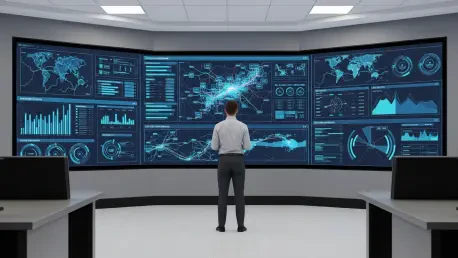
The vulnerabilities identified in the June 3, 2026, advisory represent a catastrophic failure in the data management layer of industrial devices. When hackers utilize SQL injection, they aren’t just gaining access; they are gaining the ability to manipulate the underlying databases that store historical records and real-time alerts. Authentication bypass and the use of hardcoded credentials allow unauthorized actors to enter the management interface and execute arbitrary code, which can effectively blind an operator by disabling critical safety alerts. This level of compromise turns a reliable stream of big data into a tool of deception, where the visual dashboard shows “normal” operations while a leak or a theft is occurring in reality.
When we consider the potential for disruption, how do these cyberattacks translate from digital interference into tangible consequences for sectors like agriculture and transportation?
The real-world impact of a compromised ATG is immediate and can ripple through the entire supply chain, as seen when hackers target systems at a Shell gas station or a large-scale farm. In the agricultural sector, a compromised system can disrupt harvest operations or trigger false safety alerts that interfere with food-grade storage, leading to significant downstream impacts on food continuity. While experts note that a malicious actor cannot physically cause a leak through the gauge itself, they can certainly disrupt the ability to fill vehicles or use tanks effectively. This interference creates a sensory fog for operators, where they lose the ability to trust the very data that governs their daily logistics and financial stability.
Given the severe nature of these warnings from the FBI and CISA, what immediate steps must organizations take to secure their data integration points and hardware?
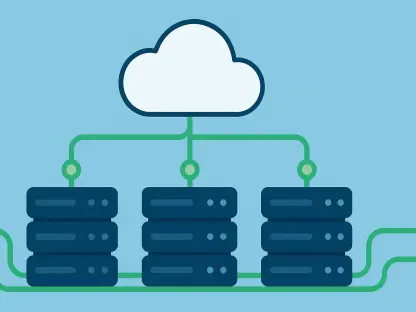
The most urgent action for any operator is to immediately disconnect these devices from the public-facing internet and implement robust security patches to close known flaws. Federal authorities have been very clear that changing default passwords is a non-negotiable first step, as hardcoded credentials remain one of the easiest paths for an intruder. Furthermore, organizations must move toward a more integrated security model where device management interfaces are isolated behind secure firewalls and multi-factor authentication. By treating these tank gauges as critical data nodes rather than just simple hardware, companies can begin to build the “defense in depth” necessary to protect their operational intelligence.
There has been significant discussion regarding the origin of these threats, including potential links to international actors. How does the historical context of industrial hacking shape our current understanding of these risks?
The current threat activity is part of a broader, more persistent pattern of behavior, with federal authorities noting previous activity targeting U.S. water and energy utilities in connection with the 2023 Gaza war. Even though the official attribution for the June 2026 incidents remains cautious, the April advisory and past investigations into gas station hacks across multiple states point toward sophisticated, state-linked groups. These actors have a history of exploiting vulnerable industrial systems to achieve both financial and geopolitical impacts. Understanding this history is crucial for data scientists and BI experts because it highlights that our critical infrastructure is being viewed as a strategic target for long-term operational disruption.
What is your forecast for the future of industrial data security and integration?
I expect we will see a rapid shift toward “secure-by-design” data integration, where the sensors used in energy and agriculture are no longer treated as isolated tools but as part of a hardened, encrypted network. We are moving toward a future where the analysis of big data will include automated anomaly detection that can identify unauthorized command execution or database manipulation in milliseconds. While the current warnings are a sobering reminder of our vulnerabilities, they are also accelerating the transition to a more resilient infrastructure that prioritizes data integrity above all else. Success in this field will depend on our ability to merge deep data science with traditional industrial operations to create a shield that is as robust as the steel tanks themselves.