
Domain shift often causes machine learning algorithms trained in one factory setting to perform poorly when deployed in environments with different lighting or materials. This fundamental challenge has catalyzed a move toward more resilient, adaptive systems that integrate unmanned aerial vehicle (UAV) technologies into the very fabric of industrial operations. In 2026, the evolution of these platforms from simple flying cameras into sophisticated mobile cyber-physical nodes has fundamentally altered how manufacturing facilities maintain their competitive edge. These autonomous systems are no longer just observing; they are participating in a proactive framework characterized by predictive quality management that anticipates failures before they manifest physically. The ability of drones to act as high-velocity data collection tools provides expansive spatial coverage that was previously impossible to achieve with fixed sensors or manual walk-throughs. As modern manufacturing assets grow in complexity, the necessity for a dynamic, multimodal sensing approach has become the standard for ensuring operational longevity and safety across diverse industrial landscapes, effectively bridging the gap between raw data and actionable intelligence.
Advanced Surface Analysis: The Thermal Approach
Thermal imaging serves as a cornerstone for analyzing an asset’s health by providing quantitative indicators that visual inspections often miss entirely. By mapping temperature distributions and heat flux patterns, drones can identify specific signatures of degradation, such as friction-induced wear, material fatigue, or electrical issues caused by Joule heating. This diagnostic capability allows industrial operators to move away from a reactive model of repairing equipment only after it fails. Instead, they are adopting a predict-and-prevent strategy that optimizes thermal efficiency and extends the operational life of expensive components. The integration of high-resolution infrared sensors onto drone platforms enables the detection of subsurface anomalies that remain invisible to the naked eye, allowing for the identification of insulation gaps or internal structural weaknesses in storage tanks and reactor vessels. This level of granularity is essential for maintaining the integrity of functional surfaces in high-temperature environments where traditional sensors would fail or provide incomplete data.
The application of machine learning plays a critical role in this process by automatically classifying thermal signatures to detect insulation failures or early-stage corrosion. Because these systems can detect subtle changes in heat patterns before physical damage becomes visible to a human inspector, they provide a layer of protection that ensures equipment stays within safe operational parameters at all times. This automated analysis reduces the dependency on constant human oversight while simultaneously increasing the frequency and accuracy of inspections across large-scale facilities. In 2026, the focus has shifted toward refining these algorithms to recognize the difference between normal operational heat and genuine defect signatures. By utilizing convolutional neural networks, the system can filter out environmental noise, such as solar reflection or atmospheric humidity, which previously plagued thermal data interpretation. This results in a highly reliable monitoring system that functions autonomously, delivering precise alerts to maintenance teams the moment a deviation from the thermal baseline is detected, thereby preventing costly unplanned outages.
Digital Twins: Mapping Physical Reality in Real-Time
The synergy between drone data and digital twin frameworks allows for the creation of virtual replicas that reflect the real-time status of physical assets with unprecedented accuracy. When a drone captures high-fidelity geometric or thermal data, such as a specific corrosion patch on a pressure vessel, this information is instantly synchronized with the virtual model. Using physics-informed neural networks, these digital twins can simulate how a defect will progress under various environmental loads and operational stresses. This creates a powerful analytical sandbox where maintenance teams can test different scenarios without risking the physical asset itself. The transition to this digital-first approach means that quality management is no longer a static snapshot of a point in time but a continuous stream of information that evolves alongside the factory floor. By 2026, the maturity of these models has reached a point where they can predict the remaining useful life of a component with a high degree of certainty, allowing for just-in-time maintenance scheduling.
These simulations utilize advanced techniques like computational fluid dynamics and the finite element method to understand exactly how surface degradation will impact future performance and structural integrity. This closed-loop feedback ensures that virtual models and physical reality remain perfectly aligned, offering high-stakes decision support for plant leadership and engineering departments. By visualizing potential failure points in a virtual environment long before they occur, quality experts can plan interventions with surgical precision, minimizing downtime and ensuring that maintenance resources are deployed only when and where they are truly needed. Furthermore, the integration of edge computing allows the drones to update specific parameters of the digital twin during flight, reducing the latency between data acquisition and analytical insight. This integration facilitates a more holistic view of the manufacturing ecosystem, where every physical change is mirrored in a virtual space, providing a comprehensive audit trail for regulatory compliance and safety certifications in highly controlled industries.
Autonomous Navigation: Precision in GPS-Denied Spaces
Reinforcement learning has fundamentally changed how drones navigate cluttered or GPS-denied environments, such as large distribution centers or indoor manufacturing halls. Rather than following rigid, pre-programmed paths that cannot account for moving machinery or shifting obstacles, these autonomous units learn optimal navigation policies through sophisticated trial-and-error processes. They dynamically calculate the most efficient routes to maximize sensor coverage while simultaneously conserving battery life and avoiding collisions with human workers. This level of autonomy is essential for maintaining consistent monitoring schedules without requiring constant manual intervention from a dedicated pilot. In 2026, these systems have evolved to handle complex three-dimensional environments where traditional navigation would be impossible, using simultaneous localization and mapping to orient themselves relative to the factory floor. The result is a seamless integration of aerial monitoring into the daily workflow of the facility, operating quietly in the background to ensure every corner of the site is inspected.
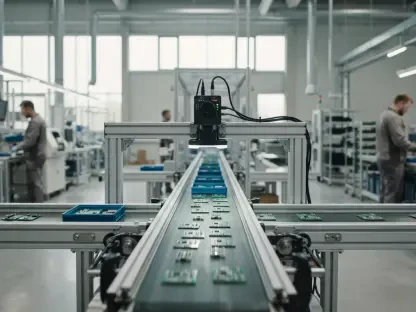
In the realm of intralogistics, this autonomy enables rapid inventory validation and the implementation of error-proofing strategies at the point of use. Drones can verify that components and packaging are correct and undamaged before they move further down the production line, effectively preventing the costly propagation of defects throughout the supply chain. By identifying a small error in the early stages of assembly or during raw material reception, these systems ensure that quality standards are maintained throughout the entire lifecycle of the product. Deep learning-based object detection allows the drones to read labels, check for structural deformities, and confirm the presence of safety seals in a fraction of the time it would take a manual team. This creates a resilient quality gate that operates continuously, significantly reducing the rate of product returns and manufacturing waste. The ability to perform these checks autonomously means that quality management is integrated into the movement of goods rather than being a separate, time-consuming bottleneck in the production cycle.
Industrial Reliability: Overcoming Technical Barriers
Despite their significant promise, drone-based systems face notable technical hurdles, particularly regarding the sensitivity of thermal sensors to material emissivity. Because emissivity changes based on surface roughness, oxidation levels, and environmental contamination, getting consistent and comparable measurements over long periods remains a complex challenge for engineering teams. Furthermore, atmospheric interference from humidity, localized heat gradients, and airborne particulates can attenuate infrared signals, leading to inaccurate readings that might mask the early stages of fatigue cracking or other micro-scale behaviors. To combat these issues, researchers in 2026 are focusing on multimodal sensor fusion, where data from thermal cameras is cross-referenced with LiDAR and visible light sensors to calibrate the readings in real-time. This approach helps to correct for environmental variables, providing a more stable dataset for the machine learning algorithms to process. Improving the spatial resolution of these sensors is also a priority, as detecting micro-cracks requires a level of granularity that standard commercial drone cameras often struggle to achieve without complex processing.
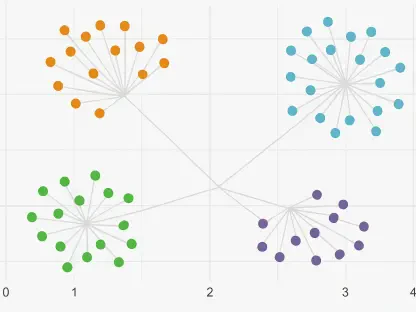
From an algorithmic perspective, the dependence on high-quality labeled datasets poses a major obstacle, as genuine industrial defects are relatively rare and expensive to document for training purposes. Models often suffer from domain shift, where an algorithm trained in one controlled environment fails in another due to subtle changes in lighting, background clutter, or material textures. To address the black box nature of traditional deep learning, current development efforts are focusing on physics-informed neural networks that are constrained by known physical laws, such as heat transfer equations. This integration of physical principles improves the reliability and explainability of the AI, which is a prerequisite for deployment in safety-critical sectors like aerospace or nuclear power. By ensuring the algorithm adheres to the laws of physics, engineers can trust the conclusions drawn by the system, even when it encounters data patterns it has not seen before. This transition toward transparent and physically grounded AI is essential for the widespread adoption of autonomous quality management in industries where failure is not an option.
Collaborative Swarms: The Future of Quality Remediation
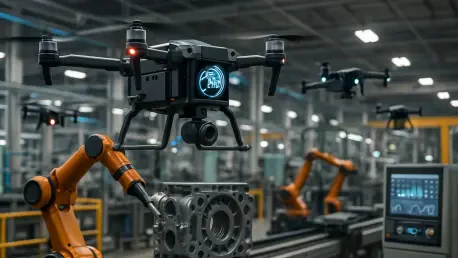
The future of this technology lies in the deployment of heterogeneous drone swarms, where groups of drones equipped with different specialized sensors work together via multi-agent reinforcement learning. This collaborative approach allows for closed-loop remediation; for example, a scanning drone might identify a surface defect and immediately alert a ground-based robot to perform a precision repair. Once the intervention is complete, the drone performs a post-remediation validation flight to confirm that the repair meets the required quality standard. This hyper-automated ecosystem requires standardized data exchange frameworks to ensure that autonomous communication remains safe and efficient across diverse industrial applications and multivendor environments. By 2026, the use of Asset Administration Shells has become common, providing a digital language that allows drones, robots, and factory management systems to share information seamlessly. This connectivity transforms individual drones from isolated tools into integrated members of a collaborative workforce that can manage complex maintenance tasks with minimal human intervention.
The benefits of these integrated systems were clearly visible in the power generation sector, where drones conducted thermal surveillance of wind turbine blades and solar arrays to prevent energy loss and structural failure. In metal processing facilities, drones mapped the temperature distributions of metal strands during continuous casting, providing critical data on shell thickness that was previously impossible to obtain with fixed sensors. This capability prevented dangerous breakouts and ensured the quality of the final product remained consistent across different production runs. The transition toward autonomous quality management fundamentally redefined the discipline as a pervasive, data-driven component of the entire production process rather than a final check. By bridging the gap between macroscopic performance and microscopic physics, these systems offered a new paradigm for industrial reliability. The ultimate goal emerged as a fully integrated industrial ecosystem where data-driven learning and governing physical laws worked in unison to ensure maximum operational safety and efficiency for years to come.