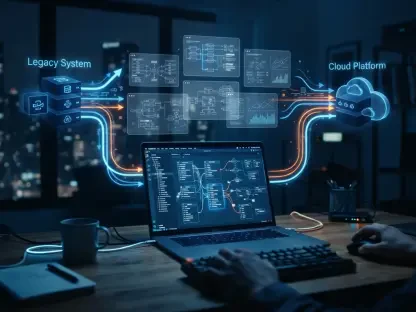

To mitigate the risks of extreme partner dependence, Anthropic is expected to aggressively expand its direct enterprise sales team to target AI-native startups and high-margin clients. This strategic pivot comes at a critical juncture for the San Francisco-based artificial intelligence firm, which has seen its revenue architecture undergo a fundamental restructuring throughout the first half of 2026. While the company once thrived as a direct-sales organization, it has increasingly become a fixture within the cloud ecosystems of the tech industry’s largest incumbents. Today, the landscape of frontier AI development is no longer defined by standalone labs operating in isolation; instead, it is characterized by deep, systemic integrations where the distinction between the model developer and the cloud platform often blurs. This shift is not merely a matter of convenience for enterprise buyers but represents a significant realignment of how advanced technology is delivered to the market. As Anthropic reports its financial results for the second quarter of 2026, the data paints a picture of a company that has successfully achieved massive scale while simultaneously locking itself into a multi-billion-dollar dependency on its primary competitors. The tension between achieving operational profitability and managing nearly $270 billion in long-term compute commitments forms the central narrative of Anthropic’s current business cycle.
The Shift Toward Cloud Marketplace Dominance
Adoption Curves: Part 1. Procurement Shifts
The trajectory of Anthropic’s revenue distribution over the last three years provides a striking case study in how enterprise procurement has matured in the generative AI era. In 2023, sales through cloud marketplaces accounted for a modest 11% of the company’s total intake, suggesting that early adopters were willing to engage directly with the lab to access its proprietary Claude models. However, by the early months of 2026, this figure surged to a dominant 48%, reflecting a massive consolidation of purchasing power within the marketplaces of Amazon Web Services, Google Cloud, and Microsoft Azure. This transition indicates that for the modern Fortune 500 company, the friction of onboarding a new independent software vendor often outweighs the benefits of a direct relationship. Large organizations have standardized their workflows around existing cloud providers, and the ability to purchase high-end AI capabilities through these pre-vetted channels has become the industry standard. This movement has effectively turned cloud marketplaces into the primary gatekeepers of enterprise AI adoption, leaving independent labs to compete for space on their partners’ virtual storefronts.
Building on this trend, the stability of the 48% marketplace share suggests that the market has reached a state of equilibrium where nearly half of all enterprise spend is mediated by a third party. Even with the late-stage addition of Microsoft as a marketplace partner in early 2026, the overall percentage of revenue coming from these channels remained remarkably steady, rather than experiencing a significant new spike. This consistency highlights the fact that Amazon and Google have established themselves as the high-volume drivers of Anthropic’s commercial success, leveraging their vast existing customer bases to distribute Claude to a global audience. For Anthropic, this reliance on external storefronts creates a paradoxical situation where their greatest source of growth is also their greatest strategic vulnerability. The company must now navigate a reality where its brand identity is increasingly filtered through the user interfaces and billing systems of the “Big Three” cloud providers, potentially diluting its direct influence over the end-user experience and the long-term loyalty of its corporate clients.
Financial Performance: Part 2. Margin Dynamics
Anthropic’s financial disclosures for the second quarter of 2026 revealed a milestone that many industry analysts once thought was years away: the achievement of operational profitability. The company reported $11.6 billion in quarterly sales, yielding an operating profit of $974 million, a feat that distinguishes it from many of its peers in the capital-intensive world of frontier AI. However, a deeper dive into the numbers reveals an operating margin of approximately 8.4%, which remains significantly lower than the historical norms for high-growth software enterprises. This margin compression is a direct result of the “tax” imposed by the marketplace model, where cloud providers retain a percentage of every transaction processed through their platforms. When nearly half of a company’s revenue is subject to these intermediary fees, the path to expansion requires either a massive increase in volume or a radical reduction in the cost of model inference. For Anthropic, the challenge lies in the fact that its partners are not just taking a cut of the sales but are also the primary suppliers of the expensive compute resources required to run those sales.
Furthermore, the relationship between revenue growth and the cost of goods sold remains tightly linked to the infrastructure fees paid back to Google, Amazon, and Microsoft. This creates a challenging economic environment where the more successful Anthropic becomes at selling its models through cloud marketplaces, the more it owes its partners in compute and transaction costs. The 8.4% margin represents the thin line between a sustainable business and one that is perpetually feeding its own infrastructure suppliers. To improve this figure, the company has started exploring more efficient model architectures and specialized hardware optimizations, yet the structural reality of the marketplace model persists. Investors are now paying closer attention to these margins than to top-line growth, recognizing that the long-term viability of an independent AI lab depends on its ability to capture a larger portion of the value it creates. Without a meaningful shift in the revenue-sharing agreements or a significant increase in direct-to-customer sales, Anthropic faces the risk of becoming a high-volume, low-margin utility for the broader cloud industry.
The High Stakes of Compute Commitments
Infrastructure Security: Part 1. The $269 Billion Bet
At the core of Anthropic’s long-term strategy is an unprecedented $269.4 billion commitment to cloud infrastructure spending, a figure that represents one of the largest hardware bets in tech history. These commitments are not merely aspirational projections but are legally binding minimum spending requirements that extend as far as 2036. By locking in this level of spending, Anthropic is essentially purchasing “insurance” against the chronic shortage of high-end AI compute capacity that has plagued the industry for years. In a market where wait times for the latest GPU clusters can stretch into the double digits of months, having guaranteed access to the world’s most advanced data centers is a critical competitive advantage. Alphabet Inc. leads these commitments with a $114.5 billion agreement through 2033, a partnership that focuses heavily on Google’s custom TPU hardware. This gives Anthropic a diversified hardware stack, reducing its reliance on traditional silicon and allowing it to optimize Claude for a variety of high-performance computing environments.
In parallel with the Google agreement, Amazon has secured a $110 billion commitment that stretches through 2036, cementing Anthropic’s role as the flagship AI partner for AWS. This relationship is particularly deep, with Anthropic utilizing Amazon’s proprietary Trainium and Inferentia chips to drive down the costs of both model training and live inference. Meanwhile, the $44.9 billion commitment to Microsoft, while smaller in scale, provides essential access to the largest installed base of enterprise software users in the world. Collectively, these agreements represent a massive wager on the permanence of generative AI demand. If the industry continues to expand at its current pace, these commitments will look like visionary moves to secure the “oxygen” of the digital economy. However, if growth ever stalls or if specialized competitors find more efficient ways to deliver intelligence, these multi-billion-dollar obligations could become a crippling financial anchor. The scale of these commitments highlights the reality that in 2026, being a leader in AI requires the balance sheet of a global superpower.
Model Mechanics: Part 2. Corporate Governance
The widespread adoption of the marketplace model is driven by the practical realities of how modern corporations manage their technology stacks. For a global enterprise, the process of onboarding a new vendor is a bureaucratic marathon involving security audits, legal reviews, and complex procurement workflows. By offering Claude through AWS Bedrock or the Google Cloud Vertex AI platform, Anthropic allows these organizations to bypass the majority of these hurdles. From the perspective of a Chief Information Officer, purchasing through an existing cloud contract is the “path of least resistance.” It allows them to leverage pre-existing Master Service Agreements and data privacy frameworks, significantly reducing the time it takes to move an AI project from a pilot phase to full-scale production. This ease of deployment has been a major factor in Claude’s rapid penetration of sectors like financial services and healthcare, where regulatory compliance and security are paramount.
Beyond the administrative convenience, the marketplace model offers sophisticated financial benefits such as consolidated billing and the strategic use of “committed spend” balances. Most large enterprises have multi-year agreements with cloud providers where they commit to spending a certain amount of money in exchange for volume discounts. Purchasing Anthropic’s models through these marketplaces often allows companies to count their AI expenditures toward these existing obligations, effectively “drawing down” their committed balance. This financial alignment makes AI adoption feel like a zero-sum budget exercise rather than a new, unbudgeted expense. Furthermore, by keeping AI prompts and outputs within the existing security perimeter of their cloud provider, enterprises feel more confident that their proprietary data remains protected under the governance protocols they already trust. For Anthropic, meeting the customer where they already are has proven to be the most effective way to scale, even if it means ceding some control over the customer relationship to the underlying cloud infrastructure giants.
Navigating the “Frenemy” Dynamic
Circular Money Flows: Part 1. The Economic Loop
A unique and somewhat controversial economic phenomenon has emerged in the relationship between Anthropic and the “Big Three” cloud providers, often referred to as the “circular money flow.” In this system, a customer pays Amazon or Google for access to Anthropic’s Claude models; the cloud provider takes its commission and passes the remainder to Anthropic; Anthropic then immediately returns a significant portion of that money to the same cloud provider to pay for the compute power and data center space required to host those models. This cycle creates a self-reinforcing loop where the cloud providers effectively act as the bank, the landlord, and the distributor for Anthropic’s business. While this arrangement provides Anthropic with the scale and capital it needs to compete at the highest level, it also creates a situation where its primary partners are the ultimate beneficiaries of its success. The cloud providers gain not only the marketplace fee but also the high-margin revenue from the compute usage, making the relationship incredibly lucrative for the infrastructure owners.
This loop is further complicated by the fact that Google, Amazon, and Microsoft are not just neutral platforms; they are also Anthropic’s most formidable competitors. Each of these companies has invested heavily in developing its own internal AI models, such as Google’s Gemini or Amazon’s Titan series. This creates a “frenemy” dynamic where the cloud providers are incentivized to promote their own models over Anthropic’s, while still profiting whenever a customer chooses Claude. For Anthropic, the challenge is to remain a “must-have” offering on these platforms so that the cloud providers cannot afford to sideline them. They must constantly innovate to maintain a performance lead that justifies their presence in the marketplace. At the same time, they must navigate the delicate politics of these partnerships, ensuring they have the support of the platform’s sales teams while knowing that those same teams are often being pushed to sell the platform’s internal AI solutions. It is a high-stakes balancing act where Anthropic must be both a partner and a rival in the same breath.
Investor Risks: Part 2. Concentration Challenges
As Anthropic prepares for a potential initial public offering, the level of counterparty concentration in its business has become a central focus for analysts and investors. Having nearly half of all revenue and 100% of its critical compute supply tied to just three massive entities creates a profile of systemic risk that is rare for a company of this size. If any of the “Big Three” were to change their marketplace fee structures, alter their prioritization of third-party models, or face significant infrastructure outages, the impact on Anthropic’s bottom line would be immediate and severe. This concentration of risk is not just theoretical; it influences everything from the company’s product roadmap to its pricing strategy. Investors are wary of the fact that Anthropic’s success is partially dependent on the strategic whims of companies that have their own competing interests, making the future of the lab’s independence a topic of frequent debate in financial circles.
Moreover, the $269.4 billion in infrastructure commitments represents a significant fixed-cost pressure that could prove problematic if the AI market experiences a downturn. Unlike more traditional software-as-a-service companies that can scale their costs down during a recession, Anthropic is locked into massive, non-cancelable payments for years to come. This creates a “revenue floor” that the company must exceed just to stay afloat, leaving very little room for error in its growth projections. If AI demand were to plateau or if model efficiency improvements reduce the overall need for raw compute faster than expected, Anthropic could find itself paying for capacity it no longer needs. This rigidity in the cost structure, combined with the loss of pricing power caused by the marketplace model, makes the company’s path to long-term profitability more precarious than it appears on the surface. Analysts are looking for signs that Anthropic can diversify its infrastructure and distribution channels to mitigate these concentration risks before it makes its debut on the public markets.
Future Outlook and Strategic Evolution
Strategic Evolution: Part 1. The Direct Sales Pivot
To counteract the encroaching dominance of cloud marketplaces and reclaim some of its lost margins, Anthropic is currently prioritizing the expansion of its direct enterprise sales operations. This initiative is designed to build deeper, more high-touch relationships with “AI-native” startups and large-scale enterprises that require bespoke implementations of Claude. By selling directly, Anthropic can avoid the transaction fees associated with marketplaces and maintain a much tighter loop with its most advanced users. This direct feedback is essential for the development of future models, as it allows the company to understand specific industry pain points and feature requests that might be obscured when a customer interacts through a third-party platform. The goal is not to replace the marketplace channel, which remains a vital source of volume, but to create a high-margin, premium tier of the business that can subsidize the lab’s more expensive research and development efforts.
In addition to improving margins, a robust direct sales team allows Anthropic to offer early access to “frontier” features that may not be immediately available on cloud APIs. There is often a significant “feature lag” between when a model developer releases a new capability and when that capability is fully integrated and certified on platforms like AWS Bedrock. For enterprises that view AI as a core competitive advantage, the ability to access the latest innovations months before their competitors is a powerful incentive to sign a direct contract. This dual-track strategy—leveraging cloud marketplaces for mass-market distribution while maintaining a direct channel for high-end users—is becoming the blueprint for survival in the AI industry. If successful, this approach will give Anthropic the financial flexibility to weather changes in the cloud landscape and provide a more stable foundation for its long-term independence. It also allows the company to collect more granular data on how its models are being used, which is critical for maintaining its edge in a market where every new feature is quickly commoditized.
Industry Impact: Part 2. Multi-Cloud Adoption
The shift toward marketplace dominance is also forcing a change in how enterprises and developers approach their overall AI architecture. Most sophisticated organizations are now pursuing a “multi-cloud” or “multi-model” strategy to avoid being locked into a single provider’s roadmap. By using Claude across AWS, Google Cloud, and Azure, these companies can ensure they have the flexibility to move their workloads to whichever platform offers the best performance or pricing at a given moment. This trend actually benefits Anthropic in the short term, as it makes Claude the “portable” intelligence layer that can sit on top of any infrastructure. However, it also means that Anthropic must maintain parity across all three major platforms, an engineering task that is becoming increasingly complex as each cloud provider develops its own proprietary hardware and specialized AI services. The need to optimize for TPUs on Google, Trainium on Amazon, and traditional GPUs on Azure requires a significant investment in cross-platform engineering that smaller labs may find difficult to sustain.
As the industry moves through 2026, the success of the Anthropic model will serve as a bellwether for the independence of the entire AI ecosystem. The central question remains whether a company can truly remain independent when it is so deeply entwined with the economic and technical systems of its rivals. For now, Anthropic has proven that it can achieve scale and profitability within this framework, but the long-term trade-offs in margin and autonomy are only just beginning to be understood. The evolution of this relationship will likely define the next decade of the technology industry, determining if AI becomes a diverse market of competing labs or a consolidated utility controlled by a handful of global infrastructure giants. Stakeholders across the sector are watching closely to see if Anthropic’s “frenemy” strategy can be sustained, or if the gravity of the cloud providers will eventually pull the lab into a permanent orbit. The outcome will have profound implications for innovation, pricing, and the accessibility of advanced intelligence for the global economy.
Anthropic prioritized its integration into major cloud marketplaces throughout the first half of 2026, a move that successfully drove its quarterly revenue to $11.6 billion. This strategy allowed the company to reach an operational profit of $974 million, even as it managed a massive $269.4 billion commitment to its infrastructure partners. Stakeholders observed that while this model provided rapid scale and procurement convenience for large enterprises, it also introduced significant margin pressure and heightened counterparty risks. To maintain its independence, the company began a significant expansion of its direct enterprise sales capabilities, seeking to balance its high-volume marketplace sales with high-margin direct relationships. Moving forward, the laboratory must continue to optimize its models for diverse hardware stacks while navigating the complex competitive dynamics of its “frenemy” partners. Organizations using Claude should consider a multi-cloud strategy to mitigate their own dependency on a single provider’s roadmap. Ultimately, the long-term sustainability of this model will depend on Anthropic’s ability to innovate faster than the infrastructure giants can commoditize its core technology.