
Current sentiment analysis tools can struggle with sarcasm or irony, such as when a frustrated reviewer uses positive words to describe a negative experience. In the dense and often chaotic world of modern e-commerce, this nuance is frequently lost, leading to automated summaries that misrepresent

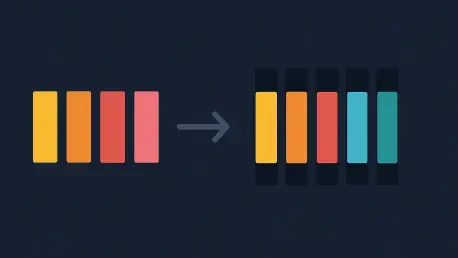
The ensemble model bridges a critical gap in natural language processing by evaluating text on contextual, local pattern, and structural flow levels simultaneously. As digital landscapes in 2026 become increasingly saturated with machine-generated narratives, the distinction between organic human

By treating education as a programmable architecture, the Tsinghua team has developed a tool that functions as the Codex of the classroom for modern curriculum designers. This innovative project, widely known as the Education Lobster or OpenMAIC, recently commanded international attention during a
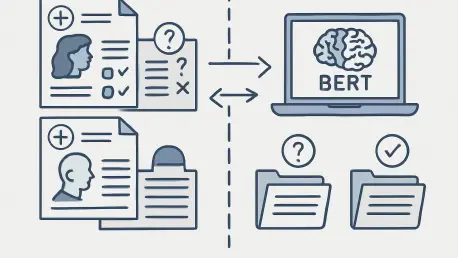
Researchers are now using latent representations to align local hospital diagnoses with standardized SNOMED-CT concepts by treating the mapping problem as a geometric challenge rather than a simple classification task. The modern healthcare landscape is currently characterized by a significant

Users can now refine specific aesthetic details of a chart, such as changing colors or adding growth projections, by simply chatting with the assistant. This capability marks a dramatic shift in how humans interact with large language models, moving beyond the constraints of static text blocks into

By supporting dialects like Hausa, Yoruba, and Amharic, the TranslatePsy initiative seeks to remove the language barriers that hinder global scientific and educational advancement. This movement represents a fundamental pivot in the trajectory of artificial intelligence, moving away from the