
Scientific knowledge is currently being weighed and measured by the very metrics that were meant to organize it, transforming citations into a form of academic currency that is increasingly vulnerable to forgery and manipulation. Node embeddings and graph neural networks provide a mathematical

The ensemble model bridges a critical gap in natural language processing by evaluating text on contextual, local pattern, and structural flow levels simultaneously. As digital landscapes in 2026 become increasingly saturated with machine-generated narratives, the distinction between organic human

Cloudera’s hybrid approach offers a more flexible alternative to the walled garden ecosystems provided by major public cloud AI vendors. This strategic shift represents a fundamental realignment in how corporate entities perceive the intersection of data management and high-level artificial

By treating education as a programmable architecture, the Tsinghua team has developed a tool that functions as the Codex of the classroom for modern curriculum designers. This innovative project, widely known as the Education Lobster or OpenMAIC, recently commanded international attention during a
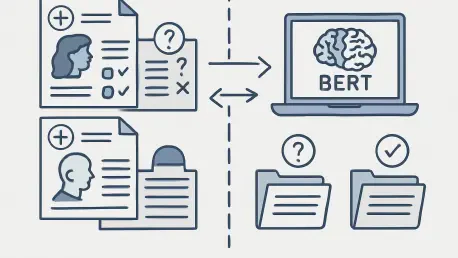
Researchers are now using latent representations to align local hospital diagnoses with standardized SNOMED-CT concepts by treating the mapping problem as a geometric challenge rather than a simple classification task. The modern healthcare landscape is currently characterized by a significant

Modern incident response procedures must be updated to include specific protocols for isolating accounts compromised through AI-related breaches and auditing data exposure. This urgent call for action comes as public sector agencies increasingly turn to large language models and generative tools to