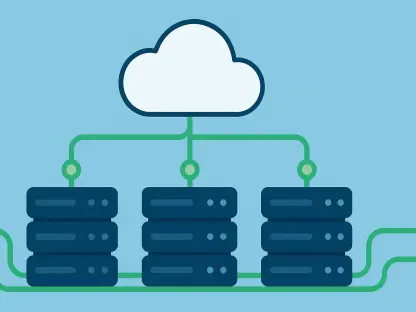

The traditional view of data as a passive digital exhaust is being systematically dismantled as enterprises recognize that raw information is the primary engine for economic survival and competitive differentiation in an automated world. Valued at roughly $66 billion in 2025, the global big data storage industry is currently undergoing a massive structural shift and is expected to quintuple by 2035. This transition is not merely about capacity but marks a move away from basic hardware models toward intelligent, software-driven systems that treat data as a strategic asset. Today, the demand for storage infrastructure is driven by the necessity to support real-time decision-making and predictive modeling across the entire corporate enterprise. Modern organizations are finding that legacy architectures can no longer keep pace with the velocity of incoming information, forcing a total reimagining of how bits and bytes are stored, accessed, and utilized for value creation.
The Catalysts of Infrastructure Transformation
The Surge of Unstructured Data
The explosion of information originates largely from the relentless stream of unstructured data generated by IoT sensors, high-definition video feeds, and social media interactions. Unlike the neatly organized tables of the past, these data types are inherently messy and grow at an exponential rate that traditional relational databases were never designed to manage. To accommodate this influx, modern storage solutions must prioritize horizontal scaling, allowing systems to expand across multiple nodes without losing performance or data integrity. This shift is particularly visible in smart city initiatives and industrial automation, where thousands of sensors produce telemetry data that must be ingested and stored simultaneously. Consequently, the industry is witnessing a move toward object storage and distributed file systems that can handle trillions of individual files while providing the metadata tagging necessary for efficient retrieval and long-term analysis.
Architectural rigidity has become the primary enemy of the modern data center, leading many organizations to abandon the static storage silos that characterized the previous decade. These legacy systems often created bottlenecks where data became trapped in specific departments, preventing the cross-functional analysis required for holistic business intelligence. By moving toward more adaptable architectures, companies are now able to scale their storage environments dynamically in response to real-time demand spikes. This adaptability is essential for handling unpredictable data loads, such as those seen during major global events or rapid shifts in consumer behavior captured through digital channels. The goal is no longer just to find a place for information to reside but to create a fluid environment where data can flow between different states of utility. This evolution ensures that storage is no longer a cost center but a foundational component of a responsive and agile business strategy.
The AI and Machine Learning Mandate
Artificial Intelligence and Machine Learning have fundamentally redefined the performance requirements of storage hardware, moving the focus from simple capacity to extreme throughput. These advanced technologies require massive amounts of data to be fed into training models at incredibly high speeds to ensure that GPUs and TPUs are never left idle. If the storage layer cannot deliver data fast enough, the expensive computational resources sit wasted, significantly increasing the total cost of development for AI initiatives. As a result, enterprises are increasingly investing in high-performance computing environments that utilize parallel file systems to provide the necessary bandwidth. This requirement persists through both the training phase and the inference phase, where the model must access real-time data to provide instant predictions. The resulting pivot toward AI-ready storage is creating a new standard for what constitutes a modern and competitive corporate data center.
Beyond simple speed, the AI mandate requires a level of data reliability and accessibility that ensures datasets are always ready for complex analytics. Advanced modern analytics platforms are being integrated directly into the storage layer to reduce the need for time-consuming data movement across the network. This localized processing capability allows for more efficient handling of heavy lifting tasks, such as filtering and pre-processing large datasets before they reach the primary compute cluster. By minimizing the delay between data acquisition and insight generation, businesses can react to market changes with unprecedented precision. This integration of intelligence into the storage fabric represents a significant departure from the era of “dumb” storage arrays. It reflects a broader trend where the physical hardware is being optimized specifically to handle the mathematical intensity of neural networks and deep learning algorithms that now dominate the technological landscape.
Technological Pillars of Modern Storage
Innovations in Speed and Flexibility
Technological breakthroughs like Non-Volatile Memory express, or NVMe, have become the cornerstone of modern high-performance storage by eliminating the legacy protocols of the past. Older systems were often limited by the constraints of interfaces designed for spinning disks, which created significant latency when applied to modern flash-based media. NVMe bypasses these limitations by providing a direct path to the processor, allowing for a massive increase in input-output operations per second. This improvement is critical for applications that require real-time data access, such as high-frequency trading platforms or autonomous vehicle navigation systems. By reducing the time it takes to read and write information, NVMe enables a level of responsiveness that was previously impossible. This protocol is now the industry standard for any organization looking to leverage big data for immediate and impactful competitive advantages in a high-speed digital economy.
Complementing the speed of NVMe is the rise of Software-Defined Storage, which offers a revolutionary way to manage resources independently of the underlying physical hardware. This approach decouples the management software from the drive enclosures, allowing administrators to pool storage resources from various vendors and manage them through a single interface. The primary benefit of this model is the significant reduction in operational costs and the elimination of vendor lock-in, which has historically plagued large-scale data centers. Businesses can now mix and match different types of storage media based on their specific performance and budget requirements. This flexibility is vital for maintaining a modern infrastructure that can evolve as new hardware technologies emerge. Furthermore, Software-Defined Storage provides the agility needed to reconfigure storage volumes on the fly, ensuring that resources are always aligned with the most pressing needs of the organization.
Strategic Pathways for Future Implementation
The adoption of hybrid and multi-cloud strategies became the preferred method for balancing the need for on-premises security with the undeniable elasticity of the cloud. Successful organizations realized that keeping sensitive data behind a private firewall while offloading less critical workloads to public providers offered the best of both worlds. To manage these increasingly complex environments, IT leaders implemented intelligent data tiering that used machine learning to move files between different storage classes automatically. This automation ensured that active, high-priority data remained on expensive high-speed drives, while older or less relevant information was migrated to low-cost archival storage. By removing the need for manual intervention, these systems reduced the likelihood of human error and allowed staff to focus on more strategic initiatives. This proactive approach to data management proved to be a critical factor in maintaining operational efficiency.
Industry leaders focused their efforts on integrating specialized data layers that could handle exabyte-scale workloads with minimal overhead. Strategic partnerships between hardware manufacturers and specialized chipmakers resulted in a new generation of storage controllers designed specifically for the rigors of modern unstructured data. These systems provided the robust framework necessary for high-stakes applications in healthcare and finance, where data integrity and speed are non-negotiable. Moving forward, the most effective strategy involved treating the storage environment as a living ecosystem that required constant optimization and monitoring. Businesses that prioritized the creation of high-performance environments were able to transform their data into actionable insights faster than their competitors. This commitment to infrastructure excellence established a foundation for sustainable growth, ensuring that the next decade of big data would be defined by intelligence rather than just volume.