
Modern enterprises are rapidly discovering that the leap from a successful artificial intelligence pilot program to a sustainable production-grade environment requires far more than just sophisticated algorithms and raw computing power. As organizations transition toward the industrialization of machine learning, the concept of the AI factory has emerged as a necessary structural shift, demanding a level of operational oversight that traditional monitoring tools simply cannot provide. The recent introduction of specialized observability solutions for Nutanix environments represents a critical pivot in how infrastructure is managed, specifically targeting the unique volatility of agentic AI. Unlike conventional workloads that exhibit predictable patterns, these new systems involve autonomous agents that reason, plan, and consume resources in dynamic bursts, often creating bottlenecks that remain invisible to standard hypervisor-level metrics. By integrating deep visibility into the Nutanix Enterprise AI stack, this development provides the granular control necessary to ensure that complex AI services remain both performant and financially viable as they scale to meet the demands of thousands of concurrent users.
The move toward agentic AI introduces a layer of unpredictability that fundamentally challenges the legacy “set it and forget it” approach to data center management. These systems do not merely run code; they orchestrate a series of high-stakes interactions between language models, vector databases, and external APIs, all while fluctuating wildly in their demand for specialized hardware. This inherent volatility makes it nearly impossible for infrastructure teams to predict capacity requirements or identify the root cause of latency spikes without a unified view of the entire stack. Consequently, the industry is seeing a shift from general-purpose monitoring toward highly specialized observability frameworks that can correlate the logic of an AI agent with the physical health of a GPU cluster. By providing this missing link, the new integration for Nutanix addresses the primary friction point preventing large-scale deployment: the inability to maintain a consistent quality of service when the underlying computational demand is in a state of constant, automated flux.
Challenges of Scaling Agentic Workloads
Operating a modern AI factory requires a departure from traditional virtualization management because the relationship between software and hardware has become increasingly non-linear and resource-intensive. When an enterprise deploys an agentic system, it is essentially creating a network of autonomous entities that can trigger massive parallel processing tasks without human intervention, leading to sudden surges in power consumption and memory pressure. If the infrastructure is not properly tuned for these “reasoning” workloads, the result is often a degraded user experience or, in extreme cases, a complete system failure caused by thermal throttling of the hardware. The current technical landscape necessitates a platform that can monitor these interactions in real-time, ensuring that the Nutanix Cloud Infrastructure can dynamically respond to the specific needs of the AI models. This visibility is not just a luxury; it is a prerequisite for any organization that intends to move beyond basic chatbots into more advanced, autonomous operational workflows that impact the core of their business strategy.
Furthermore, the economic implications of running unoptimized AI environments are becoming a significant deterrent for many large-scale adopters. GPUs are among the most expensive assets in the modern data center, and allowing them to sit idle or run inefficiently due to poor workload scheduling can lead to millions of dollars in wasted capital. The complexity of these environments often hides the fact that certain clusters might be over-provisioned while others are struggling under the weight of high-concurrency demands. Without a tool that can provide token-level visibility and link it directly to hardware utilization, administrators are essentially flying blind, unable to justify the massive investment required for AI expansion. By bridging the gap between the application layer and the physical infrastructure, the new observability suite allows for a more surgical approach to resource allocation. This level of precision enables teams to squeeze every ounce of performance out of their Nutanix and NVIDIA investments, turning what was once a black box of operational costs into a transparent and manageable component of the enterprise architecture.
Technical Architecture and Resource Management
The technical backbone of this new observability framework relies on a multi-layered telemetry system that captures data from the Nutanix AHV hypervisor, Kubernetes orchestration layers, and the underlying NVIDIA GPU clusters simultaneously. This holistic approach is essential because performance issues in an AI factory rarely stem from a single point of failure; rather, they are often the result of complex interactions between the containerized model and the physical memory bus. By providing real-time tracking of GPU health, including temperature, power draw, and memory clock speeds, the system allows for proactive risk mitigation before a thermal event or a memory leak can disrupt the production environment. This deep-dive telemetry is particularly vital for distributed clusters where a single underperforming node can slow down the entire training or inference pipeline, leading to costly delays in time-to-insight. Having a single pane of glass to view these diverse metrics simplifies the operational burden on DevOps teams who would otherwise spend hours correlating disparate log files to find a single bottleneck.
Moving beyond simple hardware monitoring, the integration introduces the concept of workload correlation, which maps specific AI activities directly to their infrastructure footprint. For instance, the system can distinguish between the heavy, sustained load of a model training session and the rapid, bursty nature of real-time inference or agentic reasoning. This distinction is crucial for optimizing the underlying Nutanix Enterprise AI platform, as it allows for the implementation of more intelligent scaling policies that reflect the actual behavior of the AI service. The ability to monitor throughput and latency at the token level further refines this process, giving data scientists and infrastructure architects a common language to discuss performance. When an organization can see exactly how many resources each token generated by a large language model is consuming, they can begin to apply rigorous governance and cost-control measures. This technical synergy ensures that the AI factory remains an efficient production line rather than a chaotic collection of high-cost experimental projects.
Strategic Impact on Enterprise Growth
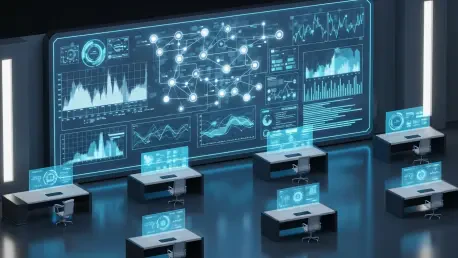
The successful implementation of this observability framework serves as a catalyst for a broader cultural shift within the IT department, fostering collaboration between traditionally siloed teams. In many organizations, the data science team, the platform engineers, and the infrastructure administrators operate in isolation, which inevitably leads to friction when scaling new AI services. By providing a unified operational view, the new Nutanix-focused solution creates a “single source of truth” that all stakeholders can rely on for decision-making. Platform teams can use the data to optimize their Kubernetes configurations, while data scientists can see how their model architectural choices impact the physical hardware, leading to more “infrastructure-aware” AI development. This alignment is critical for moving toward a more mature AI lifecycle where deployment is seen not as the final step, but as the beginning of a continuous optimization loop. This strategic integration ultimately accelerates the transition to production, allowing enterprises to realize the value of their AI initiatives much faster than previously possible.
Ultimately, the debut of these advanced monitoring capabilities signals a maturation of the entire AI ecosystem, shifting the narrative from experimental novelty to industrial reliability. As the demand for autonomous agents continues to grow, the ability to manage the associated complexity will become a primary competitive advantage for forward-thinking organizations. The integration with Nutanix provides a robust foundation for this future, offering the precision and scalability required to support thousands of concurrent agents without sacrificing stability or cost-efficiency. By prioritizing deep visibility and resource optimization, enterprises are not just keeping the lights on; they are building the resilient, high-performance infrastructure necessary to lead in an increasingly AI-driven marketplace. This development reflects a sophisticated understanding of the modern data center, where the physical and virtual layers must work in perfect harmony to support the next generation of intelligent software.
The transition toward fully operationalized AI factories required a significant shift in how organizations perceived the relationship between their hardware and their autonomous software agents. In the period from 2026 to 2028, it became clear that the successful deployment of agentic systems was dependent on the ability to bridge the gap between high-level logic and low-level resource consumption. Enterprises that adopted these integrated observability tools were able to reduce their operational overhead while simultaneously increasing the reliability of their production models. By focusing on token-level visibility and real-time GPU telemetry, infrastructure teams gained the precision needed to mitigate risks and optimize costs before they escalated. The implementation of a unified monitoring framework proved to be the decisive factor in transforming experimental AI projects into scalable, value-generating business assets. Moving forward, the focus must remain on refining these cross-layer insights to ensure that the infrastructure can evolve at the same pace as the models it supports.