
The rapid proliferation of autonomous agents and generative code assistants has effectively dismantled the wall between software conception and production, rendering traditional security frameworks largely obsolete. For years, the industry operated under a predictable, linear model where human developers authored code at a measured pace, allowing security teams to implement sequential checkpoints throughout the software development life cycle. This structure relied on the assumption that time was a luxury and that distinct boundaries separated the design, build, and deployment phases. However, in the current landscape, AI has compressed these timelines from weeks into mere seconds. When an algorithm can generate a pull request, run its own unit tests, and trigger a deployment pipeline almost instantaneously, the human-mediated “gatekeeper” model becomes a catastrophic bottleneck. The central challenge now is that security can no longer be treated as an external stage or a final hurdle; it must be woven into the very fabric of the automated workflow to prevent catastrophic logic flaws from reaching production at machine speed.
The traditional security model is no longer just under heavy pressure from modern workloads; it has reached a point of fundamental failure in the face of agentic autonomy. In the past, runtime controls served as a final safety net to catch whatever managed to slip through the cracks of development-time scanning. This binary approach—securing the code before it runs and monitoring the environment while it runs—is collapsing because the tools generating the code are often the same ones managing the environment. As the boundaries between these phases disappear, organizations must transition toward an integrated security fabric that spans from the initial drafting of technical requirements down to the kernel-level execution of the application. This evolution requires a shift in perspective where security is viewed not as a series of isolated events, but as a continuous stream of verification that matches the velocity of AI-driven iteration.
The Dual Movement of Security Controls
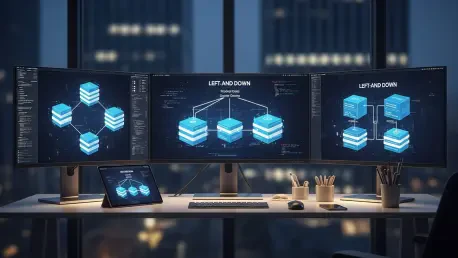
To stay ahead of the risks inherent in automated coding, security strategies are undergoing a radical shift toward a “Left-and-Down” architecture. Moving “Left” involves embedding security protocols into the very genesis of software, targeting the initial prompts and requirements that guide AI assistants before a single line of executable code is even written. By governing the “intent” phase, organizations can ensure that the AI is constrained by security policies from the moment it begins generating logic. At the same time, security is moving “Down” into the runtime environment, where defenses are increasingly focused on real-time behavior rather than outdated lists of known vulnerabilities. This dual movement creates a sandwich of protection that addresses the primary weakness of AI development: its ability to produce functional but potentially insecure code at a volume that exceeds human capacity for review.
This structural transformation is a direct consequence of the speed at which autonomous agents now operate within corporate networks. When an agent can identify a business need, write the necessary microservice, and deploy it to a cloud environment in a single automated loop, the concept of a “security review” must be entirely redefined. Traditional manual gates are effectively bypassed by the sheer momentum of these cycles, necessitating the adoption of automated governance that operates at the same layer as the development tools. This means that defense mechanisms must be as dynamic as the threats they are intended to mitigate, focusing on the underlying system behavior. By monitoring how an application interacts with the kernel and network in real-time, security teams can detect and block anomalies that static analysis would inevitably miss during the frantic pace of the initial build.
Governing Complex AI Workflows and Identities
As AI agents move beyond simple code generation and begin to actively “stitch” together disparate APIs to execute complex business goals, the focus of security is shifting from isolated endpoints to entire workflows. Historically, API security was concerned with protecting the gateway or the individual service, but in an agent-driven ecosystem, the greatest risk lies in the “seams” between these services. AI agents often chain multiple calls together to achieve a specific outcome, creating complex behavioral sequences that traditional scanners are not designed to understand. These machine-driven workflows can harbor subtle logic flaws or control bypasses that only become apparent when the entire sequence is analyzed as a whole. Security teams must now treat these autonomous agents as first-class participants in business logic, modeling their interactions to prevent them from unintentionally escalating privileges or leaking sensitive data across connected systems.
This rise of autonomous agency has simultaneously triggered a massive identity crisis within modern enterprise infrastructure. Unlike human employees, who have clearly defined roles and working hours, AI agents often require expansive, persistent, and over-privileged access to function effectively across diverse data stores and internal platforms. This creates a “chain of identity” that is notoriously difficult to audit using traditional identity and access management tools. To solve this, new security strategies are emerging that monitor these identity chains at the kernel level in real-time, providing deep visibility into what an agent is actually doing versus what its permissions technically allow. This granularity is essential for enforcing a zero-trust architecture where every action taken by an automated system is verified against its current context, ensuring that an agent cannot be hijacked or manipulated into performing actions outside its intended scope.
Automation of Remediation and Toolchain Security
The volume of code being produced today by generative models has created a significant “remediation gap” that traditional human-led operations can no longer bridge. While modern security tools have become exceptionally proficient at identifying potential vulnerabilities, the sheer scale of findings means that developers are often overwhelmed by backlogs of fixes. To counter this, the industry is pivoting toward fully automated remediation, where security platforms not only identify a flaw but also generate, test, and validate a fix within the existing CI/CD pipeline. This transition from “detection and triage” to “automated closure” is no longer a luxury but a mandatory requirement for any organization hoping to maintain a secure posture while utilizing AI. By closing the loop between discovery and resolution without requiring human intervention for every minor patch, companies can focus their limited human expertise on high-level architectural risks.
Furthermore, the attack surface has expanded significantly to include the very toolchain used by developers to enhance their productivity. Coding assistants, specialized plugin architectures, and local model servers often operate outside the purview of traditional IT security oversight, creating a hidden layer of risk known as the “shadow toolchain.” These tools can be vulnerable to prompt injection attacks, where malicious input causes the AI to generate insecure code or leak proprietary data from the developer’s local environment. To mitigate this, organizations are adopting “endpoint guardian” strategies that provide a comprehensive inventory of all AI tools in use across the engineering department. By governing the data flow between these assistants and the local file system, security teams can ensure that the automation intended to speed up development does not inadvertently become a conduit for intellectual property theft or supply chain compromise.
Infrastructure Governance and Shadow AI Management
In the current high-velocity environment, traditional governance and compliance often act as significant friction points that impede technical progress. The modern solution to this problem is the implementation of “governance as infrastructure,” where the software supply chain is treated as a verifiable system of record using policy-as-code. This approach allows AI agents to iterate on code until it meets a pre-defined set of security and compliance standards, with the system providing immediate feedback loops. By baking these guardrails directly into the infrastructure, the need for a manual sign-off at every milestone is eliminated, enabling machine-speed certification of new features. This shift ensures that the speed of the development engine is matched by the speed of the regulatory framework, allowing for a more agile and responsive business model.
Another urgent priority for leadership is the management of “Shadow AI,” which occurs when individual departments or employees utilize external AI services without the knowledge of the central IT or security office. This lack of centralized visibility makes it nearly impossible to track what sensitive corporate data is being shared with third-party models or which external agents have been granted access to internal documentation. To regain control, organizations are deploying unified visibility layers that monitor all employee and application-level interactions with AI services in real-time. This monitoring is not merely about restriction; it is about establishing a clear baseline of usage to assess the total exposure of the organization. By understanding the flow of information to external models, security teams can implement granular data loss prevention policies that prevent the accidental disclosure of trade secrets while still allowing the workforce to benefit from the efficiency of AI tools.
Behavioral Defense and the Obsolescence of Static Lists
The traditional reliance on Common Vulnerabilities and Exposures (CVE) lists and static signatures is becoming increasingly ineffective as AI-driven exploitation techniques evolve. Because AI can discover and weaponize previously unknown weaknesses at a rate that far outpaces the human ability to catalog them, the industry is moving toward a defense-in-depth strategy rooted in runtime prevention. This approach utilizes kernel-level observation to monitor the actual behavior of an application as it executes, rather than searching for a specific pattern of a known hack. By understanding the inherent logic and expected behavior of a function or library, these systems can instantly block any execution path that deviates from the norm. This transition to behavioral defense is crucial because it protects the system against “zero-day” exploits that have not yet been identified by the broader security community.
The ultimate point of control in a modern application is no longer the perimeter but the runtime environment itself. As organizations move away from the slow cadence of human-speed updates, the only truly effective defense is one that operates with an intrinsic understanding of the application’s intended state. This shift acknowledges the reality that the sheer volume of potential vulnerabilities is too high for manual management and that a “vulnerability-centric” approach is fundamentally reactive. Behavioral analysis, in contrast, is proactive, focusing on how the code acts in the wild rather than trying to label every possible threat signature. This method provides a much more resilient defense posture, as it remains effective even when the underlying code is being constantly updated and modified by automated systems that may introduce new, uncatalogued risks.
Shifting Focus to Intent and Requirements
Perhaps the most significant paradigm shift in contemporary application security is the move toward influencing software at the requirements layer, well before the first line of code is generated. Manually reviewing thousands of lines of code produced by an AI assistant is both economically unfeasible and technically exhausting for security researchers. Instead, the industry is beginning to recognize that the most effective control point is the initial prompt or the technical requirement document that guides the AI’s output. By inserting specific security constraints and architectural rules into the “intent” phase of development, organizations can guide the AI to produce code that is secure by design. This preventive approach reduces the need for extensive downstream cleanup and ensures that security is an primary consideration from the very beginning of the creative process.
This new reality requires a fundamental change in the role of the security professional, who must now evolve into a policy architect or a prompt engineer. Since AI agents are essentially advanced readers of instructions, the security and quality of the final product are entirely dependent on the precision of those initial directives. This necessitates a level of discipline in the requirement-gathering process that has historically been lacking in traditional software engineering circles. By treating “intent” as a primary security control, teams can create a set of executable guardrails that govern the AI’s creative process. This ensures that the generated logic adheres to corporate safety standards, resulting in a more robust and trustworthy system that benefits from the speed of automation without sacrificing the integrity of the underlying architecture.
Continuous Compliance and the Live Audit Feed
The traditional view of compliance as a manual, periodic audit that occurs months after a project has been completed is no longer compatible with the reality of continuous AI-driven deployment. In the modern landscape, the delay between development and certification represents a significant window of risk that must be closed. The industry is currently moving toward a model of “continuous compliance,” where the development pipeline itself acts as a live audit feed that records every change and verification step in real-time. By utilizing AI to analyze test results, build artifacts, and system logs, organizations can provide developers with immediate feedback on whether their work satisfies complex regulatory requirements. This eliminates the “measurement gap” and ensures that the organization remains in a constant state of audit-readiness.
This transformation effectively turns compliance from a bureaucratic hurdle into a valuable signal within the CI/CD pipeline, allowing for faster release cycles without compromising legal or safety standards. By mapping evidence directly to security controls as the code is being built, security teams can provide a transparent and verifiable trail of accountability for every automated action. Moving forward, the focus must be on integrating these automated audit tools deeper into the orchestration layer of the cloud environment. Organizations should prioritize the adoption of platforms that offer real-time visualization of their compliance status across all regions and services. This proactive stance not only mitigates the risk of heavy regulatory fines but also builds trust with customers and partners who demand high levels of transparency in how their data is handled by increasingly autonomous systems. This systematic approach to security and compliance will be the defining characteristic of successful enterprises as they navigate the complexities of the automated era.